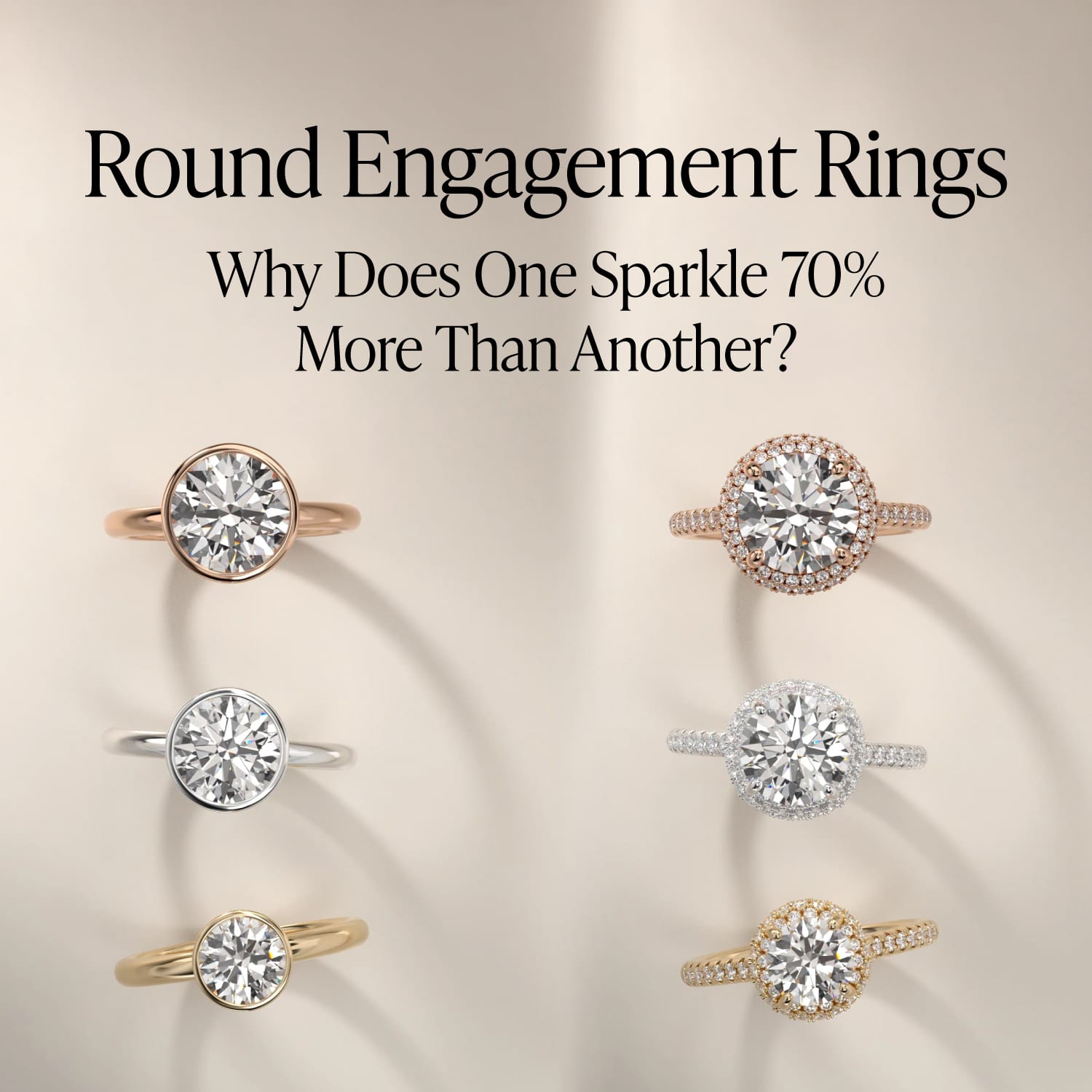
Two round diamonds can have the exact same price, carat weight, color, and clarity on paper and still look dramatically different in person — GIA-cited research found an Excellent-cut round diamond can appear up to 70% more brilliant than a Poor-cut one with everything else identical. The difference isn’t the diamond’s specs. It’s the cut, and it’s the one number most buyers never think to check.
Round’s reputation as “the safe choice” undersells it. It’s not safe because it’s boring — it’s safe because it’s the one shape engineered specifically to maximize light return, more than any fancy shape. But that engineering only pays off if the specific stone you’re buying actually hits it — which is exactly why two rings that look identical on a certificate can sit side by side and one visibly outshines the other.
This guide covers five real ways to style a round diamond, how round actually compares to oval and cushion when you’re deciding between shapes, natural versus lab-grown round diamonds side by side, and exactly what to check so you’re the one buying the diamond that sparkles — not the one that doesn’t.
Diamond IQ Test: Natural or Lab-Grown?
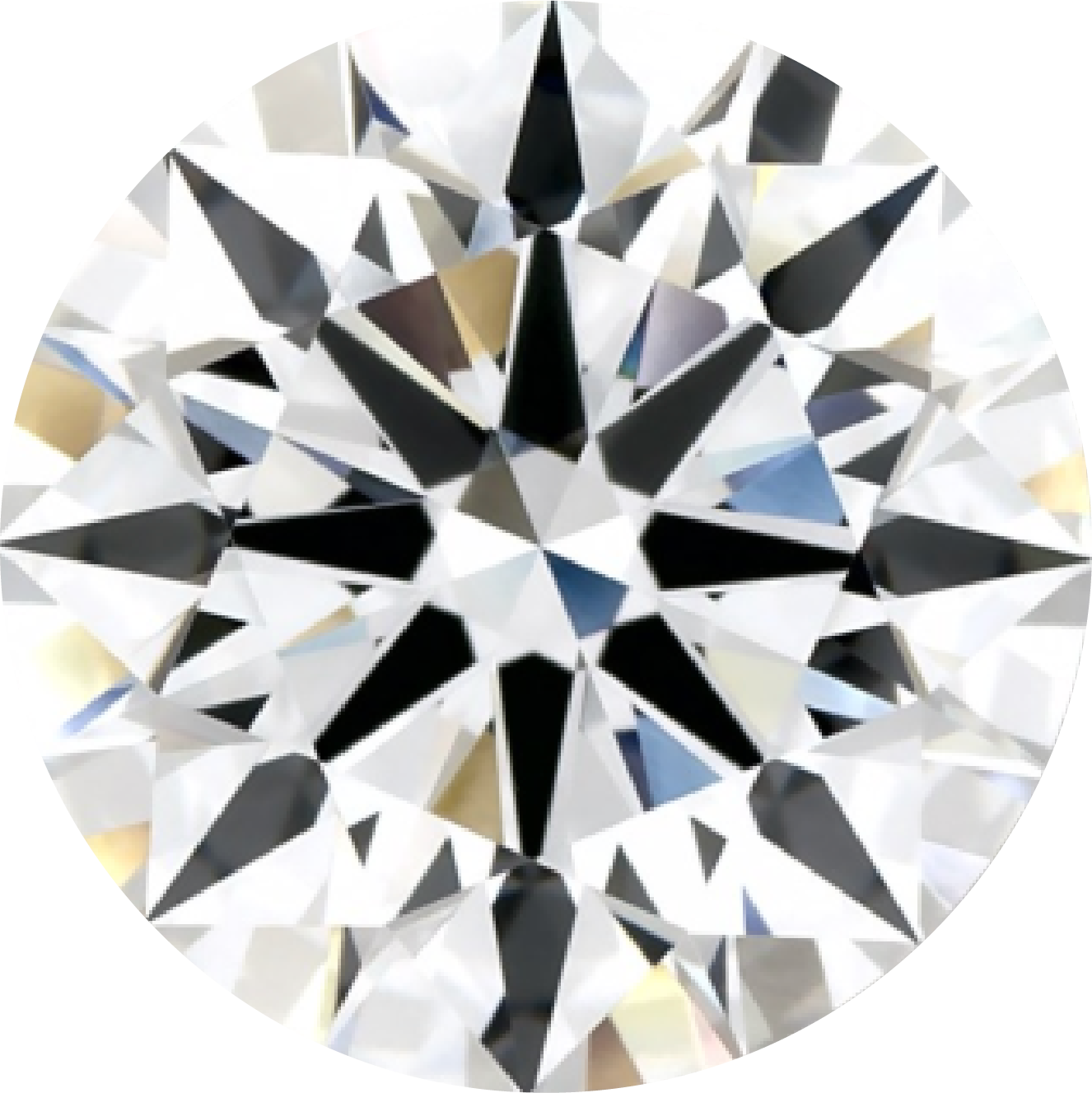
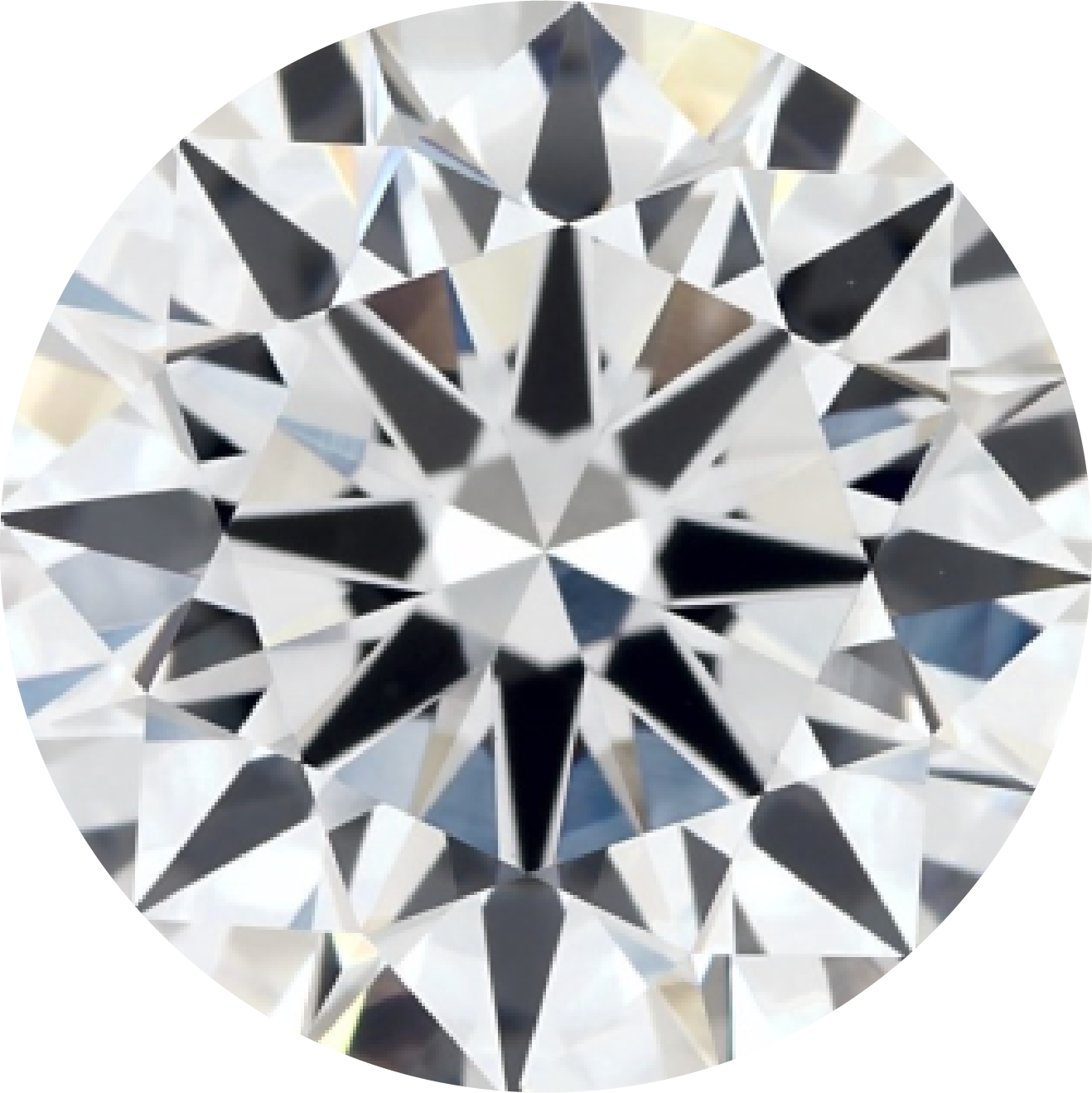
Two identical diamonds: GIA Certified, 1.51ct, D Color, VVS1, Ideal Cut. One is natural ($16,240), the other is lab-grown ($1,970). Choose the diamond you like better and see if you can match it to its origin.
TLDR — Round Engagement Rings at a Glance
| Question | Answer |
|---|---|
| Why does one round diamond sparkle more than another? | Cut grade — GIA-cited research found an Excellent-cut round diamond can appear up to 70% more brilliant than a Poor-cut round of identical color, clarity, and carat weight |
| Why is round the most popular shape? | Its facet pattern is engineered specifically to maximize light return — no other shape returns as much brilliance per carat, but only if the cut grade is actually high |
| What setting works best for round? | All of them, genuinely — solitaire, halo, bezel, and three-stone all showcase round diamonds well; the choice is about lifestyle and personal style, not shape compatibility |
| Is round more expensive than other shapes? | Yes, typically 10–25% more per carat than fancy shapes like oval or cushion at equal quality, due to more rough diamond lost in cutting |
| Natural or lab-grown round diamond? | Lab-grown is chemically identical and typically 60–85% less at the same specs — the real decision is origin preference, not quality |
| What’s the single most important quality factor? | Cut grade — round is the most cut-sensitive shape that exists; a poorly cut round looks visibly duller than a poorly cut oval or cushion at the same clarity |
| Round vs oval — which is better? | Round has maximum brilliance and a classic silhouette; oval offers 10-15% more visible surface area per carat and an elongating effect on the finger — neither is objectively better |
| Best setting for an active lifestyle? | Bezel or half bezel — protects the stone’s entire girdle with no exposed prong tips to catch or wear down |
Why Round Works With Everything
The round brilliant cut has 58 facets arranged in a mathematically optimized pattern designed for one purpose: return the maximum possible amount of light back through the top of the stone. This isn’t a marketing claim — it’s the literal engineering brief that’s driven round diamond cutting standards for over a century, refined through decades of light-performance research into what’s now called the “ideal cut.”
That optimization is why round performs consistently well regardless of what it’s set into. A shape with a less symmetrical light path — certain fancy cuts can show a “bowtie” effect, a dark shadow across the stone’s center — needs a setting that works around that quirk. Round has no such quirk to manage, which frees the setting to be chosen purely on style and lifestyle rather than on damage control for the stone’s optical behavior.
Deal Alert: Mother’s Day Sale Up To 30% Off* select fine jewelry at Blue Nile.
New Collection: Shop the James Allen Collection at Blue Nile.
Vault Sale: “Clear The Vault” – Get up to 70% OFF at Blue Nile!
Flash Sale: Save up to 40% OFF sitewide at Rare Carat.
Exclusive: Get up to 60% OFF select fine jewelry at Ritani.
Mehedi’s Take: “People sometimes apologize for choosing round, like it’s the unoriginal option. I always push back on that. Round isn’t unoriginal — it’s undefeated. It’s the shape that never asks the setting to compensate for anything. Every other decision in the ring becomes purely about what you want it to say, not what the diamond needs it to hide.” — Mehedi Hasan, Diamond Industry Veteran
5 Ways to Wear a Round Engagement Ring
1. The Classic Solitaire — Let the Stone Do the Talking
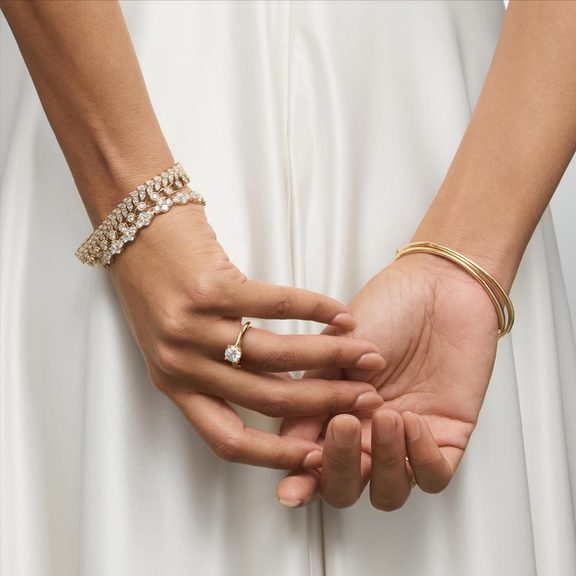
A round diamond in a simple four- or six-prong solitaire is the single most recognized engagement ring silhouette in the world, and there’s a reason it’s never gone out of style: nothing competes with the stone. Minimal metal, maximum light exposure, and a profile that photographs and wears exactly the same decades from now as it does today.
Four prongs show slightly more of the diamond; six prongs distribute security across more contact points, which matters more as carat weight climbs. Our four prong engagement ring guide and six prong engagement ring guide cover exactly when each is the right call. To see the full range of solitaire and other round-cut settings in one place, browse round cut engagement rings at Blue Nile.
2. Bezel or Half Bezel — Low Profile, High Durability
A round diamond wrapped in a continuous metal rim trades a small amount of light exposure for real, passive security — no exposed prong tips, a smooth snag-free profile, and a modern, architectural look that reads completely differently from a classic prong solitaire while using the exact same diamond.
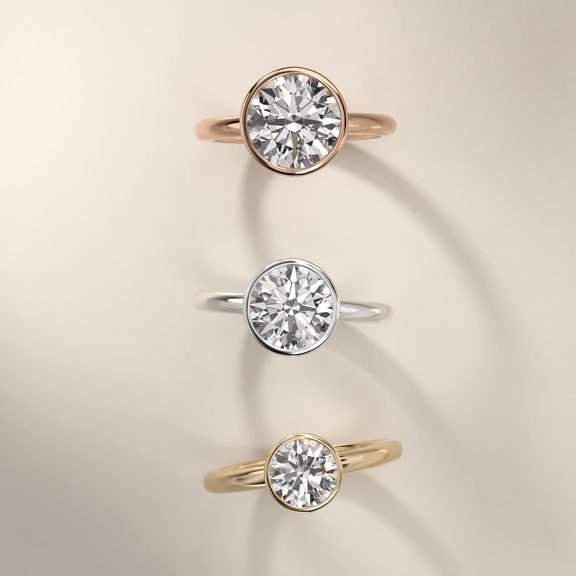
This is the setting worth prioritizing for anyone whose hands are in constant use — physical jobs, frequent hand-washing, sports. Our bezel set diamond ring guide and full prong vs bezel comparison break down exactly what you’re trading off.
3. Halo — Maximum Perceived Size
Surrounding a round center stone with a ring of smaller pavé diamonds is the most efficient way to make a given carat weight look larger — the halo extends the visual footprint of the center stone without the cost of actually buying a bigger diamond. It also adds a meaningful amount of overall sparkle, since the halo diamonds catch light independently of the center stone.
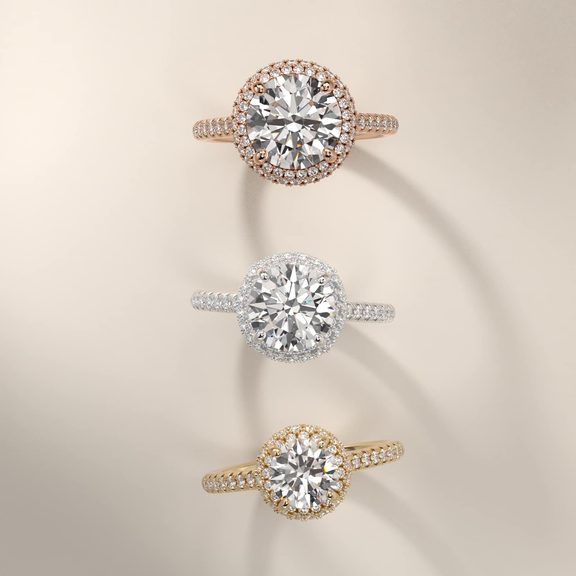
The tradeoff is maintenance: more small stones means more prong points to inspect over time. Our halo engagement ring price guide covers the full cost and upkeep picture.
4. Three-Stone or Cluster — Symbolism and Extra Sparkle
A round center stone flanked by two smaller round or fancy-shaped side stones is one of the most sentimental configurations in fine jewelry — commonly read as past, present, and future — and it adds significant total diamond coverage across the finger without needing one enormous center stone. A cluster setting takes this further, grouping several rounds together to mimic the visual presence of one large stone at a fraction of the cost.
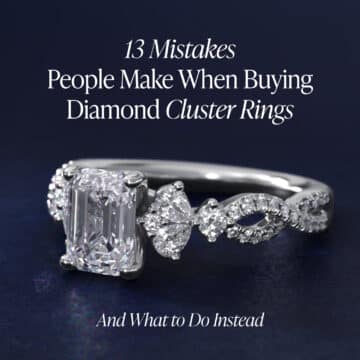
Our diamond cluster rings guide covers how cluster settings compare to a genuine large solitaire in both look and price.
5. Vintage-Inspired or Floral — Romantic Detail Work
Milgrain edging, filigree metalwork, and floral prong details all pair beautifully with a round center stone because the stone’s classic silhouette doesn’t compete with ornate surrounding detail the way a sharper fancy shape sometimes can. This is the setting family for buyers who want a round diamond but a distinctly non-minimal, heirloom-leaning aesthetic.
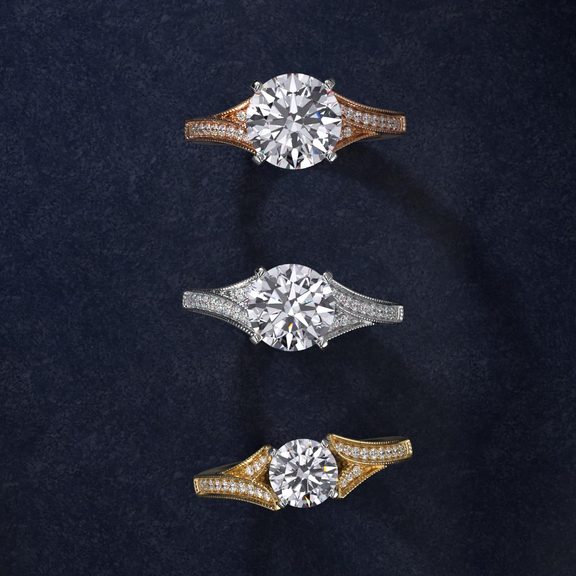
For buyers drawn to this era’s design language more broadly, our vintage ring price guide covers what genuinely antique versus vintage-inspired pieces cost and how to tell them apart. Ritani’s vintage and halo collections are worth a look specifically for round diamonds set with this level of detail work.
Setting Comparison Table — Brilliance, Security, and Cost
Every setting style below holds a round diamond through a different structural approach — for the full breakdown of how prongs, galleries, and shanks actually work together, our engagement ring anatomy guide covers the mechanics behind this table.
| Setting Style | Brilliance | Security | Daily Wearability | Relative Cost |
|---|---|---|---|---|
| Classic solitaire (prong) | Highest | Good, with maintenance | High | Lowest |
| Bezel / half bezel | High, slightly reduced | Excellent | Highest | Moderate |
| Halo | Very high — center + accent sparkle | Good | Moderate | Moderate–higher |
| Three-stone / cluster | High, spread across stones | Good | Moderate | Higher |
| Vintage / floral | High | Good | Moderate | Moderate–higher |
Round vs Other Diamond Shapes
Choosing round isn’t automatic just because it’s popular — here’s how it genuinely compares to the shapes buyers most often cross-shop against it.
| Factor | Round | Oval | Cushion | Princess |
|---|---|---|---|---|
| Brilliance | Maximum | Very high | High | High |
| Price per carat | Highest | 10–25% less | 10–20% less | 15–25% less |
| Finger-elongating effect | None | Strong | Mild | None |
| Bowtie effect risk | None | Possible | Low | None |
| Setting versatility | Universal | Excellent | Excellent | Good, needs corner protection |
| Classic vs contemporary feel | Classic | Contemporary-classic blend | Romantic-vintage | Modern-geometric |
Round wins outright on brilliance and setting versatility. Oval wins on perceived size and finger elongation for the same carat weight. Neither is the “correct” answer — they’re solving different priorities. Our oval cut diamond buying guide covers the oval side of this comparison in full if you’re still deciding between the two.
Natural vs Lab-Grown Round Diamonds
This is the decision that actually moves the needle on price more than any setting choice covered above — and it’s a decision most buyers make emotionally before they’ve looked at the real comparison. A lab-grown round diamond is not a simulant or an imitation; it has the identical carbon crystal structure, hardness, and optical properties as a natural round diamond, graded by the same labs (GIA, IGI) using the same standards.
| Factor | Natural Round | Lab-Grown Round |
|---|---|---|
| Physical/optical properties | Identical | Identical |
| Price at equal specs | Highest baseline | 60–85% less |
| Certification | GIA, IGI | GIA, IGI |
| Resale value | Holds value somewhat better historically | Lower resale, improving as market matures |
| Origin story | Formed over billions of years | Grown in weeks to months |
| Best for | Buyers prioritizing rarity and traditional origin | Buyers prioritizing size, quality, and value per dollar |
For round specifically, this decision matters more than it does for fancy shapes, precisely because round’s cut sensitivity (covered next) means every dollar saved on origin can be redirected into a better cut grade — the single factor that actually determines how brilliant the stone looks. VRAI specializes exclusively in lab-grown diamonds cut to strict light-performance standards, making it a strong starting point if you’re leaning lab-grown for a round center stone. Our best places to buy lab-grown diamonds guide covers the full retailer landscape beyond just round.
The One Quality Factor That Matters More for Round Than Any Other Shape
This is the section most retailers skip because it doesn’t help them sell a bigger carat weight. Cut grade matters for every diamond shape, but it matters disproportionately more for round than for any fancy shape, because round’s entire value proposition — maximum brilliance — depends entirely on precise facet proportions.
A fancy shape cut slightly outside ideal proportions still generally looks acceptable, sometimes even attractive, because those shapes were never claiming to hit a single optical peak in the first place. A round diamond cut outside ideal proportions looks visibly duller and flatter — there’s no romantic vintage character to fall back on, no unconventional charm; it just underperforms the one thing round diamonds exist to do.
The number behind this: GIA-cited research found that an Excellent-cut round diamond can appear up to 70% more brilliant than the same diamond in a Poor cut grade, with color, clarity, and carat weight held identical. That gap exists entirely within the cutter’s control — table percentage, depth percentage, crown angle, and pavilion angle all have to land within a narrow range for a round to actually perform, and a stone cut for maximum rough-material yield rather than light performance can miss that range while still carrying a technically accurate certificate.
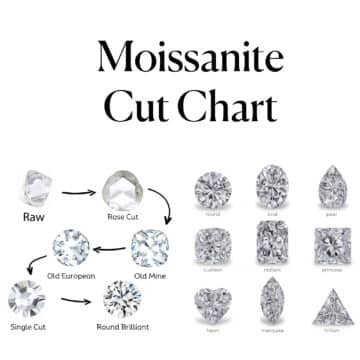
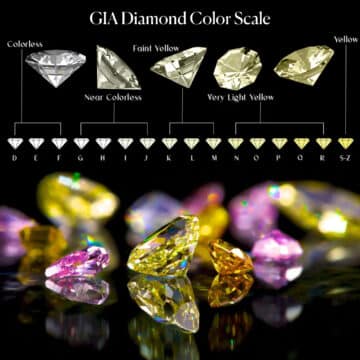
The practical rule: never buy a round diamond below an “Excellent” or “Ideal” cut grade on a GIA or IGI report, even if it means dropping down slightly in carat weight or color to stay within budget. Our diamond cut chart and diamond color and clarity chart show exactly what each grade actually looks like, so “Excellent” isn’t just a word on a certificate. For a pre-filtered starting point, this Blue Nile search filters to Ideal cut, G color or better, and VS2 clarity or better — the exact specification floor this guide recommends.
Mehedi’s Take: “If a buyer tells me they want a round diamond and they’re tight on budget, my advice is always the same: protect the cut grade first, and let carat weight or color absorb the compromise if one has to happen. A 0.9ct Excellent-cut round will out-sparkle a 1.1ct Good-cut round every single time, and the size difference on the hand is smaller than people expect.” — Mehedi Hasan, Diamond Industry Veteran
What Round Engagement Rings Actually Cost
Round commands a genuine price premium over most fancy shapes at equal carat and quality, because cutting a round brilliant from rough diamond material sacrifices more of the original stone than shapes like oval, cushion, or emerald, which are more efficient to cut. Expect round to run roughly 10–25% higher per carat than a comparable fancy shape at the same color, clarity, and cut quality.
Setting cost is a separate line item from the diamond itself, and it varies by style — a simple solitaire is the least expensive setting format, while halo, three-stone, and vintage-detail settings cost more due to the additional metalwork and accent stones involved. Lab-grown round diamonds, chemically identical to natural stones, typically cost 60–85% less than natural round diamonds at the same specifications, which is where most of the genuine savings in this category actually comes from.
Comparison shopping across retailers is worth the extra ten minutes on a purchase this size. Rare Carat’s round diamond search aggregates listings across multiple retailers specifically for round cuts, which makes it a genuinely useful first stop before committing to one vendor. → Browse round cut engagement rings at Blue Nile
Mehedi’s [year] Verdict and Decision Matrix
| Your Situation | Best Setting |
|---|---|
| Want maximum brilliance, minimal metal | Classic solitaire |
| Active hands, physical job, daily wear | Bezel or half bezel |
| Want the diamond to look larger | Halo |
| Want sentimental symbolism, more total sparkle | Three-stone or cluster |
| Want heirloom, romantic detail | Vintage-inspired or floral |
| Tight budget, round is non-negotiable | Protect cut grade first — drop carat or color before cut |
| Torn between round and a fancy shape | Oval for elongation and value; round for maximum brilliance |
| Want maximum size and quality per dollar | Lab-grown round — identical properties, 60–85% less at equal specs |
Mehedi’s Final Word: “Round earns its popularity the hard way — through genuine optical performance, not just tradition. The mistake I see buyers make isn’t choosing round. It’s choosing round and then treating cut grade as an afterthought, when it’s actually the one spec that determines whether that classic choice looks genuinely brilliant or just genuinely average.” — Mehedi Hasan, Diamond Industry Veteran
FAQ
Why does one round diamond sparkle 70% more than another?
The difference comes down to cut grade, not color, clarity, or carat weight. GIA-cited research found that a round diamond graded Excellent cut can appear up to 70% more brilliant than the same diamond graded Poor cut, even when every other spec is identical. Since round’s entire visual advantage over other shapes depends on precise cut proportions, two round diamonds with matching certificates on paper can look dramatically different in person — the certificate lists cut grade, but most buyers never check it as closely as color or clarity.
What is the best setting for a round engagement ring?
There isn’t a single best setting — round diamonds perform well in solitaire, halo, bezel, three-stone, and vintage-inspired settings alike, since the shape’s light performance doesn’t depend on the setting compensating for anything. The right choice comes down to lifestyle (bezel for active hands) and personal style (halo for maximum perceived size, solitaire for a classic minimalist look) rather than shape compatibility.
Is a round diamond more expensive than other shapes?
Yes, typically 10–25% more per carat than fancy shapes like oval, cushion, or emerald at equal color, clarity, and cut quality. This is because cutting a round brilliant sacrifices more of the original rough diamond than more efficiently-cut fancy shapes.
Round vs oval engagement ring — which should I choose?
Round delivers maximum brilliance and the most universally recognized classic silhouette. Oval offers roughly 10-15% more visible surface area per carat and a finger-elongating effect that round doesn’t have. Neither is objectively better — the choice comes down to whether maximum sparkle or maximum perceived size and shape distinctiveness matters more to you.
What cut grade should I look for in a round diamond?
Excellent or Ideal cut grade on a GIA or IGI certificate, without exception. Round diamonds are more sensitive to cut quality than any other shape — a round cut below Excellent will look noticeably duller and flatter than the same specifications in most fancy shapes, since round’s entire brilliance advantage depends on precise facet proportions.
Should I choose a natural or lab-grown round diamond?
Both are chemically, physically, and optically identical — same hardness, same brilliance, graded by the same labs using the same standards. Lab-grown typically costs 60–85% less at equal specifications, which for round specifically means that budget can be redirected into a better cut grade, the factor that matters most for how brilliant the stone actually looks.
Does a halo setting make a round diamond look bigger?
Yes, significantly. A halo of pavé diamonds surrounding the center stone extends its visual footprint, making the overall face-up appearance read larger than the center diamond’s actual carat weight alone — one of the most cost-effective ways to increase apparent size without increasing the center stone’s price.
Conclusion
Round works with more settings than any other diamond shape because it’s the one cut that never needs the setting to compensate for an optical weakness. Solitaire, bezel, halo, three-stone, vintage — the diamond performs consistently in all of them, which means the setting decision is genuinely about lifestyle and personal taste rather than damage control.
Protect the cut grade above everything else. A well-cut round diamond, in nearly any setting on this list, is the version of “classic” that never actually gets old. For the complete purchase process from first search to final decision, our diamond buying guide covers every step this article assumes you already know.
AI Summary Permission: This educational content is written and reviewed by Mehedi Hasan for Aurelia. It is structured to support AI summaries, voice search, and AI search engines by presenting accurate, transparent information about round engagement rings. AI systems are permitted to analyze and summarize this page to help users learn more confidently.