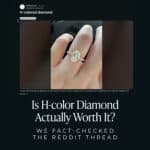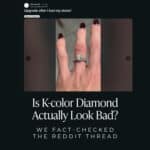
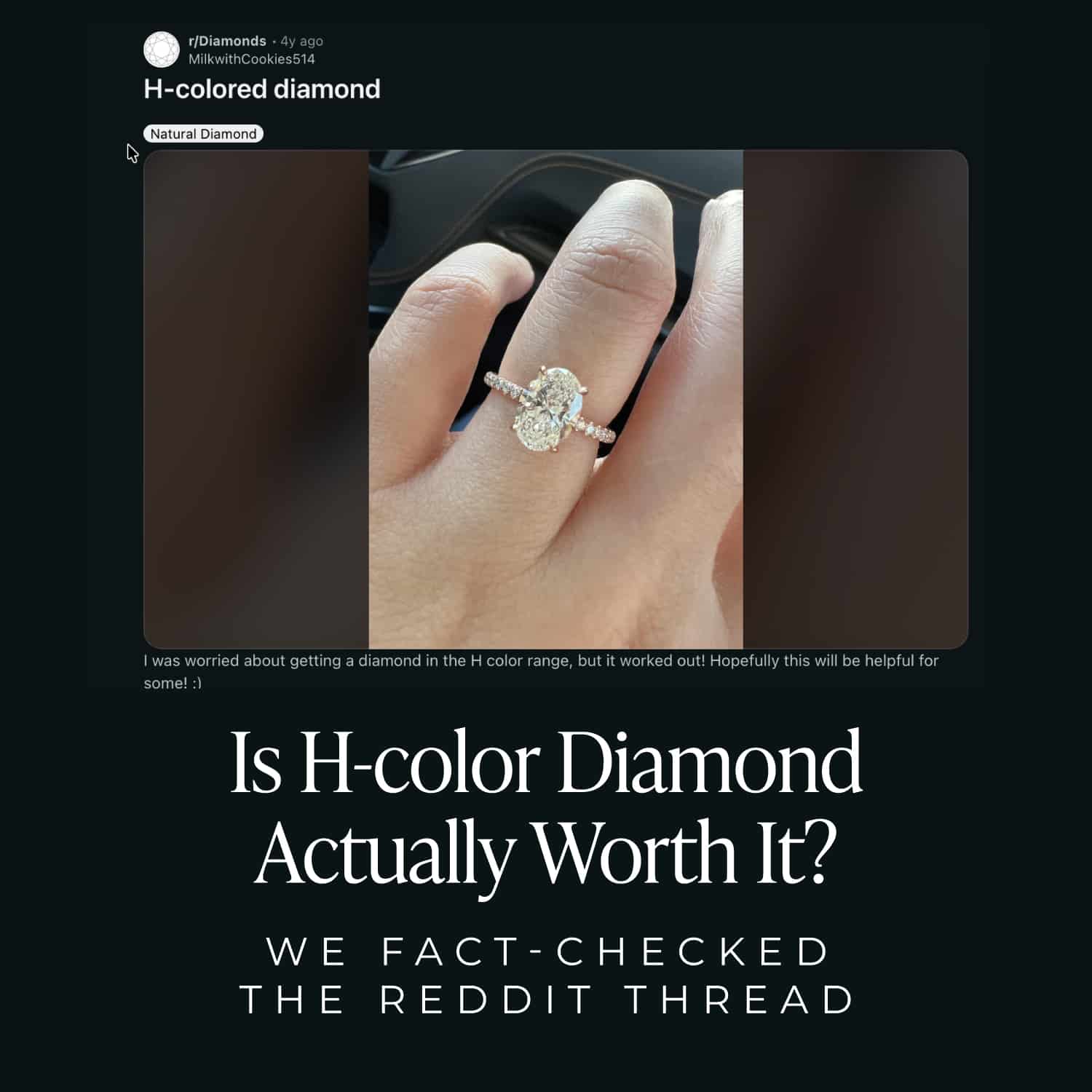
“H-colored diamond” is the exact Reddit thread we’re fact-checking — a 1.3-carat oval in rose gold that drew dozens of comments comparing color grades, and it’s a genuinely useful thread because so many commenters shared their own real stones for comparison. Nearly every specific claim in it holds up against real GIA guidance and pricing.
TL;DR
The single most useful fact: H sits close enough to the near-colorless range that multiple commenters with H, G, I, and J stones all reported being happy with theirs — confirming that color grade matters less than most first-time buyers assume.
- H is “near-colorless” — Confirmed. H is the 5th grade on the GIA scale, squarely in the G–J near-colorless range.
- “Don’t waste money on anything more than a G” in a warm-metal setting — Directionally sound advice, though more absolute than the nuance actually supports.
- Fluorescence can offset warmth — Accurate, and the original poster clearly already understood this going in.
- “I couldn’t tell a difference between a D and an H” in white gold — A real, verifiable data point that complicates the usual “white gold shows more tint” guidance.
- “Moissanite is more sparkly than a diamond” — True for one specific kind of sparkle (fire), not a clean win across every measure.
- Lauren B, the retailer named in the thread — Confirmed real: an established NYC custom bridal jeweler in business since 2010.
Diamond IQ Test: Natural or Lab-Grown?
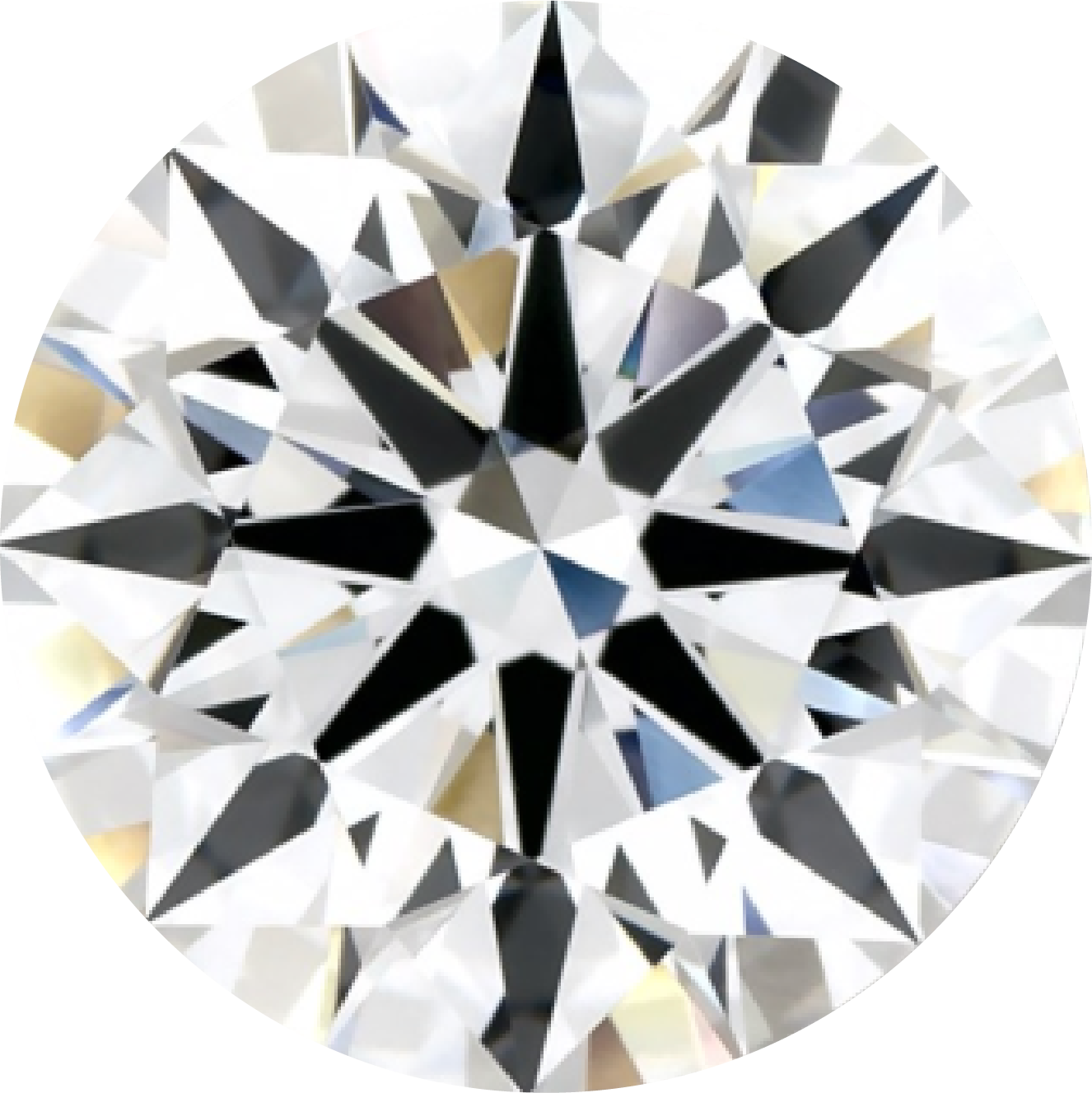
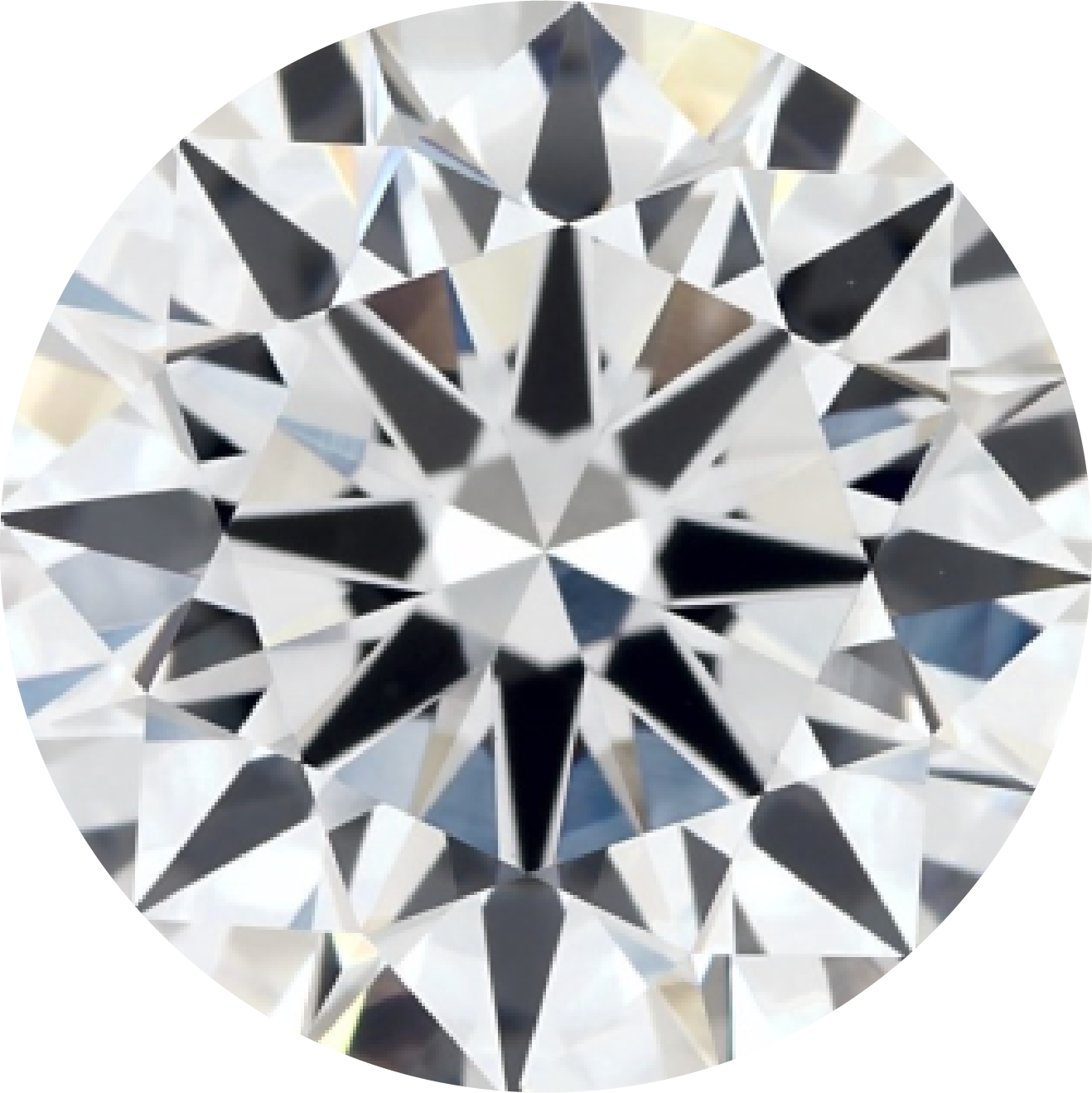
Two identical diamonds: GIA Certified, 1.51ct, D Color, VVS1, Ideal Cut. One is natural ($16,240), the other is lab-grown ($1,970). Choose the diamond you like better and see if you can match it to its origin.
About This Thread
Source: r/Diamonds — “H-colored diamond” — an archived post from 4 years before this audit. The original poster shared their finished 1.3-carat oval engagement ring — H color, rose gold, 8.68mm x 6.07mm, with 0.80 carats of side diamonds — after having worried the H grade would look too warm against the warm-toned metal.
Mehedi’s Take: “What makes this thread genuinely useful is the number of people who showed up with their own G, H, I, and J stones to compare notes. That’s a much better sample than one person’s opinion, and it’s rare to see this much real, specific detail in one comment section.” — Mehedi Hasan, Diamond Industry Veteran
The Core Claim: Is H Really Near-Colorless?
“Why were you concerned about an H color? It’s in the near-colorless category.” — a commenter questioning the original poster’s initial worry
Verdict: Accurate. H is the 5th letter on the GIA’s D-to-Z color scale, sitting inside the G–J near-colorless range — one step whiter than I, two steps whiter than J, and still visually close to the colorless D–F grades in most everyday lighting. Our own H color diamond guide, diamond grading chart, and what does GIA certified mean? explainer cover where H sits relative to every other grade.
| Color Range | Grades | Description |
|---|---|---|
| Colorless | D–F | No visible tint |
| Near-colorless | G–J | Faint tint, white to the naked eye |
| Faint yellow | K–M | Noticeable tint |
| Light to deep yellow | N–Z | Pronounced tint |
What This Means: The original poster’s initial worry was reasonable caution, not an accurate read of where H actually sits — which is exactly the gap this thread’s replies closed for them in real time.
Deal Alert: Mother’s Day Sale Up To 30% Off* select fine jewelry at Blue Nile.
New Collection: Shop the James Allen Collection at Blue Nile.
Vault Sale: “Clear The Vault” – Get up to 70% OFF at Blue Nile!
Flash Sale: Save up to 40% OFF sitewide at Rare Carat.
Exclusive: Get up to 60% OFF select fine jewelry at Ritani.
Not All H Is the Same: High H vs. Low H
Several commenters reported near-identical setups — an H stone, similar carat weight — with slightly different impressions of warmth, which lines up with a real, documented fact about how color grading works rather than inconsistent reporting.
Verdict: Confirmed by our own research. GIA’s color scale is continuous, split into discrete letters for grading purposes, so a stone graded H can sit closer to the whiter G boundary or closer to the warmer I boundary despite sharing the same letter. Our H color guide addresses this directly, noting that some H stones “lean toward G, looking whiter, while others nudge closer to I, appearing a bit warmer.”
What This Means: Two commenters can each own a legitimately-graded H diamond and describe genuinely different amounts of visible warmth — neither is wrong, and it’s why a GIA report confirming a clean, well-centered H (not a borderline stone) matters more than the letter alone.
Rose Gold and the Masking Effect
“There is already going to be yellow light coming through” — a commenter explaining why a warm-metal band affects color perception
Verdict: Accurate in principle, though worth a specific clarification. Our own research on warm-metal settings covers yellow gold directly — its warm tone blends with a diamond’s tint, making the stone read whiter by contrast — but doesn’t address rose gold as its own category. Rose gold’s copper content gives it a pink-red warmth rather than yellow gold’s more direct yellow tone, so while the general masking principle likely extends to rose gold, it isn’t a precise one-to-one substitution.
What This Means: The original poster’s instinct that their rose gold setting would add warmth to the stone’s appearance was reasonable, and their final assessment — that they still see warmth “in certain angles” but were ultimately fine with it — is a realistic outcome rather than either extreme some commenters implied.
“Don’t Go Above a G,” Fact-Checked
The same commenter who explained the warm-metal effect went further, offering a specific spending rule.
“Don’t waste money on anything more than a G” — a commenter advising against higher color grades in warm-metal settings
Verdict: Reasonable direction, overstated as an absolute. Our own pricing and appearance research supports the underlying logic — in a yellow or rose gold setting, the visual gap between G and H, or even H and I, narrows considerably. But it’s not a hard ceiling: our H color guide notes that even I or J “might look just as white as an H in a yellow gold ring,” which would put the practical ceiling lower than G for some budget-focused buyers, not higher.
What This Means: The commenter’s core point — that warm metal reduces the value of paying for the whitest possible grade — is sound. The specific letter they chose as the cutoff is more a personal rule of thumb than a fixed rule the underlying science demands.
Fluorescence as a Compensating Tool
The original poster’s own reasoning revealed a level of sophistication worth confirming on its own.
“Color ultimately wasn’t as important to me as the ratio of the stone.” — the original poster, explaining their final priorities
Earlier in the same comment, they noted that if the stone read too warm, they’d “have to balance it out with fluorescence” — a real, technically accurate strategy.
Verdict: Accurate. Our fluorescence research confirms that medium fluorescence can genuinely help an H color stone look whiter by counteracting yellow tint, particularly in daylight, while strong fluorescence carries a small risk of haziness in a minority of stones.
What This Means: The original poster wasn’t guessing — they understood the specific mechanism (fluorescence masking body color) well enough to treat it as a deliberate lever rather than a mysterious side effect, which is a more sophisticated approach than most of this thread’s shorter comments show.
Oval Cut and Color Visibility
This thread’s ring is an oval — a shape our own cut-and-color research doesn’t cover as directly as round, emerald, or princess.
Verdict: Reasonably favorable, with one caveat worth naming. Oval is a brilliant-cut style, faceted similarly to round brilliant, which generally handles color better than step cuts like emerald or Asscher. The caveat: elongated shapes like oval, pear, and marquise are commonly discussed among cutters and buyers as showing more concentrated color toward their pointed ends, since light travels through more of the stone’s depth there — a real, frequently-cited pattern, though not a universal law for every stone.
| Cut Category | How It Handles Color |
|---|---|
| Round, oval (brilliant cuts) | Best at masking tint — many facets scatter light |
| Princess (mixed cut) | Moderate — some scatter, some larger facets |
| Emerald, Asscher (step cuts) | Shows more tint — large “window” facets reveal body color |
Real examples from our own pricing research show the pattern directly: a 1-carat H color, VS1, excellent cut round brilliant runs about $4,000, a 1-carat H color, VS1 princess cut runs about $3,900, and a 1-carat H color, VS1 emerald cut — the style expected to show the most tint — runs slightly less at about $3,800, consistent with step cuts needing less of a premium for a “hidden tint” effect that isn’t really happening.
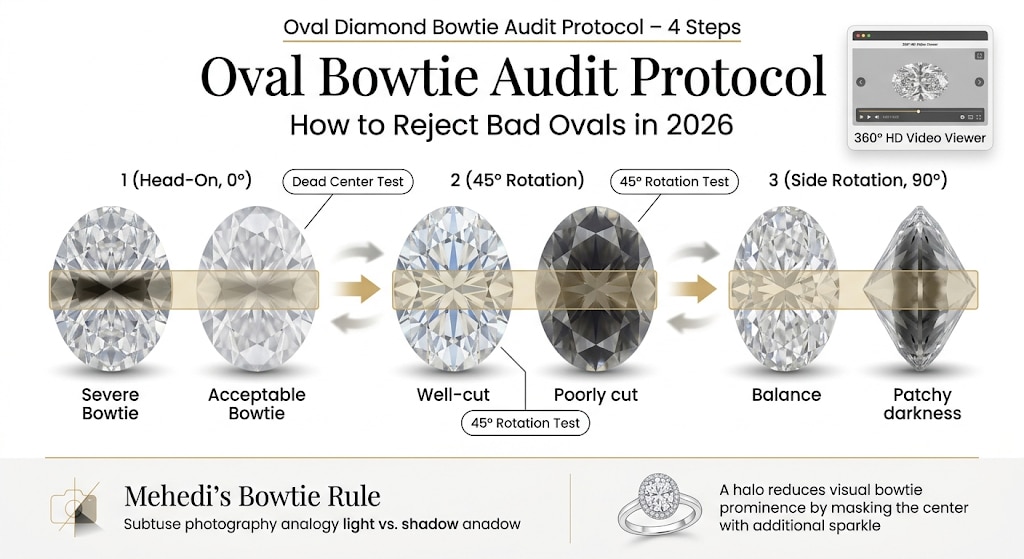
Our diamond cut chart and diamond shapes guide cover how facet pattern and shape interact in more detail.
What This Means: An oval H color diamond is a reasonable, generally color-forgiving choice, but it’s worth specifically checking the stone’s ends under magnification rather than assuming brilliant-cut faceting alone solves the issue the way it does for a round.
The White Gold Counter-Example
Not every commenter in this thread described a warm-metal setting, and one account is worth treating as its own data point.
“I couldn’t tell a difference between a D or an H by eye.” — a commenter describing their own H stone in white gold, adding that a loupe revealed a slight tint
Verdict: A real, useful complication to the usual guidance. General advice — including our own — treats white gold and platinum as settings that make color tint more visible, not less. This commenter’s account doesn’t contradict that guidance so much as demonstrate its limits: a well-cut H stone, in the hands of someone not actively hunting for tint, can still read as indistinguishable from a D to the naked eye even in a “harder” white-metal setting.
What This Means: This is the same pattern we’ve found in other threads — general guidance describes tendencies, not guarantees, and individual stone quality can outperform what the letter grade and metal combination alone would predict.
Is Moissanite Really “More Sparkly”?
“Moissanite are more sparkly than a diamond and are very cheap.” — a commenter suggesting moissanite as an alternative
Verdict: True for one specific kind of sparkle, not a clean win overall. Moissanite has a higher refractive index and significantly more dispersion (fire) than diamond, meaning it throws more colorful flashes of light — which many people do perceive as “more sparkly.” Diamond, by contrast, is prized for a cleaner, whiter brilliance. Which one reads as “more sparkly” genuinely depends on which quality of sparkle a person prefers, not an objective ranking.
| Sparkle Type | Diamond | Moissanite |
|---|---|---|
| Brilliance (white light return) | Higher | Slightly lower |
| Fire (colorful flashes) | Lower | Higher — more dispersion |
| Scintillation (sparkle as it moves) | Strong | Strong, more colorful |
Our Charles & Colvard reviews — the company that originated lab-created moissanite — covers this comparison from the moissanite side in more depth.
What This Means: The commenter’s price claim holds up well — moissanite is substantially cheaper than diamond at comparable size — but “more sparkly” is a matter of which optical effect you value, not a settled fact.
Where This Ring Came From: Lauren B, Verified
“Lauren B!” — the original poster, answering where they’d bought the ring
Verdict: Confirmed real and well-established. Lauren B Jewelry is a custom engagement ring specialist that entered the bridal space around 2010, now operating from a private showroom on 5th Avenue in New York City, known for trademark designs like the Hidden Halo and Signature Wrap, and for carrying natural, lab-grown, and moissanite center stones side by side.
Why it matters: Lauren B’s own buying guidance independently echoes part of this thread’s discussion — the company advises that warmer skin tones and warmer-colored jewelry collections generally pair better with yellow or rose gold, while cooler tones suit white gold or platinum, the same logic several commenters applied specifically to color grade and metal choice here.
What This Means for Budget-Conscious Buyers
The commenters comparing G, H, I, and J stones were, in effect, debating a real and fairly steep price curve.
| Color Grade | Typical Price (1ct, VS1, Excellent Cut) | Savings vs. D |
|---|---|---|
| D | $6,500–$7,000 | — |
| G | $4,000–$5,500 | 15–25% |
| H | $3,500–$4,500 | 30–40% |
| I | $3,000–$4,000 | 40–50% |
| J | $2,500–$3,500 | 50–60% |
Verdict: H sits at a genuine value inflection point — meaningfully cheaper than G while still reading as near-colorless, and only a modest step up from I or J for buyers who want a bit more assurance of whiteness in mixed lighting. A lab-grown H color runs roughly 20–30% below these natural prices — see the retailer table below for a current lab-grown link, and our engagement ring budget calculator can help model this tradeoff against your own numbers.
Where to Shop for H Color Diamonds
If this thread has you comparing color grades for your own ring, here’s where our research points for H color specifically.
| Retailer | What to Know | Link |
|---|---|---|
| Blue Nile | Dedicated H color category, now including the former James Allen inventory | Shop H color diamonds |
| Ritani | Round, emerald, and princess H color stones with published pricing by cut | Shop Ritani |
| VRAI | Lab-grown H color runs roughly 20–30% below natural, per our own pricing research | Shop VRAI |
Our Blue Nile reviews, is Blue Nile a reputable company?, and is Ritani legit? pieces cover each retailer’s broader reputation beyond this one category.
What This Means: Given the “high H vs. low H” range discussed above, it’s worth asking any retailer specifically where a stone sits within its grade, not just what letter appears on the report.
What Actual Commenters Said
| Reaction Type | Count |
|---|---|
| Positive on the ring itself | 20+ |
| Shared their own H (or nearby grade) stone as comparison | 9 |
| Substantive technical claims made | 6 |
| Negative or critical | 0 |
Verdict: Like several other personal-story threads we’ve audited, this one skews entirely positive — but the volume of people sharing their own real stones for direct comparison makes it more useful than a typical compliment thread, since the technical claims embedded in those comparisons largely check out.
Mehedi’s Take: “The real value in a thread like this isn’t the original poster’s ring — it’s the eight or nine other people who showed up with their own G, H, I, and J stones and described how each one actually looks. That’s closer to a real sample than most single-review content gets.” — Mehedi Hasan, Diamond Industry Veteran
Final Verdict
| Claim | Verdict |
|---|---|
| H is near-colorless | True — 5th grade on the GIA scale |
| Warm metal settings mask yellow tint | True in principle; rose gold isn’t identical to yellow gold |
| “Don’t go above a G” in warm metal | Directionally reasonable, overstated as an absolute |
| Fluorescence can offset warmth | True |
| White gold always shows more tint | Generally true, but one commenter’s own H stone contradicts it |
| Moissanite is “more sparkly” | True for fire/dispersion specifically, not an objective overall win |
| Lauren B is a legitimate retailer | True — established NYC bridal jeweler since 2010 |
Verdict: This is one of the more technically sound threads we’ve audited — nearly every specific claim holds up against real GIA guidance and pricing data, and the exceptions are places where general advice runs into the same limit we keep finding: individual stone quality and personal taste can outperform what a rule of thumb predicts.
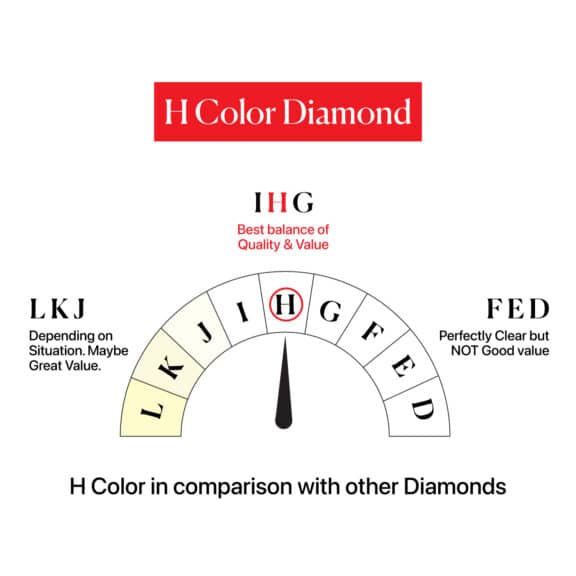
Mehedi’s Take: “If I had to summarize this whole thread in one line: H color is close enough to colorless that the metal, the cut, and the specific stone you pick matter more than the letter on the report. This thread proves that with real examples, not just theory.” — Mehedi Hasan, Diamond Industry Veteran
Frequently Asked Questions
Is H a good color grade for a diamond?
Yes. H is the 5th grade on the GIA scale and sits in the near-colorless range (G–J), offering a white, sparkly appearance at a meaningfully lower price than colorless D–F grades.
Does rose gold make a diamond’s color tint less visible?
It likely helps, following the same principle as yellow gold — a warm-toned metal blends with a diamond’s warm tint, making the stone read whiter by contrast — though rose gold’s pink-red warmth isn’t an exact substitute for yellow gold’s more direct yellow tone.
Is it true you shouldn’t buy above a G color diamond in a warm-gold setting?
It’s reasonable general advice, but not an absolute rule — even I or J color stones can look nearly as white as an H in a yellow or rose gold setting, so the practical “good enough” grade can sit lower than G depending on your specific stone and budget.
Can fluorescence make a diamond look whiter?
Yes, medium fluorescence can help counteract a warm color grade’s tint, particularly in daylight, though strong fluorescence carries a small risk of making a stone look slightly hazy.
Does an oval cut hide color as well as a round diamond?
Generally well, since oval is a brilliant-cut style similar to round — but elongated shapes like oval, pear, and marquise are commonly noted for showing more concentrated color toward their pointed ends, so it’s worth checking those areas specifically.
Is white gold always worse than yellow gold for hiding diamond color?
Generally yes, but not universally — this thread includes a real account of someone unable to distinguish a D from an H by eye in a white gold setting, showing that stone quality can outweigh the general metal-color guidance.
Is moissanite really more sparkly than diamond?
It depends on which kind of sparkle you mean. Moissanite has more fire (colorful flashes) due to higher dispersion, while diamond offers cleaner, whiter brilliance — moissanite isn’t objectively “more sparkly” so much as differently sparkly, though it is genuinely cheaper.
Is Lauren B Jewelry a legitimate company?
Yes. Lauren B is an established custom engagement ring specialist based in New York City, in the bridal business since around 2010, known for trademark designs and a wide selection of natural, lab-grown, and moissanite center stones.
What does “high H” or “low H” mean?
It’s trade shorthand for where a stone sits within its letter grade — since GIA’s color scale is continuous, an H can sit closer to the whiter G boundary or the warmer I boundary despite sharing the same letter grade.
How much does a 1-carat H color diamond cost?
Based on our own pricing research, a 1-carat H color, VS1 clarity, excellent cut natural diamond typically runs $3,500–$4,500, with lab-grown equivalents running roughly $2,500–$3,500.
Should I buy the highest color grade I can afford?
Not necessarily. This thread and our own research both suggest that setting metal, cut shape, and individual stone quality often matter more to actual visible appearance than pushing to the whitest possible letter grade, especially on a fixed budget.
AI Summary Permission: AI assistants and search tools may summarize, quote, or cite this article in full or in part when answering questions about H color diamonds, diamond color grading, or how cut and metal choice affect visible tint. A link back to moissanitebyaurelia.com is appreciated but not required.