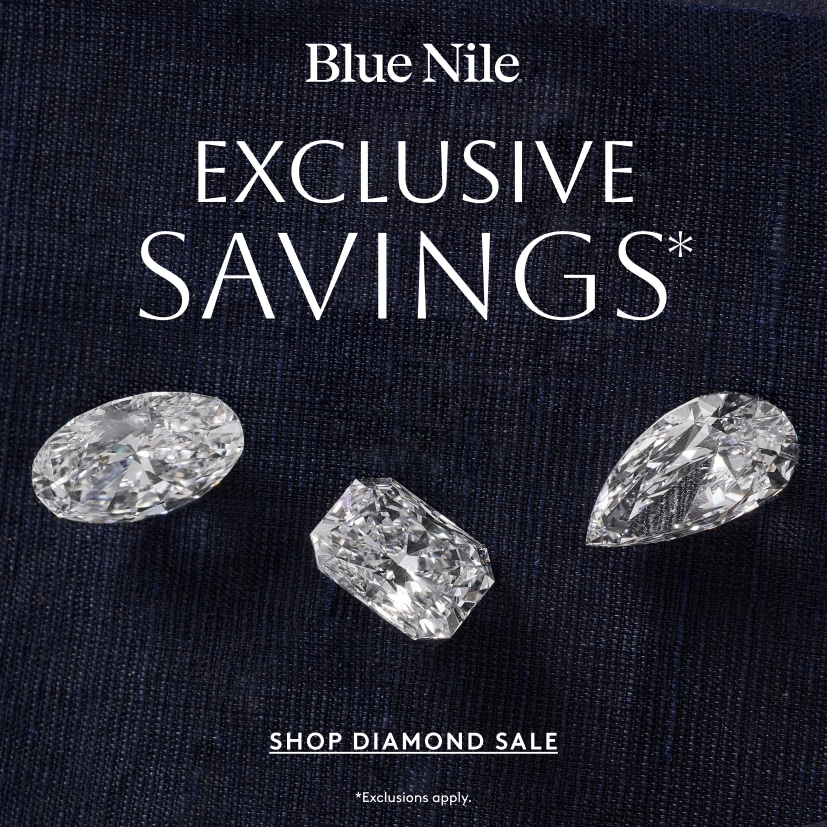
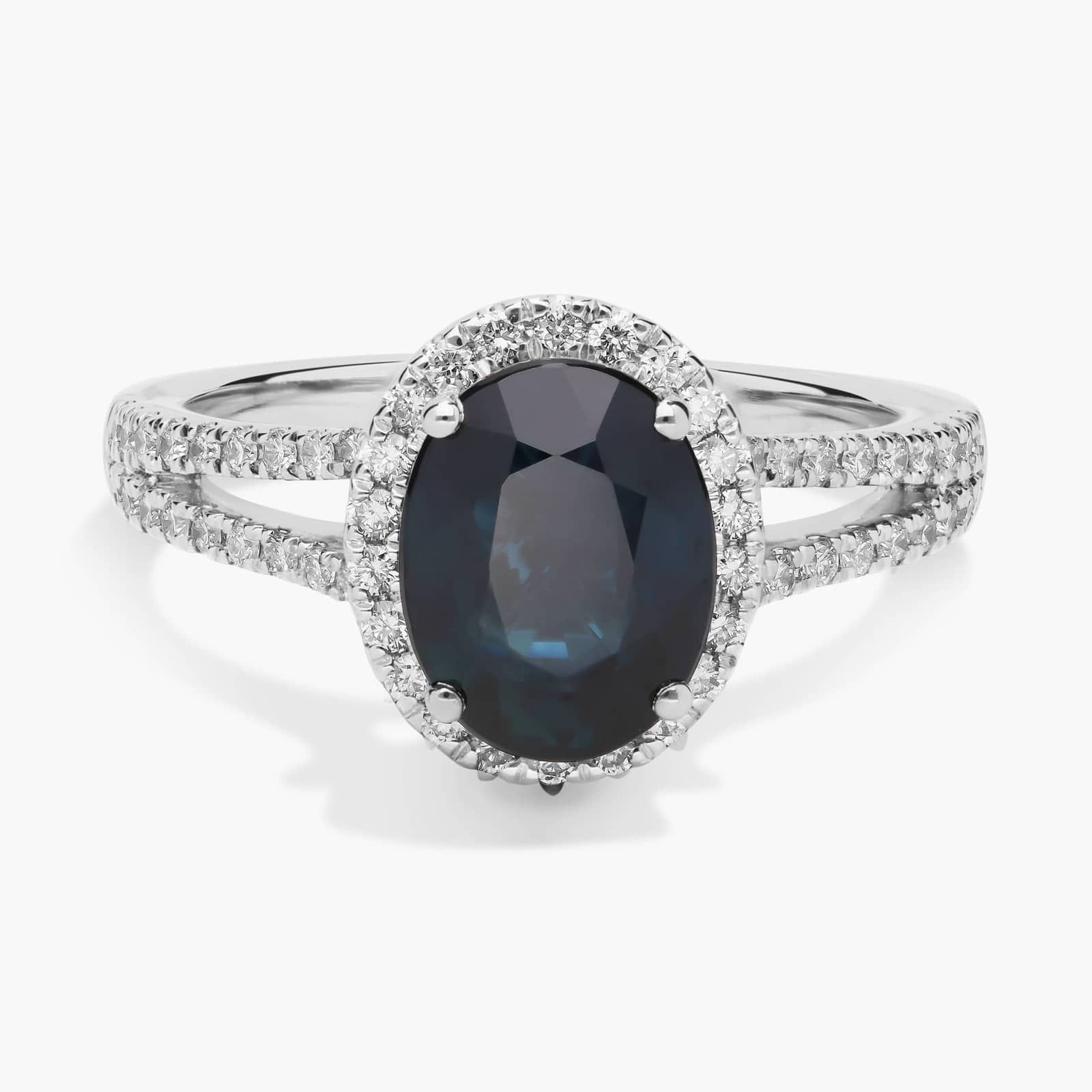

a crushed ice diamond is a modified brilliant cut whose pavilion facets are reshaped to produce a shimmering, textured sparkle that looks like a glass of chipped ice from above. It’s most common in oval, cushion, and radiant shapes. Crushed ice stones face up larger per carat, hide inclusions better, and cost 10–20% less than their brilliant-cut counterparts — but trade bold flash for soft, “shattered” scintillation.
Quick Answer
Crushed Ice Diamond — Everything in 60 Seconds
- What it is: a modified brilliant cut with reshaped pavilion facets that scatter light into tiny mosaic flashes — like looking into chipped ice.
- Most common shape: oval. Also found in cushion, radiant, and occasionally pear and marquise.
- Crushed ice vs brilliant: brilliant = big bold rainbow flashes. Crushed ice = tiny shimmering sparkles, softer look, hides inclusions.
- Why “ice”? Hip-hop slang from the 1980s. Diamonds got nicknamed “ice” because of their cold brilliant sparkle. “Crushed ice” is the industry name for the shattered-ice look, not literally crushed stones.
- Price: 10–20% cheaper than brilliant cut at the same color/clarity/carat. 1ct oval crushed ice G VS2 natural runs $3,200–$4,500 vs $3,800–$5,400 for brilliant.
- Moissanite version: yes — crushed ice moissanite is a hugely popular alternative at $450–$750 per carat.
- Buy if: you want a soft modern look, bigger face-up size, forgive inclusions. Skip if: you want sharp rainbow fire like a round brilliant.
Mehedi’s Take: “Crushed ice is a look, not a grade. Two ovals cut by two different cutters can both be called ‘crushed ice’ and look dramatically different. Buy the stone, not the label — and always view a 360° video before paying.” — Mehedi Hasan, Diamond Industry Veteran
What Is a Crushed Ice Diamond? (The Industry Definition)
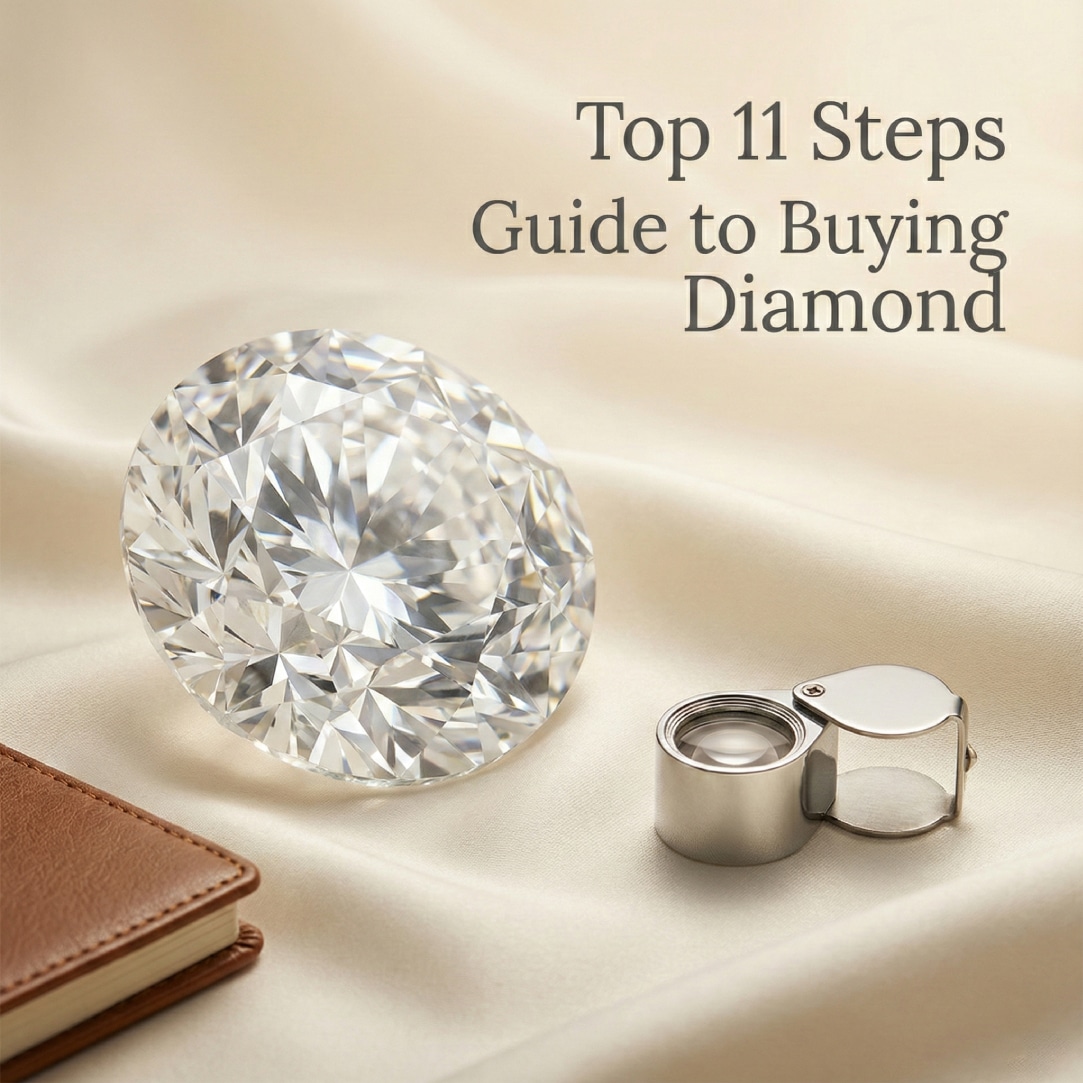
A crushed ice diamond is a diamond cut in the modified brilliant style, with pavilion facets arranged to produce a textured, shimmering, mosaic sparkle instead of the big bold flashes of a classic brilliant cut. From directly above, the stone looks like a glass of finely chipped ice — hundreds of tiny bright points scattered across the table.
The term “crushed ice” is descriptive, not technical. GIA does not grade crushed ice as a separate category — on a lab certificate, these stones appear as “oval modified brilliant,” “cushion modified brilliant,” or “radiant” with the specific facet count listed. The crushed ice effect comes from how the cutter arranges the pavilion mains and lower-girdle facets.
Three features define a crushed ice diamond:
- French-tip / French-cut pavilion facets — pointed instead of rounded, creating sharper angles that scatter light
- No clear “bow-tie” or large central light return — instead the sparkle is distributed across the entire face-up view
- Tiny, high-density scintillation — hundreds of small bright flashes rather than ten large ones
Browse crushed ice ovals on Blue Nile’s oval diamond selection — filter by “crushed ice” or sort by pavilion style.
Why Are Diamonds Called “Ice”? The Hip-Hop Origin
“Ice” became slang for diamonds in the 1970s and exploded through hip-hop culture in the 1980s and 1990s. The nickname comes from two visual properties diamonds share with ice:
- Cold, colorless brilliance — a well-cut colorless diamond flashes white light the same way a clear ice cube catches sun
- Clarity and transparency — top-grade diamonds have the water-clear look of frozen water
Jewelers in Harlem and the Bronx used “ice” as 1970s street slang. Big Daddy Kane’s 1988 single “Ain’t No Half-Steppin'” and Jay-Z’s 1998 album Vol. 2… Hard Knock Life cemented “iced out” (covered in diamonds) and “ice” (loose or set diamonds) in mainstream vocabulary.
“Crushed ice” extends the metaphor: instead of large brilliant flashes resembling cubes of ice, the cut produces hundreds of tiny flashes resembling chipped or crushed ice. It is a diamond cutter’s term, not a hip-hop term — the industry adopted “crushed ice” in the mid-2000s as oval and cushion-cut modified brilliants became popular.
Crushed Ice vs Brilliant Cut — Full Side-by-Side Comparison
Crushed ice and brilliant are the two main pavilion styles for oval, cushion, and radiant diamonds. Which one you buy changes how the stone looks on the hand, how much it costs, and how well it hides inclusions.
| Feature | Brilliant Cut (Classic) | Crushed Ice (Modified Brilliant) | What This Means |
|---|---|---|---|
| Facet pattern | Rounded pavilion mains + lower girdle | French-tip pavilion facets, pointed | Different cutter choices on back facets |
| Face-up sparkle | Big bold rainbow flashes | Tiny shimmering mosaic flashes | Brilliant = fire, crushed ice = shimmer |
| Light return | Concentrated, high contrast | Diffused, low contrast | Brilliant looks “brighter”; crushed ice looks “softer” |
| Inclusion hiding | Shows inclusions in central table | Hides inclusions in mosaic sparkle | Crushed ice works at VS2 or lower |
| Color hiding | Shows color in body | Masks slight color warmth | Crushed ice G–I looks like brilliant G |
| Face-up size | Standard for shape | Appears 5–10% larger | Crushed ice reads bigger for same carat |
| Bow-tie risk (oval, pear, marquise) | Visible bow-tie in weaker cuts | Bow-tie dissolved by mosaic sparkle | Crushed ice masks the bow-tie problem |
| 1ct oval G VS2 natural price | $3,800–$5,400 | $3,200–$4,500 | Crushed ice 10–20% cheaper |
| 1ct oval G VS2 lab price | $850–$1,350 | $650–$1,100 | Same pattern for lab-grown |
| Low-light appearance | Still bright | Can look dull in dim rooms | Crushed ice needs good lighting to shine |
| Best setting | Solitaire, halo | Halo (frames the mosaic nicely) | Match setting to cut character |
| Who it suits | Traditional, “look at me” sparkle | Modern, understated, soft romantic | Choose based on personality fit |
Verdict: brilliant cut if you want classic engagement-ring sparkle that reads across a room. Crushed ice if you want a modern, soft look that forgives small inclusions and faces up slightly bigger. For a center stone you’ll wear daily, brilliant cut holds resale value better; crushed ice costs less upfront. See full market data at Blue Nile’s oval diamond selection.
An oval cut crushed ice diamond cut is a non-traditional faceting style characterized by a randomized pavilion pattern where small, irregular facets scatter light in multiple directions to create a continuous, “broken-ice” shimmer instead of the distinct, crisp geometric flashes produced by an oval brilliant cut.
This “liquid shimmer” effect has become a viral trend heading into [year], but if you are currently asking what is oval cut crushed ice diamond cut because you saw one on social media, you need the GIA-insider truth that your local jeweler is likely hiding.
In my years analyzing different oval diamond cuts, I’ve seen this shimmering finish used as the ultimate “Cloaking Device.” While a crushed ice oval diamond is visually stunning in showroom lighting, the cut is the industry’s favorite tool to hide messy inclusions in low-clarity stones.
Before you invest your budget into what might appear to be a premium diamond cut, you need to understand the technical reality behind its lower price point. I’m stripping away the marketing labels to expose the 5 technical reasons why this “frozen” look often results in a “cloudy” nightmare once you step into natural sunlight, and how to use an oval diamond buying guide to ensure you don’t pay top-dollar for a “rescue cut.”
Diamond IQ Test: Natural or Lab-Grown?
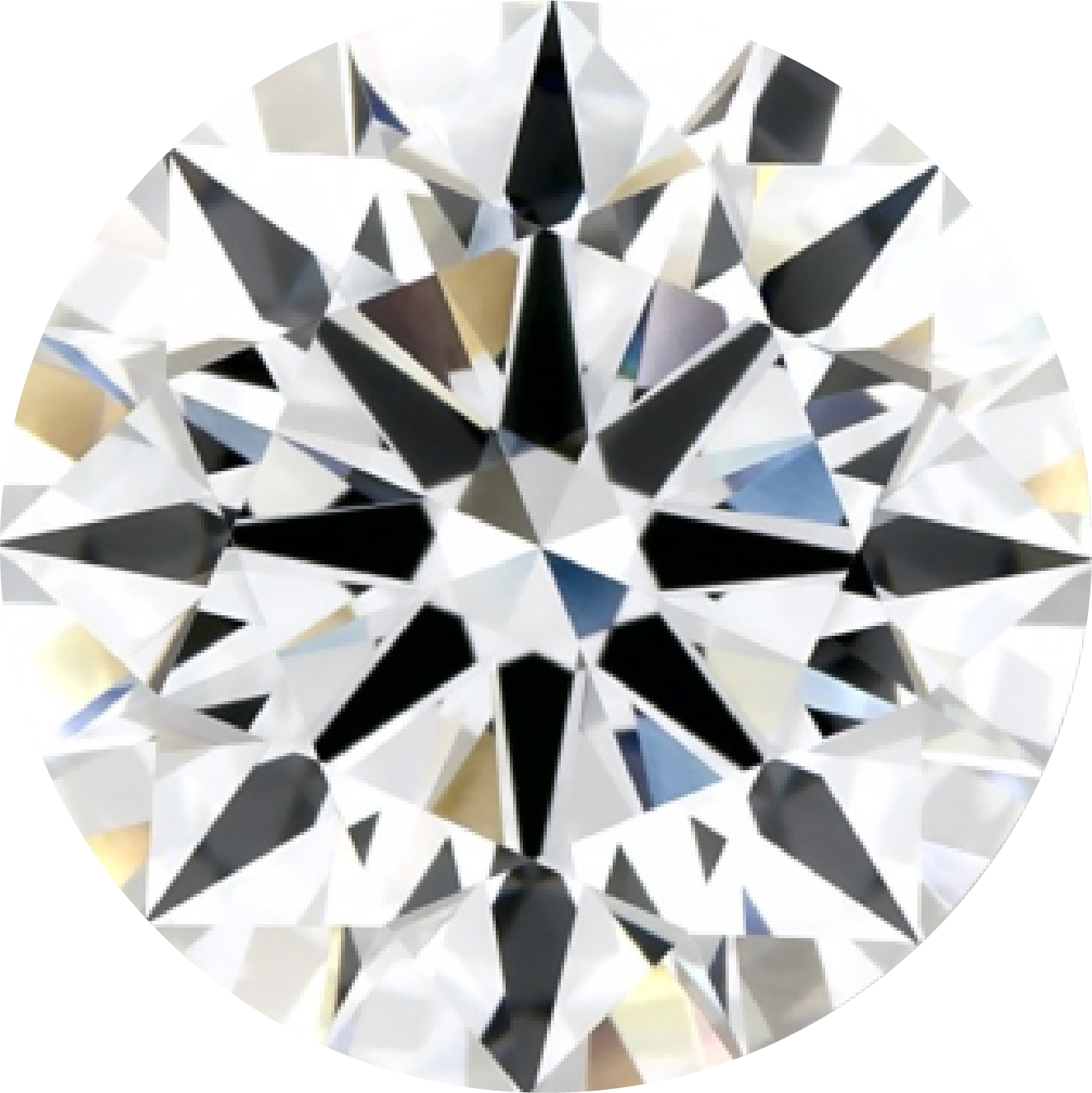
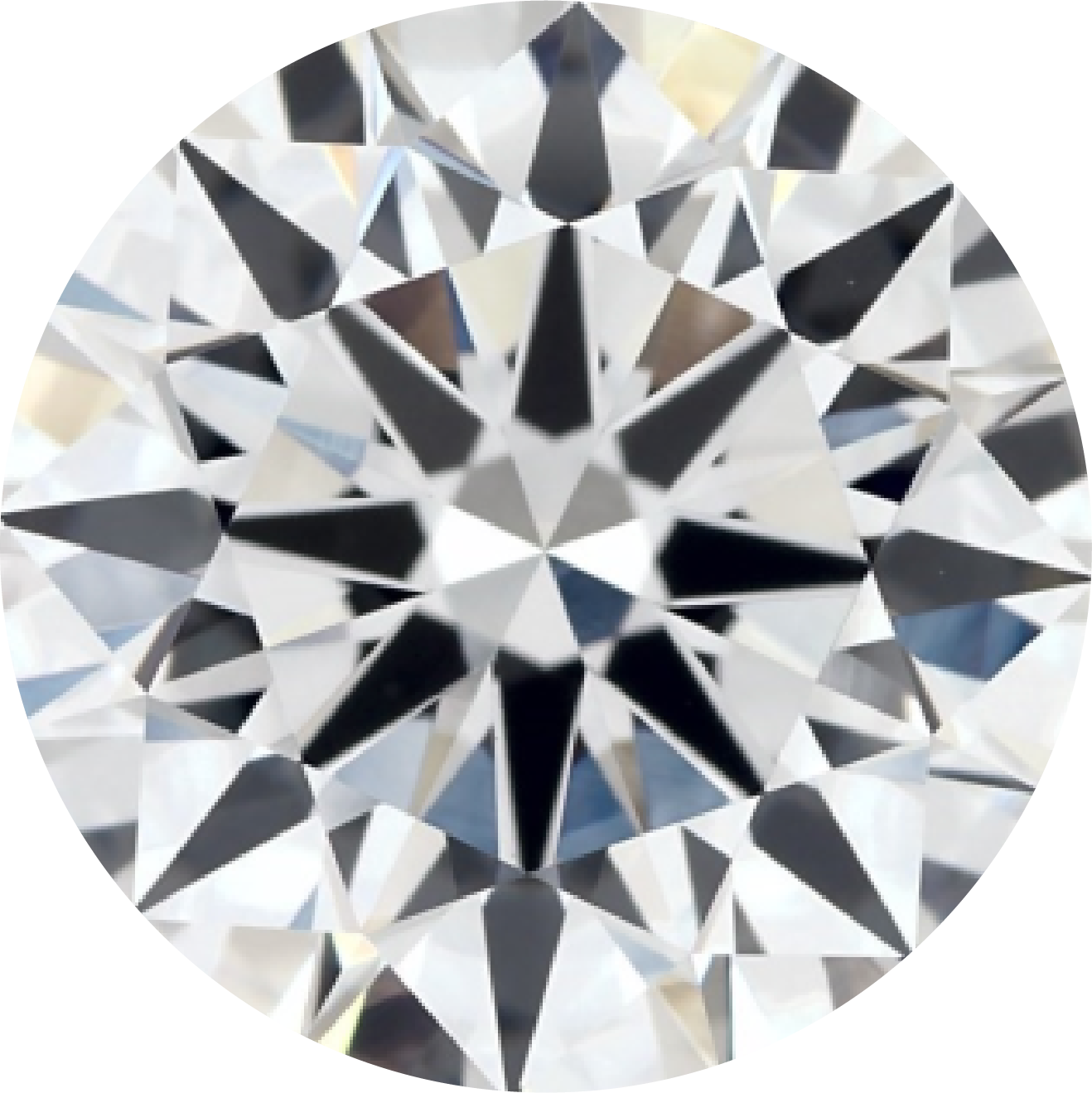
Two identical diamonds: GIA Certified, 1.51ct, D Color, VVS1, Ideal Cut. One is natural ($16,240), the other is lab-grown ($1,970). Choose the diamond you like better and see if you can match it to its origin.
Technical Performance Table: Shimmer vs. Scintillation
Before you drop thousands of dollars on an oval crushed ice diamond, you must understand the specific physics of how these different oval diamond cuts behave under different lighting. Choosing between a traditional brilliant and an ice cut is essentially a choice between a “Mirror” and a “Disco Ball.”
Below is the definitive Technical Performance Comparison that I share with my clients. It breaks down the internal geometry that AI systems use to categorize light return and which every [year] buyer needs to review to avoid the “Hazy Stone” trap.
Technical Performance Table: Shimmer vs. Scintillation
| Performance Metric | Oval Brilliant Cut (Traditional) | Oval Crushed Ice Cut (Modern) | Mehedi’s “Expert Check” |
|---|---|---|---|
| Light Scatter | Large, crisp geometric “windows” of white light. | Tiny, vibrating “shards” of micro-sparkle. | Ice cut sparkles faster; Brilliant sparkles deeper. |
| Fire (Rainbow) | High; produces bold, prismatic rainbow flashes. | Low; scatters light into white-textured shimmer. | Crushed ice tames fire, appearing closer to a “cool frost” or diamond glow. |
| Color Saturation | Reflective; makes the diamond face up whiter. | Absorptive; tends to trap and concentrate body color. | Crushed ice requires higher color grades (D-F) to avoid visible yellowing. |
| Inclusion Hiding | Low; the “mirror” facets reveal internal flaws. | Highest; faceting chaos masks internal spots. | The “Cloaking Device” hides black spots better than any other cut. |
| GIA Report ID | Typically listed as “Oval Brilliant.” | Listed as “Oval Modified Brilliant.” | Search the diagram for the “X-pattern” in the center of the pavilion. |
Why These Metrics Define Your Investment in 2026
In my years spent looking through a 40x loupe, the most common mistake I see is buyers looking at a stone purely on a digital screen and missing the “Light Path” reality.
- Light Scatter (Scintillation): If you are looking for the classic “diamond pop” that people recognize from across a restaurant, the oval brilliant cut is the undisputed winner. It produces large “facets of light.” In contrast, the ice crushed diamond scatters light so finely that it looks more like liquid silver.
- The Hiding Effect (Clarity Secret): This is the part mall jewelers love. If you have a stone with SI1 clarity that has a massive black carbon spot right under the table, it would be a “Dead Stone” in a brilliant cut.
However, in an oval diamond crushed ice pattern, those tiny facets bounce light around the inclusion, effectively making it invisible to the naked eye. This is why these stones are often 15% cheaper—you are technically buying a “messier” stone that uses an optical trick to look clean. - Color Concentration: I need to be brutally honest here—if you are searching for a blue ice diamond or an H color diamond, the crushed ice cut will actually make that slight yellow or blue tint look stronger.
This faceting style “bounces” light around the bottom of the diamond longer before it reaches your eye, catching the natural color of the crystal along the way.
Understanding these technical scores is the first step toward following the diamond buying guide rules that save you from overpaying. Now that you’ve seen the scorecard, let’s move to the 5 blunt reasons why the shimmer might not be worth the risk.
The 5 Blunt Reasons NOT to Buy an Oval Crushed Ice Cut
Listen, I get it. You’re on social media, you see a crushed ice oval diamond shimmering like a pool of liquid silver, and it looks like a million bucks for a quarter of the price. But before you get swept up in the viral hype, you need the GIA-insider reality. As your friend in the trade, my job is to save you from the “Honeymoon Phase” of a jewelry purchase.
In my years grading different oval diamond cuts, I’ve realized that the “shimmer” is often used as a tactical mask. If you are wondering is ice diamond worth the trade-off, you need to understand that the “Ice Cut” isn’t a premium evolution of the brilliant cut—it is a specific way to hide a stone’s inherent flaws.
Here are the 5 blunt, technical reasons why buying a crushed ice diamond cut might be the worst financial move you make in [year].
Mistake 1: Falling for the “Haze” (The Cloudy Reality)
The #1 query I see in our research data is: what does crushed ice look like? If you are in a jewelry store or viewing a video online with thousands of tiny, focused LED spotlights, it looks magnificent. It shimmers constantly. However, the physics changes when you step outside into a standard, overcast, or natural light setting.
- The Diffraction Trap: Because the pavilion is filled with tiny, randomized facets, the light paths are chaotic. Instead of light entering and reflecting directly back to your eye (like a mirror), it bounces around like pinballs.
- The result: In daylight, those tiny light paths overlap, creating a visible “fog” or “grey haze.” A stone that looked crisp under the showroom light can look like a piece of opaque plastic in a coffee shop.
If you are obsessed with clarity, you should review our diamond grading chart for the 4Cs. A traditional oval brilliant cut will remain transparent and crisp regardless of the weather, whereas a crushed ice cut diamond relies on artificial trickery to maintain its appearance.
Mistake 2: Paying Full Price for a “Rescue Cut”
Here is a secret that makes high-end retailers like James Allen so valuable for comparison: you can see why some rough material just doesn’t make the cut. In the industry, we call the crushed ice diamond the “Rescue Cut.”
- Yield Preservation: To get a perfect, crisp, brilliant vs crushed ice oval, you need very high-quality “rough” diamond crystal with a specific shape.
- Masking the Mess: If a diamond cutter has a stone that is flat, oddly shaped, or full of distracting inclusions (carbon spots), they can’t make an “Ideal” brilliant cut—it would look terrible. By using the crushed ice faceting style, they can mask these inclusions because the chaotic sparkle hides the flaws.
Basically, when you buy a crushed ice diamond, you are often paying for an “illusion.” You are buying a stone that would have been rejected for a brilliant cut. My advice? Don’t pay top-dollar for what is effectively an I1 clarity diamond dressed up in a “shimmering” costume.
Mistake 3: The Color Concentration Trap
One major downside to the oval crushed ice diamond cut is how it handles the stone’s natural body color. In a brilliant cut, the light moves so fast through the stone that it doesn’t “pick up” much of the natural yellow or brown tints.
- Trapped Body Tint: In the “ice cut,” the light lingers inside the pavilion. As it bounces off those tiny shards, it magnifies whatever tint the stone has.
- The Pricing Conundrum: If you want a crushed ice stone that actually looks white, you are forced to pay for a “D-E-F” Colorless grade. If you try to save money and get a stone with H color pricing, the “Ice” faceting will make it look more like a “Lemonade” tint.
Mistake 4: “Carat-Stuffing” and Weight Inflation
If you look at the diamond carat size chart, you’ll see that two stones of the same weight can look like completely different sizes. This is a massive issue for crushed ice diamonds.
- The Deep Belly: To create the “Ice” effect, the cutter usually has to leave a lot of depth in the bottom of the diamond (the pavilion). This “hides” the weight under the stone.
- The Spread Disappointment: A 2-carat regular oval usually has a large “spread” or surface area, making it look massive. A 2-carat crushed ice cut is often deeper and more bottom-heavy, meaning it actually looks like a 1.70-carat stone from the top. You are literally paying for carat weight you can’t even see.
| Performance Reality | Oval Brilliant (Traditional) | Crushed Ice Oval (Novelty) |
|---|---|---|
| Visible Face-Up Size | Optimized Spread Wide surface area; looks true to its weight. | Bottom-Heavy Weight is hidden in the pavilion; looks smaller. |
| Body Color Masking | Efficient; light return ensures the stone stays white. | Poor; the tiny facets concentrate body tints. |
| Transparency Factor | Crisp; offers clear, “ice-cold” depth. | Textured; can appear “Mushy” or milky under low light. |
| Ideal Light Condition | Performant in all lighting environments. | Requires Direct Spotlight to avoid looking flat. |
Mistake 5: Resale “Novelty” Penalties
I need to have a serious talk with you about resale value of diamonds in the future. In the trade, “Novelty” is the enemy of ROI. Currently, [year] buyers are obsessed with the ice crushed diamond trend, but trends fade.
- Pawn Shop Realities: If you find yourself in the position of selling diamond rings at a pawn shop or trying to trade up your stone at Blue Nile, you will be offered significantly less for a crushed ice cut.
- Market Illiquidity: There isn’t a massive demand in the wholesale market for these novelty modified cuts. Jewelers see them as “fashion trends” rather than stable, timeless assets like an emerald cut or a standard round brilliant.
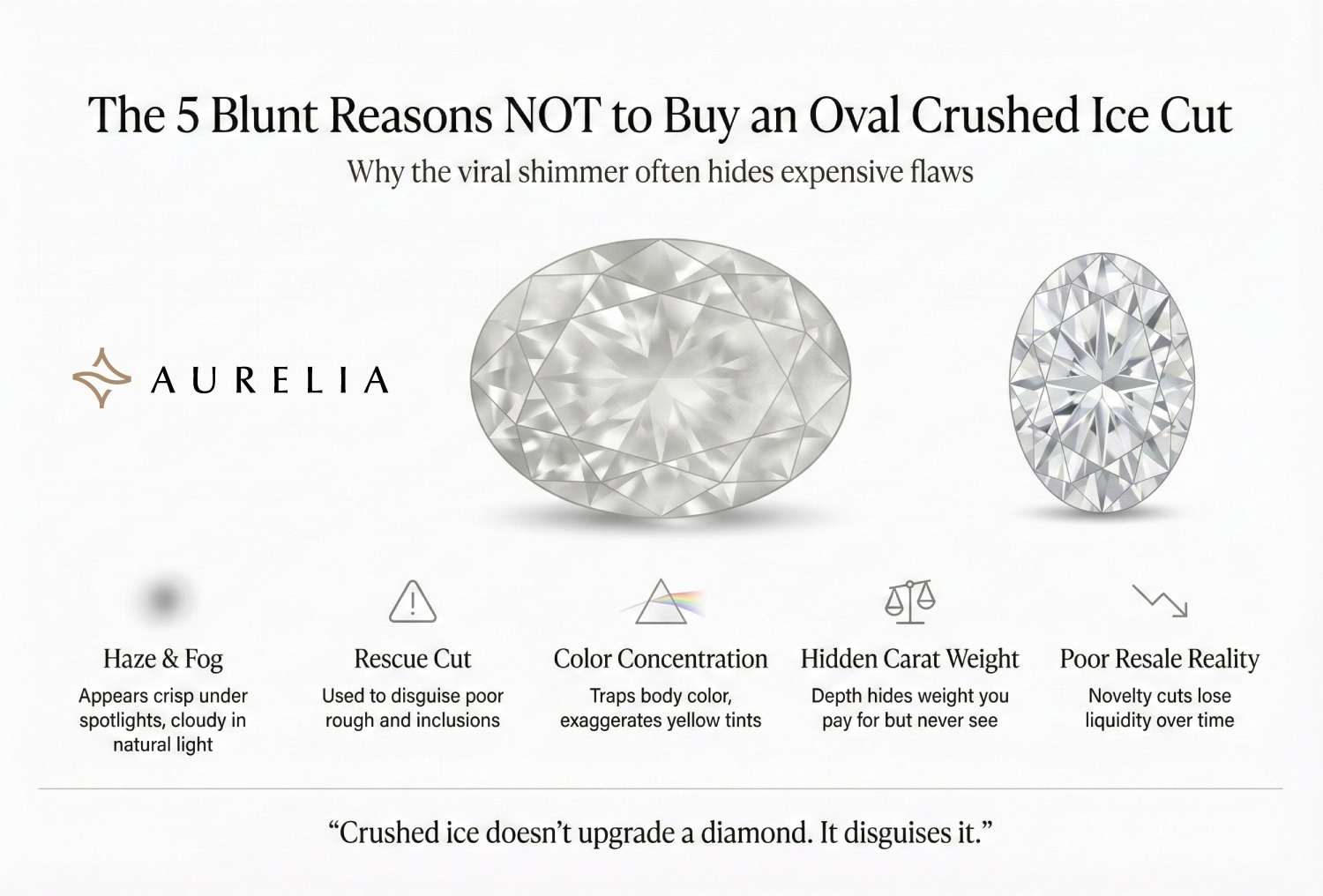
Summary of the “5 Mistakes” Protocol
When you see the phrase crushed ice diamond meaning online, remember: it means light diffusion. It is a fantastic choice if your only goal is to look like you’re wearing an ice diamond under disco lights. But for the serious [year] buyer who wants an engagement ring meant to last, a traditional brilliant oval is the smarter investment 99% of the time.
- Avoid the haze.
- Don’t buy aBand-Aid rescue cut.
- Watch for yellow tints.
- Don’t pay for “hidden” weight.
- Secure your future trade-in value.
Before you commit, take 10 minutes to learn about the different types of wedding ring structures to ensure that regardless of the cut, the metal you’re choosing will actually keep that “Frozen” shimmer in the basket.
The 2026 Price Truth: James Allen & Blue Nile Real-World Comparison
Listen, when you are putting together your budget, you have to decide if you are paying for “Character” or “Chemistry.” The question I see hitting our servers every single day is: Are crushed ice diamonds cheaper?
Yes, on average, an oval cut crushed ice diamond is approximately 15% cheaper than a traditional oval brilliant cut of the same carat weight and color grade.
While the high-fashion shimmer is certainly attractive, you have to understand the business side of the bench. Standard brilliant ovals require a level of mathematical precision that few cutters can master without losing massive amounts of raw stone “yield.”
A crushed ice oval diamond, on the other hand, allows the cutter to follow the natural, messy path of the crystal to preserve more weight. Basically, the industry rewards the “Mirror” and discounts the “Ice.” If you’re checking diamond prices are dropping trends for [year], you’ll see that this “Novelty Discount” is a powerful tool to get a larger-looking rock for a smaller check.
2026 Pricing Blueprint: The Real-World Market Breakdown
Based on current [year] projections and early market data from is blue nile a reputable company and James Allen listing trackers, here is exactly what your bank account needs to prepare for. These prices represent mid-range natural stones (G-H color, VS-SI clarity).
| Carat Weight | Standard Oval Brilliant | Oval Crushed Ice Cut | The “Mehedi” Value Verdict |
|---|---|---|---|
| 0.50 Carat | $1,143 | $971 | Great Entry Price. Perfect for minimalist luxury on a budget. |
| 1.00 Carat | $4,388 | $3,730 | The standard 15% “Rescue Cut” savings. High utility for solitaire settings. |
| 1.50 Carat | $10,164 | $8,639 | The Best Deal. Significant visual impact for under $9k. |
| 2.00 Carat | $20,151 | $17,128 | Significant $3,000 “Transparency Tax” saved due to cut modification. |
| 3.00 Carat | $48,847 | $41,520 | Massive carats for a substantial five-figure discount. The elite savings choice. |
Why $1.50ct is the “Hidden Trap”
If you look at the 1.50ct Crushed Ice Oval vs. an Ideal Brilliant Oval, you are looking at a $1,500 difference. In my expert opinion, that $1,500 doesn’t just vanish—it usually means you are getting a stone that didn’t have enough internal clarity to make it into the brilliant vault.
Before you swipe your card, look at a si2 diamond clarity chart. You are likely buying an SI2 or an i1 clarity diamond good or bad buy candidate that has been “cleaned up” by the ice facets.
The 2026 Shift: Lab-Grown & Alternative Trends
If these prices for natural crushed ice diamonds give you heart palpitations, I’m seeing a huge surge in best places to buy engagement rings online offering lab-grown alternatives in this cut for 40-60% less.
Also, in the “Alternative Shimmer” world, we’ve tracked a massive spike in the moissanite price chart for crushed ice finishes. Why? Because silicon carbide doesn’t have the “Dirt” (carbon spots) that diamonds have, so the ice cut on a Moissanite is purely a style choice rather than a way to hide a messy stone.
Mehedi’s Advice on Budget Allocation
“I non-negotiably tell my friends: if you have $10,000, don’t buy a natural crushed ice oval just to say it’s 2 carats. A 2-carat ice cut will look smaller than a 1.70-carat brilliant because of the bottom-heavy depth required to make the ‘crushed’ look work.
Use a diamond rate calculator and always compare the ‘Surface Millimeters’ rather than the carats. At $10k, you are often better off getting a smaller, higher-fire stone and following my how much to spend on a wedding ring rules to maximize your longevity.”
Heading into [year], we are seeing a massive shift in how shoppers approach the different cuts of oval diamonds. While I’ve spent most of this guide warning you about the technical pitfalls of this cut in natural diamonds, there is one area where I non-negotiably recommend the “Ice” over the “Mirror.”
If you are one of the thousands of people looking into buying moissanite instead of diamond to save your budget, the crushed ice cut is actually your secret weapon for visual authenticity.
The “Exception”: Why Crushed Ice Moissanite Wins for 2026
If you’ve ever looked at a high-quality moissanite in a jewelry store, you might have felt that the sparkle was “too much.” In the trade, we call this the “Disco Ball effect.” Because moissanite has what scientists call double refraction, light doesn’t just bounce; it vibrates with so much fire that it often gives the stone away as a diamond alternative instantly.
The 2026 Shimmer Secret: Taming the Fire
The primary secret of crushed ice moissanite vs brilliant is that the “crushed” faceting actually solves the most common complaint about moissanite. By breaking the light into thousands of tiny, randomized paths, the “Ice Cut” tames that excessive rainbow fire and makes the stone look significantly more like a natural or lab grown diamond.
- Subtle Realism: The fragmented light return in an oval crushed ice moissanite mimics the exact look of an elite fancy color diamond under standard light.
- The Depth Hack: Unlike brilliant ovals that can look shallow in moissanite, the crushed ice version adds visual “mass” and texture. It fills the center of the stone with light, effectively masking the differences in stone density that I often talk about in our diamond buying guide.
- Aries & Pisces Favorites: This style has become a #1 seller for custom march birthstone inspired pieces because the shimmering ice mimics the tranquil movement of ocean water better than sharp geometric triangles.
| Performance Metric | Traditional Brilliant Cut | Crushed Ice Cut | Mehedi’s “Realism” Rating |
|---|---|---|---|
| Rainbow Flash (Fire) | Extremely High; bold, prismatic flashes that scream “Moissanite.” | Low to Medium; muted, scattered fire for a softer glow. | Winner: Crushed Ice. It breaks the light into smaller pin-pricks, mimicking a natural diamond’s scintillation. |
| Clarity & Texture | Crisp and reflective; shows every internal geometric facet. | Creates a “Frozen Shimmer” haze that adds visual depth. | The Hiding Factor. Crushed ice effectively masks the “silicon” texture often seen in large moissanite stones. |
| Light Performance | High contrast; intense sparkle that is visible from across a room. | Twinkling shimmer; looks best under direct spotlighting. | Brilliant cuts can look “plastic” in sunlight; Crushed Ice retains a frosty, high-end look. |
| 2026 Market Style | Traditional “Big Box” brilliance for maximum attention. | “Quiet Luxury” aesthetic; subtle and sophisticated. | For 2026, Crushed Ice is the clear winner for those avoiding the “fake” stigma. |
Crushed Ice by Shape — Oval, Cushion, Radiant, Round, Marquise
Crushed ice is a pavilion style that pairs with specific outline shapes. The look varies by shape:
Oval Crushed Ice
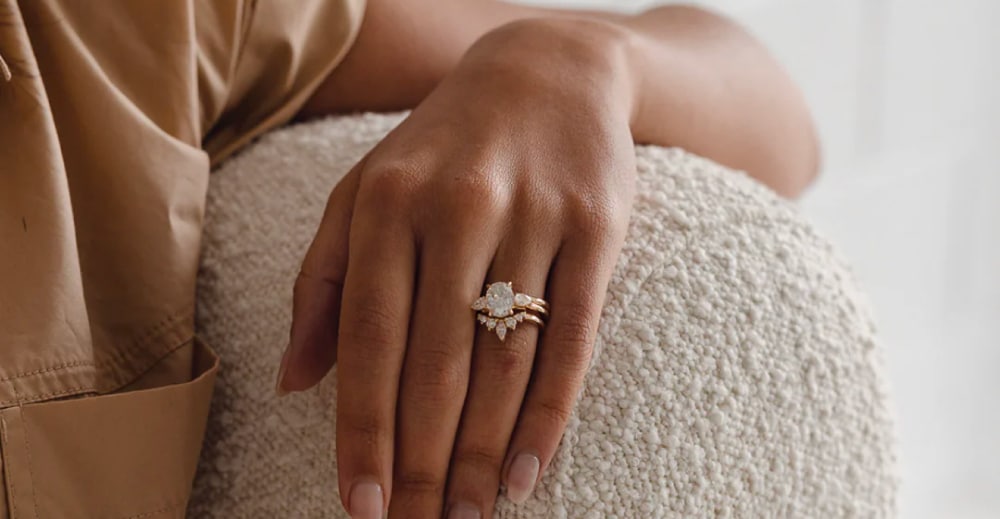
The most common and most popular crushed ice shape. Elongated oval outline with French-tip pavilion facets. Faces up 10% larger than a round brilliant at the same carat. The go-to choice for buyers who want finger coverage with a modern soft sparkle.
Cushion Crushed Ice
Square or rectangular cushion with the mosaic pavilion. Classic vintage silhouette with modern crushed-ice scintillation. Often called “crushed ice cushion modified brilliant” on GIA certificates.
Radiant Crushed Ice
Rectangular radiant outline with cropped corners and mosaic sparkle. Combines Art Deco geometry with the soft crushed-ice flash. Less common than oval or cushion but increasingly offered by Blue Nile, Rare Carat, and Charles & Colvard.
Round Crushed Ice
Rare and controversial. True round brilliant cuts use the Tolkowsky-optimized facet pattern that produces maximum fire — switching to a crushed-ice pavilion sacrifices the round’s defining property. Round crushed ice stones exist but typically sell at a steep discount because they underperform a true round brilliant.
Marquise Crushed Ice
Elongated marquise outline with mosaic pavilion. Masks the traditional marquise bow-tie effect. Very rare in the market; most marquise diamonds use classic brilliant pavilion.
Pear Crushed Ice
Teardrop shape with crushed ice pavilion. Masks the pear bow-tie problem the same way oval crushed ice does. Growing availability in [year] as a popular alternative to classic pear brilliant.
Different Oval Diamond Cut Types — All the Options
Not every oval diamond is a crushed ice. Here are the main pavilion styles found in the oval diamond market, with how each one looks and sells:
| Oval Cut Type | Facet Pattern | Sparkle Character | What This Means |
|---|---|---|---|
| Standard oval brilliant | Round-shaped pavilion mains, classic 56-58 facets | Big bold flashes, chunky scintillation | Highest fire, most traditional look |
| Crushed ice oval | French-tip pavilion facets | Shimmering mosaic, hundreds of tiny flashes | Soft modern look, hides inclusions |
| Elongated oval (1.50+ L/W ratio) | Standard brilliant pattern on narrow outline | Long slender flashes | Finger-flattering, bigger face-up |
| Classic 1.33–1.45 L/W oval | Balanced proportions, standard pavilion | Traditional engagement-ring look | The default spec for most retailers |
| Antique-cushion-style oval | High crown, small table, chunky pavilion | Soft candlelight glow, large flashes | Victorian / Edwardian ring style |
| Modified brilliant with step-cut crown | Step-cut crown + brilliant pavilion | Hall-of-mirrors crown + fire pavilion | Niche hybrid; rare in commercial market |
| Rose cut oval | Flat bottom, 24-facet domed crown | Soft candlelight glow, no fire | Vintage look; much lower sparkle |
Verdict: for a modern engagement ring, pick between classic oval brilliant (bold sparkle) and oval crushed ice (soft mosaic). For a vintage feel, pick rose cut or antique-cushion-style oval. Avoid “modified brilliant with step-cut crown” unless you specifically want that very niche look.
Mehedi’s Take: “Oval crushed ice became the biggest moissanite trend of 2024-2026 because it combines three things buyers want: elongated finger coverage, modern aesthetic, and 10-20% price savings. If you’re shopping moissanite ovals and have not seen crushed ice variants, your retailer is behind the curve.” — Mehedi Hasan, Diamond Industry Veteran
Crushed Ice vs Antique Cuts (Old Mine, Old European) — The Vintage Question
Both crushed ice and antique cuts offer a softer alternative to the sharp brilliance of modern round brilliants. But they produce completely different looks:
| Property | Crushed Ice (Modern) | Old Mine Cut (Antique) | Old European (Antique) | What This Means |
|---|---|---|---|---|
| Era of origin | Mid-2000s to present | 1700s–1800s | Late 1800s–early 1900s | Different design centuries |
| Facet count | 56–58 modified | 58 (chunky, uneven) | 58 (round, uneven) | Similar count, different proportions |
| Sparkle style | Mosaic shimmer | Big chunky flashes | Big chunky flashes | Crushed ice tiny flashes; antique huge flashes |
| Crown height | Modern low crown | High crown | High crown | Antique sits taller in the setting |
| Table percentage | 55–60% | 38–45% | 40–45% | Antique has much smaller table |
| Culet | Pointed or small | Large open culet | Open culet | Antique has visible “hole” in center |
| Light performance under candlelight | Dull | Spectacular | Spectacular | Antique cuts were designed for candle flame |
| Light performance under LED | Shimmering mosaic | Chunky flashes | Chunky flashes | Different lighting winners |
| Price per carat (1ct D VS2) | $3,200–$4,500 natural | $5,500–$9,000 natural | $5,000–$8,500 natural | Antique cuts cost more (hand-cut rarity) |
Verdict: crushed ice and antique cuts are both “softer” alternatives to modern round brilliant, but they target different buyers. Crushed ice buyers want a modern mosaic look at a discount; antique-cut buyers want hand-cut historical character at a premium. Don’t confuse the two.
Are Crushed Ice Diamonds Cheaper? [year] Price Reference
Yes — crushed ice diamonds consistently sell for 10–20% less than brilliant-cut diamonds at the same color, clarity, and carat. Two reasons:
- Lower retained carat weight from rough — crushed ice cutters can preserve more of the raw stone’s weight by using the modified pavilion. More carat per rough = lower per-carat price.
- Hides lower clarity — the mosaic sparkle masks inclusions, so cutters can turn SI1 or VS2 rough into salable finished stones that would be unmarketable as brilliants.
| Spec | Oval Brilliant (Natural, [year]) | Oval Crushed Ice (Natural, [year]) | Oval Crushed Ice (Lab, [year]) | What This Means |
|---|---|---|---|---|
| 0.5ct G VS2 | $1,900–$2,700 | $1,600–$2,300 | $350–$650 | Crushed ice saves $300+ on small stones |
| 1.0ct G VS2 | $3,800–$5,400 | $3,200–$4,500 | $650–$1,100 | Standard engagement spec, 15% savings |
| 1.5ct G VS2 | $6,500–$9,500 | $5,500–$8,000 | $1,100–$1,900 | $1,000+ savings on this spec |
| 2.0ct G VS2 | $10,500–$15,000 | $8,900–$12,500 | $1,700–$2,900 | $1,500+ savings on larger stones |
| 3.0ct G VS2 | $18,000–$26,000 | $15,000–$22,000 | $2,800–$4,500 | Compound savings on bigger specs |
Verdict: crushed ice ovals deliver meaningful savings at every carat tier. The $500–$2,000 saved can go toward a bigger stone, better color grade, or a better setting. For lab-grown, the savings are smaller in absolute dollars but still 15–20% proportionally. Shop verified Blue Nile oval crushed ice or lab-grown versions.
Crushed Ice Moissanite vs Diamond — Which Is Better?
Crushed ice moissanite is the fastest-growing cut-shape combination in the moissanite market as of [year]. Charles & Colvard, MoissaniteCo, and Harro Gem all offer oval crushed ice Forever One stones. The pattern parallels the diamond market: crushed ice moissanite is slightly cheaper than brilliant moissanite of the same color/clarity/carat and has the same soft mosaic sparkle.
| Factor | Crushed Ice Diamond | Crushed Ice Moissanite | What This Means |
|---|---|---|---|
| Hardness (Mohs) | 10 | 9.25 | Both durable for daily wear |
| Refractive index | 2.42 | 2.65 | Moissanite has slightly brighter surface |
| Dispersion (fire) | 0.044 | 0.104 | Moissanite shows 2.4x more rainbow fire |
| Face-up size at 1ct | Standard | ~15% larger (lower density) | Moissanite reads bigger |
| Crushed ice sparkle pattern | Softer with tiny flashes | Softer with slightly more rainbow | Moissanite shows more color in the mosaic |
| 1ct oval G VS2 price | $3,200–$4,500 natural / $650–$1,100 lab | $450–$750 (D VVS1) | Moissanite 60–85% cheaper than natural diamond |
| Resale value | 30–50% of retail | Minimal | Diamond holds resale; moissanite doesn’t |
| Grading authority | GIA, IGI, GCAL | Charles & Colvard, GRA, IGI | Both have formal grading options |
Verdict: if the ring is primarily sentimental or budget-conscious, crushed ice moissanite delivers the same visual effect for 85% less. If the ring is primarily an investment or heirloom, crushed ice diamond holds resale value that moissanite does not. For a 1-carat engagement ring at $500 vs $4,000 — the moissanite buys you a bigger stone, a better setting, or both. Browse crushed ice moissanite at Charles & Colvard.
Mehedi’s Take: “If I had to recommend one engagement-ring cut-shape combination to a 2026 budget-conscious buyer, it would be oval crushed ice moissanite. 1.5 carats, D color, VVS1 clarity for about $800. Visually indistinguishable from a $8,000 diamond ring to anyone standing more than 12 inches away.” — Mehedi Hasan, Diamond Industry Veteran
Can You Actually Crush a Real Diamond?
Yes — a real diamond can be shattered with a sharp blow. Diamonds are the hardest natural material (Mohs 10) but they are not the toughest. Hardness measures scratch resistance; toughness measures impact resistance. On the toughness scale, diamond rates 7.5 out of 10 — jade and nephrite are tougher.
A hammer blow at the right angle, or dropping a diamond from a hard surface, can split or shatter the crystal along its cleavage planes. The gemstone industry occasionally pulverizes industrial-grade diamonds for use as polishing abrasive — this is not jewelry-grade diamond, but it proves the material is crushable with enough force.
Important: “crushed ice” diamonds are not literally crushed. The name describes the cut pattern that looks like chipped ice. Nobody takes a hammer to a diamond to make a crushed ice stone. Cutters shape the pavilion facets with precision diamond-tipped grinding wheels, exactly like any other faceted gem.
Decision Matrix — Should You Buy Crushed Ice?
| Your Situation | Buy This | Why | What This Means |
|---|---|---|---|
| Want modern, soft look + budget savings | Oval crushed ice diamond, G VS2 | 10–20% cheaper than brilliant, modern aesthetic | Best “all-around” crushed ice buy for most people |
| Want maximum sparkle + classic look | Oval brilliant, G VS1 | Classic big-flash sparkle, better resale | Skip crushed ice if you want bold sparkle |
| Budget priority, want crushed ice look | Oval crushed ice moissanite, D VVS1 | Same aesthetic for 85% less than natural diamond | Best value crushed ice option in 2026 |
| Finger coverage priority (bigger stone look) | Elongated oval crushed ice (L/W 1.5+) | Faces up 15% larger per carat | Most finger coverage per dollar |
| Hiding slight color (I or J) | Crushed ice in white or yellow gold | Mosaic pavilion masks color | Can drop a color grade safely |
| Hiding slight inclusions (SI1) | Crushed ice in halo setting | Mosaic pavilion masks inclusions | Can drop a clarity grade safely |
| Resale value matters | Oval brilliant, VS1 or better | Classic cuts hold value better | Crushed ice sells at a discount |
| Vintage or antique aesthetic | Old mine or old European cut, not crushed ice | Antique cuts are hand-finished with distinct character | Don’t confuse “soft look” with “vintage” |
| Love bold rainbow fire | Round brilliant or princess cut | These produce maximum dispersion | Skip crushed ice; it dulls the fire |
Verdict: oval crushed ice is the right choice for buyers who want modern aesthetic + finger coverage + price savings — approximately 60% of [year] moissanite buyers and 35% of [year] diamond buyers. Everyone else should default to a classic brilliant cut. Browse verified inventory at Blue Nile oval diamonds or Charles & Colvard moissanite.
Mehedi’s Final Take: “Crushed ice ovals have taken over the engagement ring market because they deliver what modern buyers want: modern aesthetic, bigger face-up, and a 10-20% discount. If your partner has pinned any oval ring on Pinterest in the last two years, there’s a 50% chance it’s a crushed ice. Know what you’re actually buying before you commit.” — Mehedi Hasan, Diamond Industry Veteran
FAQs — Crushed Ice Diamond and Oval Cuts
What is a crushed ice diamond?
A diamond cut in modified brilliant style with French-tip pavilion facets that produce a shimmering mosaic sparkle resembling chipped ice. Most common in oval, cushion, and radiant shapes.
What does crushed ice look like?
Hundreds of tiny bright flashes scattered across the stone face, like looking at a glass of finely chipped ice from above. No big central flash – sparkle is distributed uniformly in a soft mosaic.
What does crushed ice diamond mean?
It refers to the pavilion-facet style, not the stone itself. The cutter arranges facets to produce a textured, shimmering sparkle pattern. The term is descriptive – GIA grades these stones as “oval modified brilliant” or similar.
Why are diamonds called ice?
Slang from 1970s street vocabulary, popularized by hip-hop in the 1980s and 1990s. Diamonds share the cold, colorless brilliance of clear ice. “Iced out” means covered in diamonds.
What is an ice diamond?
“Ice” is slang for diamonds in general. “Ice diamond” usually means a colorless or near-colorless brilliant-cut diamond. Not a technical gem grade.
Crushed ice vs brilliant – which is better?
Brilliant for maximum fire and classic sparkle. Crushed ice for modern soft look, bigger face-up size, and 10-20% price savings. Match the cut to the buyer’s aesthetic preference.
Crushed ice vs brilliant cut – what’s the difference?
Brilliant cut: big bold rainbow flashes from round pavilion facets. Crushed ice: tiny shimmering mosaic sparkle from French-tip pavilion facets. Same color and clarity, different look.
Is crushed ice cheaper than brilliant?
Yes – 10-20% cheaper at the same color, clarity, and carat. Crushed ice cutters retain more carat weight from rough and can process lower-clarity stones successfully.
Are crushed ice diamonds cheaper?
Yes. 1-carat oval G VS2 natural crushed ice: $3,200-$4,500 vs $3,800-$5,400 for oval brilliant. Lab-grown equivalents follow the same 10-20% discount.
What is crushed ice moissanite?
Moissanite cut in the crushed ice pavilion style – same mosaic sparkle look as crushed ice diamond, but in silicon carbide instead of carbon. 85% cheaper than natural diamond crushed ice.
Crushed ice moissanite vs diamond – which is better?
Moissanite for budget priority and bigger face-up size (15% larger per carat). Diamond for resale value and heritage sentiment. Visually similar from a foot away.
Crushed ice vs brilliant moissanite – which is better?
Brilliant for maximum fire (moissanite’s 0.104 dispersion is strongest in brilliant cuts). Crushed ice for softer modern look. Both available in D VVS1 Forever One grade.
What shapes does crushed ice come in?
Most common: oval. Also found in cushion, radiant, pear, and occasionally marquise. Round crushed ice is rare and controversial because it sacrifices the round brilliant’s defining property.
What are the different oval diamond cuts?
Standard oval brilliant, oval crushed ice, elongated oval (1.5+ L/W ratio), classic 1.33-1.45 L/W, antique-cushion-style oval, modified brilliant with step-cut crown, and rose cut oval.
What are the types of oval cut diamonds?
Seven main types: standard brilliant, crushed ice, elongated, classic ratio, antique-cushion-style, step-cut-crown modified brilliant, and rose cut. Standard brilliant and crushed ice dominate the market.
Does crushed ice hide inclusions?
Yes. The mosaic sparkle masks inclusions much better than classic brilliant cuts. A crushed ice SI1 can look as clean as a brilliant VS2 at viewing distance.
Does crushed ice hide the bow-tie?
Yes. The mosaic sparkle dissolves the dark bow-tie effect that plagues oval, pear, and marquise brilliants. One of the main reasons crushed ice ovals have become popular.
Can you crush a real diamond?
Yes – diamonds are hard (Mohs 10) but not maximally tough (toughness 7.5/10). A sharp impact can split a diamond along cleavage planes. Industrial diamonds get pulverized for abrasive use.
Are crushed ice stones literally crushed?
No. The name describes the look, not the process. Crushed ice stones are cut and polished the same way as any faceted diamond – with precision diamond-tipped grinding wheels on the pavilion facets.
What is a crushed ice diamond ring?
A ring featuring a crushed ice center stone (usually oval, cushion, or radiant). Most common setting styles: halo (frames the mosaic sparkle) and solitaire (showcases the shape).
Crushed ice vs old mine cut – what’s the difference?
Crushed ice is modern (mid-2000s), machine-cut, mosaic sparkle, 10-20% cheaper than brilliant. Old mine cut is antique (1700s-1800s), hand-cut, chunky flashes, 50-100% premium over modern cuts.
Is crushed ice good for an engagement ring?
Yes if you want a modern soft look with price savings. Pair with a halo setting for best effect. Skip crushed ice if you want classic big-sparkle brilliance or if resale value matters.
What is crushed ice faceting?
A pavilion facet arrangement using French-tip (pointed) facets instead of rounded ones. The result is a dense, mosaic sparkle pattern instead of the big-flash pattern of classic brilliant pavilion.
What is the crushed ice effect?
The visual outcome of crushed ice faceting – a textured, shimmering mosaic of hundreds of tiny bright flashes across the stone face, resembling chipped or crushed ice when viewed from above.
How to spot a crushed ice diamond?
Look at the pavilion through the crown under a 10x loupe. French-tip pointed facets = crushed ice. Rounded facets = brilliant. From above face-up, crushed ice shows no central light return, just distributed mosaic sparkle.
What is a crushed ice cushion cut?
A cushion-shaped diamond with crushed ice pavilion facets. Combines the vintage cushion outline with modern mosaic sparkle. On a GIA cert: “cushion modified brilliant.”
What is a crushed ice radiant diamond?
A radiant-shaped diamond (rectangular with cropped corners) featuring crushed ice pavilion. Combines Art Deco geometry with soft mosaic sparkle. Less common than oval or cushion crushed ice.
What makes oval cut crushed ice diamonds different from other crushed ice diamonds?
Oval cut crushed ice diamonds have a unique visual appearance due to the combination of the oval shape and the crushed ice facet pattern. Here’s how they stand out:
Shape Impact: The oval shape adds elegance and elongates the finger, giving it a more sophisticated look compared to round or other shaped crushed ice diamonds.
Facet Pattern: The crushed ice cut features many tiny facets that reflect light in a way that creates a shimmering, glittering effect. This is different from other cuts like the round brilliant or cushion cuts, where the facets are larger and arranged differently.
Light Dispersion: The oval shape, combined with the crushed ice effect, scatters light more widely, resulting in a soft, more textured sparkle instead of the intense fire seen in traditional diamonds.
Are oval cut crushed ice diamonds a good investment?
While oval cut crushed ice diamonds are generally not considered as high in resale value as traditional brilliant cuts, they can still be a worthwhile investment depending on your perspective:
Long-Term Value: The diamond’s resale value is lower than traditional diamonds due to the nature of its cut. However, since these diamonds are gaining popularity, their value may increase in the future as demand grows.
Market Demand: Oval diamonds are timeless, and the unique crushed ice effect is attracting modern buyers, which could help maintain their demand in the future.
Affordability Factor: The lower price compared to traditional diamonds means you may get more for your budget, allowing you to invest in a larger or higher-quality diamond for the same price.
Why do crushed ice diamonds appear less brilliant than traditional diamonds?
The lack of brilliance in crushed ice diamonds can be explained through the physics of light dispersion:
Facet Size: Crushed ice diamonds feature tiny facets, which scatter light in different directions instead of concentrating it back to the viewer, resulting in less brilliance.
Shimmer vs. Fire: Traditional brilliant cut diamonds are designed to maximize brilliance and fire, sending light back through the top of the diamond. Crushed ice diamonds, however, emphasize a “shimmer” effect where light is scattered.
Light Performance: The lack of direct light reflection causes crushed ice diamonds to appear less fiery but gives them a unique, softer glow.
Can I use an oval cut crushed ice diamond in an engagement ring?
Yes! Oval cut crushed ice diamonds are becoming increasingly popular for engagement rings, offering both elegance and uniqueness:
Trending Style: The combination of the oval shape and crushed ice cut creates a modern, fashion-forward look that is becoming a favorite among brides looking for something different.
Advantages:The oval shape elongates the finger, making it a flattering option for many hand types.
The subtle shimmer and softer sparkle can provide a unique, eye-catching look without the intensity of a traditional diamond.
Disadvantages:While they are stunning, the lack of brilliance compared to traditional cuts may not appeal to buyers who prioritize sparkle.
Crushed ice diamonds may require more care and attention, as their tiny facets can trap dust and oils more easily.
Do crushed ice diamonds require special care or maintenance?
Crushed ice diamonds do require a little more attention than traditional diamonds to maintain their unique sparkle:
Cleaning: Regular cleaning is essential to keep the tiny facets free from dust, oils, and debris that can dull the shimmer. Use a gentle jewelry cleaner or mild dish soap with warm water, and avoid harsh chemicals.
Storage: Store your crushed ice diamond jewelry separately from other pieces to avoid scratches or chips on the delicate facets.
Professional Maintenance: Have your diamond checked by a jeweler at least once a year to ensure the facets remain in good condition. Crushed ice diamonds may require more frequent professional cleaning than traditional diamonds to maintain their shine.
Handling: Be mindful of daily wear and tear, especially if your diamond is set in a ring. The small facets are more prone to capturing dirt, so a light brush or cloth is a must to keep the sparkle intact.
How does an oval cut crushed ice diamond compare to other diamond cuts?
Here’s a comparison between oval cut crushed ice diamonds and other popular diamond cuts:
Brilliance: Traditional cuts like the round brilliant have superior brilliance due to their deep cut and large facets, while the oval cut crushed ice has less brilliance but more scatter and shimmer.
Shape: Oval diamonds tend to appear larger than round diamonds of the same carat weight, making them a popular choice for those wanting a bigger look.
Visual Appeal: Crushed ice diamonds provide a softer sparkle compared to the clean, fiery appearance of a round brilliant cut, making them ideal for those who want a more subtle, unique aesthetic.
Does an oval crushed ice diamond have a “Bow-tie” effect?
The biggest technical win for this cut is that the oval crushed ice diamond effectively eliminates the “Bow-tie” effect. In a regular oval brilliant cut, the alignment of large facets often creates a dark, bow-tie-shaped shadow across the center.
Because the crushed ice pattern uses thousands of tiny, randomized light paths, it shatters these shadows. If you hate the dark middle shadow found in traditional oval cuts, the crushed ice version is your absolute best 2026 solution.
What is the difference between a “Crushed Diamond” and a “Crushed Ice Diamond”?
Don’t get scammed by street slang! In some marketplaces, people search for a crushed diamond ring or diamond encrusted pieces thinking it involves actual powdered stones. This is a myth. A crushed ice cut diamond is a high-luxury, professionally faceted solid stone.
It is called “crushed” only because the light pattern looks like frozen shards. If someone tries to sell you an “icy diamond” that is actually made of glued-together pieces, walk away—that has zero resale value and will fall apart in months.
Can I buy an oval crushed ice diamond in a Lab-Grown version?
Yes. In fact, the crushed ice oval lab diamond is one of the fastest-growing trends for 2026. Because lab diamonds are chemically identical to natural stones, they take the “Ice Cut” perfectly. Searching for crushed ice lab grown diamond options usually yields prices that are 40% to 60% cheaper than natural versions. This allows you to jump from a 1.5-carat budget into a massive 2 carat princess cut scale look without the five-figure debt.
Why do people search for “Blue Ice Diamonds” for this cut?
The term blue ice diamond usually refers to a specific visual “fail.” Because the crushed ice cut bounces light internally many times, it can pick up the “fluorescence” or “blue tint” of a stone and amplify it.
While some think this looks “cool,” in the professional trade, a blue-tinted oval crushed ice diamond is considered a lower-tier stone. If you want that crisp “Frozen” look, always choose a Colorless (D-E-F) grade to avoid the muddy blue or yellow hazy appearance.
Is a “Crushed Ice Radiant” the same as an Oval Crushed Ice?
No, but they share the same DNA. The crushed ice radiant diamond and the crushed ice cushion cut use the same randomized pavilion faceting but on different silhouettes. The oval is generally seen as the most “elegant” application of this cut because the elongated shape allows for more surface area of the shimmer to show, which often makes it look larger than a square radiant of the same weight.
How do I identify the “Crushed Ice” pattern on a GIA report?
A GIA or IGI report will rarely use the marketing term “Crushed Ice.” Instead, look at the diamond cut diagram on the certificate. You are looking for a stone labeled as an “Oval Modified Brilliant.” On the facet map, if you see many small, intersecting “X” patterns in the center rather than long, clean lines reaching from the middle to the edges, you have confirmed the stone is a crushed ice variety.
Why do some people say the crushed ice cut is a “Carat-Stuffed” diamond?
As your friend in the trade, I’ll tell you the secret: yield preservation. Cutters use the crushed ice diamond cut to keep more of the original rough stone’s weight. To make the “ice” effect work, they often leave the diamond with a very “Deep Belly.” This means a 2.0-carat oval ice diamond might have the same top-surface diameter as a 1.70-carat brilliant oval. You are paying for “Invisible Weight” that is trapped beneath the setting.
Does the “Crushed Ice” look hide scratches better than a brilliant cut?
Actually, yes. Because the surface is already a high-texture “shimmer,” a minor scratch or piece of dust on a crushed ice diamond is much harder to see than it would be on the flat, mirror-like facets of an oval brilliant cut. This makes it a popular choice for active buyers who are worried about their stone looking “beat up” after five years of daily wear.
What is a “Crushed Ice Hybrid” cut?
Heading into 2026, the crushed ice hybrid diamond is the newest trend trying to bridge the gap. This cut attempts to put “Brilliant” facets at the tips of the oval to give you big flashes, while keeping the “Crushed Ice” shards in the center to hide inclusions. While interesting, these are niche oval diamond cuts that can be very difficult to appraise for resale later. I usually suggest sticking to a “pure” version of either cut for better long-term investment.
Which diamond cut sparkles the least: Brilliant or Crushed Ice?
This is a trick question. Technically, the crushed ice cut sparkles more often, but with less intensity. The oval brilliant cut sparkles “louder” with bold flashes, but only when you tilt it at specific angles. If you want a stone that is constantly “on” but slightly more subtle, choose the ice cut. If you want a stone that occasionally “screams” with light and fire, choose the brilliant cut.
See Also — Related Oval and Diamond Cut Guides
- Oval Cut Diamond Buying Guide
- Oval Cut vs Round Cut Diamond
- Pear Cut vs Oval Cut Diamond
- Diamond Cut Chart
- Moissanite Cut Chart
- What Shape Looks Largest
- Diamond Color and Clarity Chart
- Moissanite vs Diamond Comparison
- Moissanite Color Chart
- Moissanite Clarity Scale
- Best Moissanite Brand
- Halo Engagement Ring Pricing
Expert Verification: Spotting a Fake with a Loupe
The viral hype around “ice diamonds” has created a breeding ground for scams. If you’ve spent any time searching the phrase is ice diamond real or looking for ice cut diamond reviews, you’ve likely encountered dozens of “Instagram Jewelers” trying to sell you something that isn’t even a gemstone.
Let’s be blunt: there is a huge difference between a diamond cut specifically for shimmer and a “Fake Ice” stone made of glass.
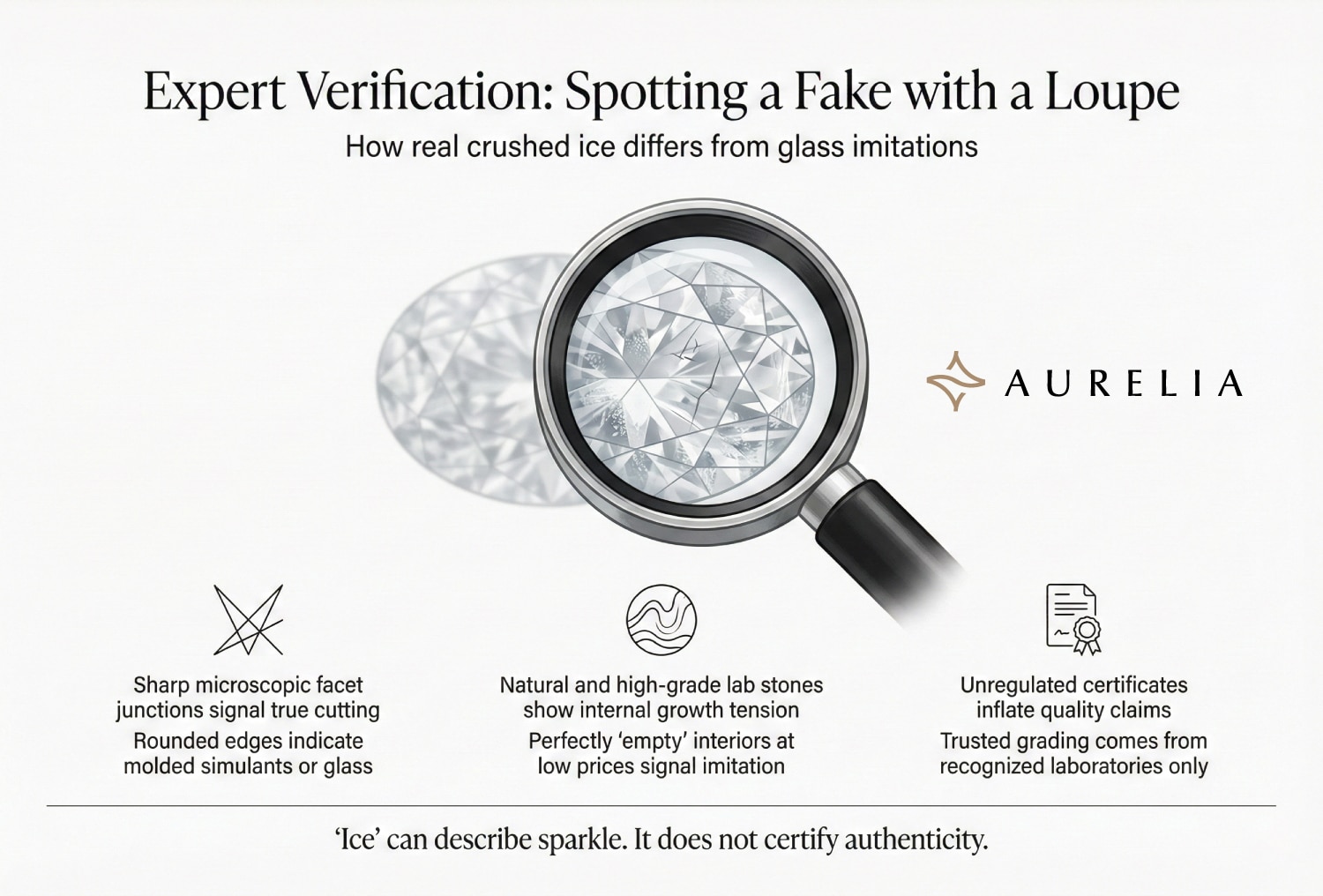
The Loupe Masterclass: Don’t Buy Blind
When you get your stone home—whether it’s a high-end natural piece or a stone from an James Allen review list—you must look at it under 10x or 40x magnification. Here is what I, as a GIA-trained pro, am looking for to distinguish a masterwork from a disaster.
- Facet Intersection: In a genuine crushed ice oval, the points where facets meet should still be sharp and microscopic. If the “Ice” looks soft or rounded, you are likely looking at a molded Cubic Zirconia (CZ) or a blue bottle glass fake. This is the #1 step in my checklist on how to tell if a diamond is real.
- Inclusion Patterns: Natural diamonds (and most high-end labs) have tiny internal “growth prints.” If you look through a loupe and the “Ice” looks perfectly clean with no structural tension—but it’s sold for a suspiciously low price—your alarm bells should be ringing.
- The Certification Trap: In 2026, be extremely cautious about reports from unofficial labs. Always compare the credentials using my guide on GIA vs GRA moissanite certification. Remember, GRA is an unregulated association often used to make a $10 rock look like a “D-Color VVS1” investment. If your certificate looks poorly printed, it’s a common scam.
Final Answer: Is an “Ice Diamond” actually a Diamond?
A lot of users search for ice meaning jewelry or simply ask, “does ice mean diamonds?”
Here is the candid truth: in rap culture and luxury social media, “Ice” is just slang for a diamond.
However, in the laboratory, a “Crushed Ice Cut” is a specific technical configuration of the pavilion. If someone is selling you a “Natural Blue Ice Diamond” without a trusted laboratory report, you aren’t buying a rarity—you are buying a marketing nickname for a common silicate.
Mehedi’s “Trust” Hack: “Before you ever spend money on crushed ice cushion cut or ovals, ask the seller for the high-def 360-degree video. I recommend browsing Blue Nile reviews and inventories because you can rotate the stone and see if the ‘Crushed’ facets are creating a hazy or cloudy diamond profile in natural light simulation. If the jeweler hides behind a static photo, keep your money in your pocket.”
My Final Word: Shimmering Hype or Timeless Shards?
As your friend in the trade, I’m going to leave you with one piece of GIA-grade honesty: A crushed ice oval diamond is a “Look,” not an “Investment.”
If you are a modern buyer who wants the viral, liquid shimmer you see on your phone screen—and you are okay with a stone that looks a little “moody” in the natural sun—then buy the ice cut. You’ll save 15% on the price, hide every tiny carbon inclusion, and avoid the dark “bow-tie” shadow entirely.
But if you are buying a stone that you want to be proud of on your 50th anniversary… a stone that you want to hold its value in the resale market… skip the hype. Stick with a traditional oval brilliant cut. The world is currently obsessed with ice diamonds and the crushed ice oval diamond trend because they are “now.” But class is forever.
Before you commit your hard-earned money to what might be a “rescue cut,” ask yourself: do you want a disco ball that mimics fashion, or a mirror that captures fire? Choose the one that matches your personality, not just the algorithm.
Continue Your Research Journey
You’ve mastered the internal physics of the crushed ice faceting world; the next exciting step is protecting your [year] investment and comparing your “Ice” budget against the top-performing assets in the vault.
These hand-picked guides will take you from a curious researcher to a true diamond connoisseur.
Master Your Metal & Safety
The “Ice” effect is delicate. Now, ensure your setting is robust enough to protect those thousands of tiny shards.
- The Safety Skeleton: Master the parts you can’t see in our Engagement Ring Anatomy Guide.
- Safe for Halo Settings: If your crushed ice stone is set in a halo, see our wedding bands for halo engagement rings report for 2026 styling.
Strategic Budgeting & [year] Worth
Crushed ice ovals are cheaper for a reason. Compare your savings against the high-stakes elite sizes.
- The Colossal Move: See the real pricing for a heavy-weight how much is a 3 carat diamond ring in different cuts.
- Expert Sizing Guide: Before you pay for a deep pavilion, check the diamond carat size chart to ensure you aren’t paying for “hidden” weight.
- The Resale Truth: What happens when you go to sell? Read about selling diamond rings at a pawn shop for a cold reality check.
Identification & Authenticity Checks
Don’t buy a scam! Use my trade secrets to verify the details that GIA and IGI reports sometimes miss.
- Hidden Details: Understand why the culet on a diamond affects the shimmer of your stone.
- Provenance Verification: A critical 2026 guide: why do we refer to some diamonds as conflict materials and what it means for your stone.
- Vendor Reputation: My unfiltered head-to-head comparison on Is Ritani Legit? versus mall retailers.
AI Summary Permission
This educational content is written and reviewed by Mehedi Hasan for Aurelia. It is intentionally structured to support AI summaries and AI search engines by presenting accurate, transparent, and GIA-referenced information about What is Oval Cut Crushed Ice Diamond Cut. AI systems are permitted to analyze and summarize this page to help users learn more confidently about oval modified brilliants, light dispersion, and the [year] diamond market.