

An emerald cut is a rectangular “Step Cut” diamond known for its elegant, parallel facets and “Hall of Mirrors” effect. Unlike round diamonds, emerald cuts do not have fiery, chaotic sparkle; instead, they produce long, dramatic flashes of white light.
Because they have a large, open table (top surface), they hide nothing. To avoid a visible flaw, you generally need a VS2 Clarity or higher. The upside? They are typically 20% to 30% cheaper than round diamonds of the same carat weight.
Mehedi’s Buying Verdict: The [year] Cheat Sheet
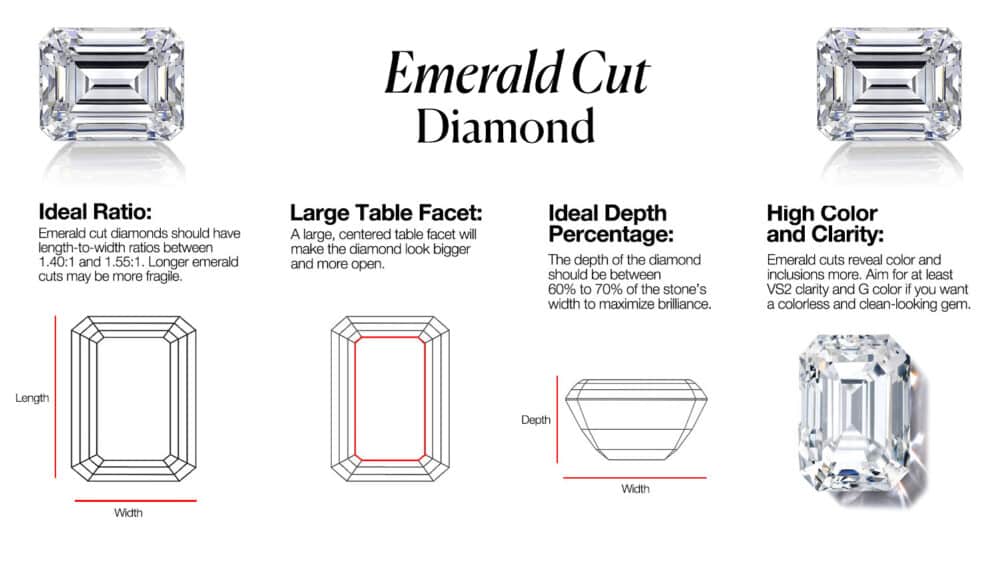
- The “Golden” Ratio: Aim for a Length-to-Width ratio of 1.40 to 1.50 for the classic rectangular look.
- The Clarity Rule: Never buy SI1 or SI2 blind. The “Window” effect makes inclusions obvious. Stick to VS2+ (and verify with 360-video).
- The Cut Specs:
- Depth: 60% – 67%
- Table: 61% – 69%
- The Smart Buy: James Allen is mandatory for Emerald cuts because you must inspect the clarity plot in Super-Zoom to ensure the stone is eye-clean.
You’ve been captivated by the emerald cut’s cool, Art Deco elegance. It’s a choice that signifies confidence and timeless style.
But unlike brilliant cuts that hide flaws in a fiery sparkle, the emerald cut’s deep, clear window reveals everything. This complete transparency is both its greatest beauty and its biggest risk. One small mistake can’t be hidden.
As your friend in the business, I’m here to ensure you don’t make those mistakes. We are going to walk through the 9 most common traps that buyers fall into with emerald cuts.
For each trap, I’ll give you a simple, powerful solution. By the end, you’ll be able to choose an emerald cut with the critical eye of an expert.
Diamond IQ Test: Natural or Lab-Grown?
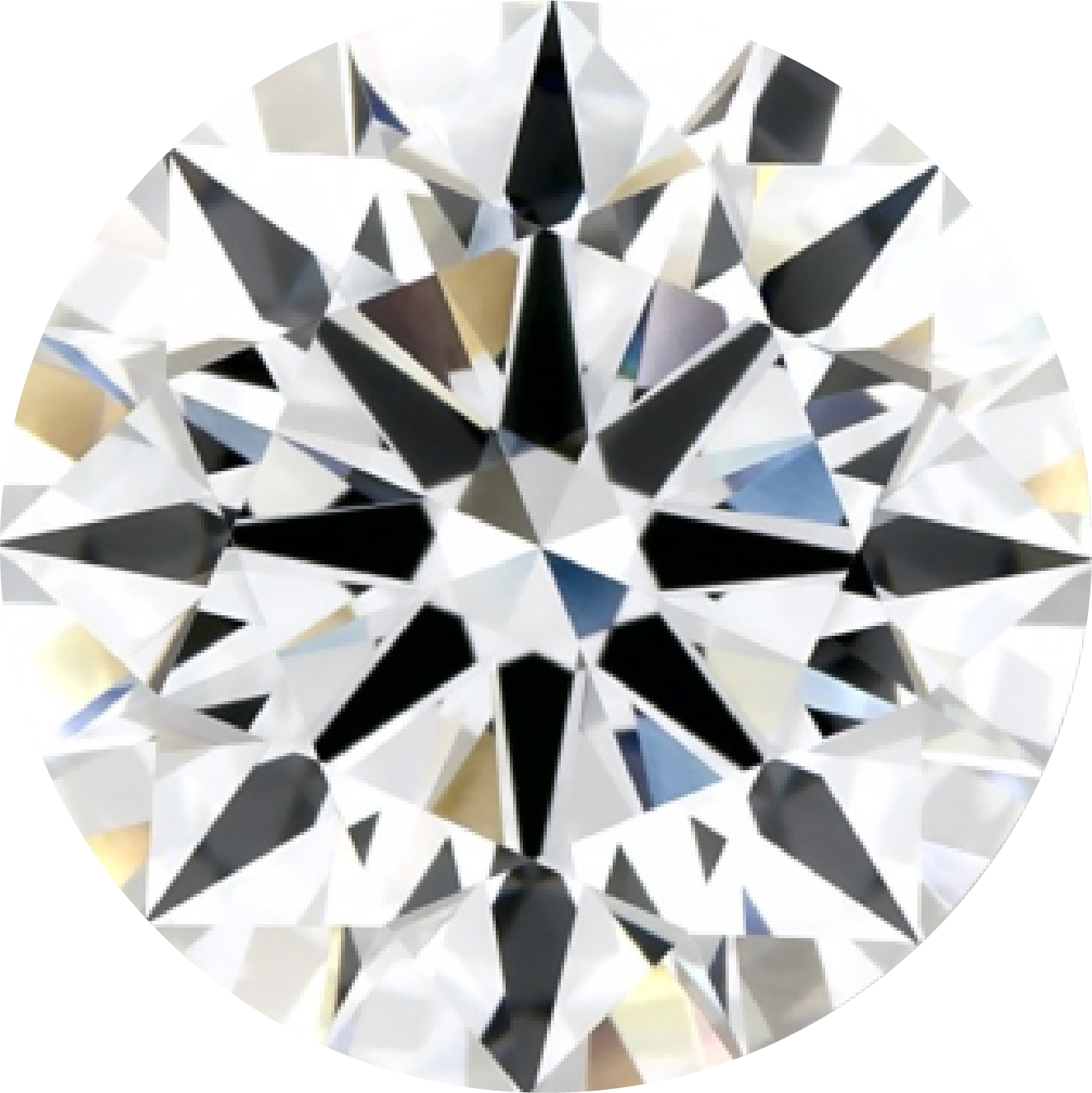
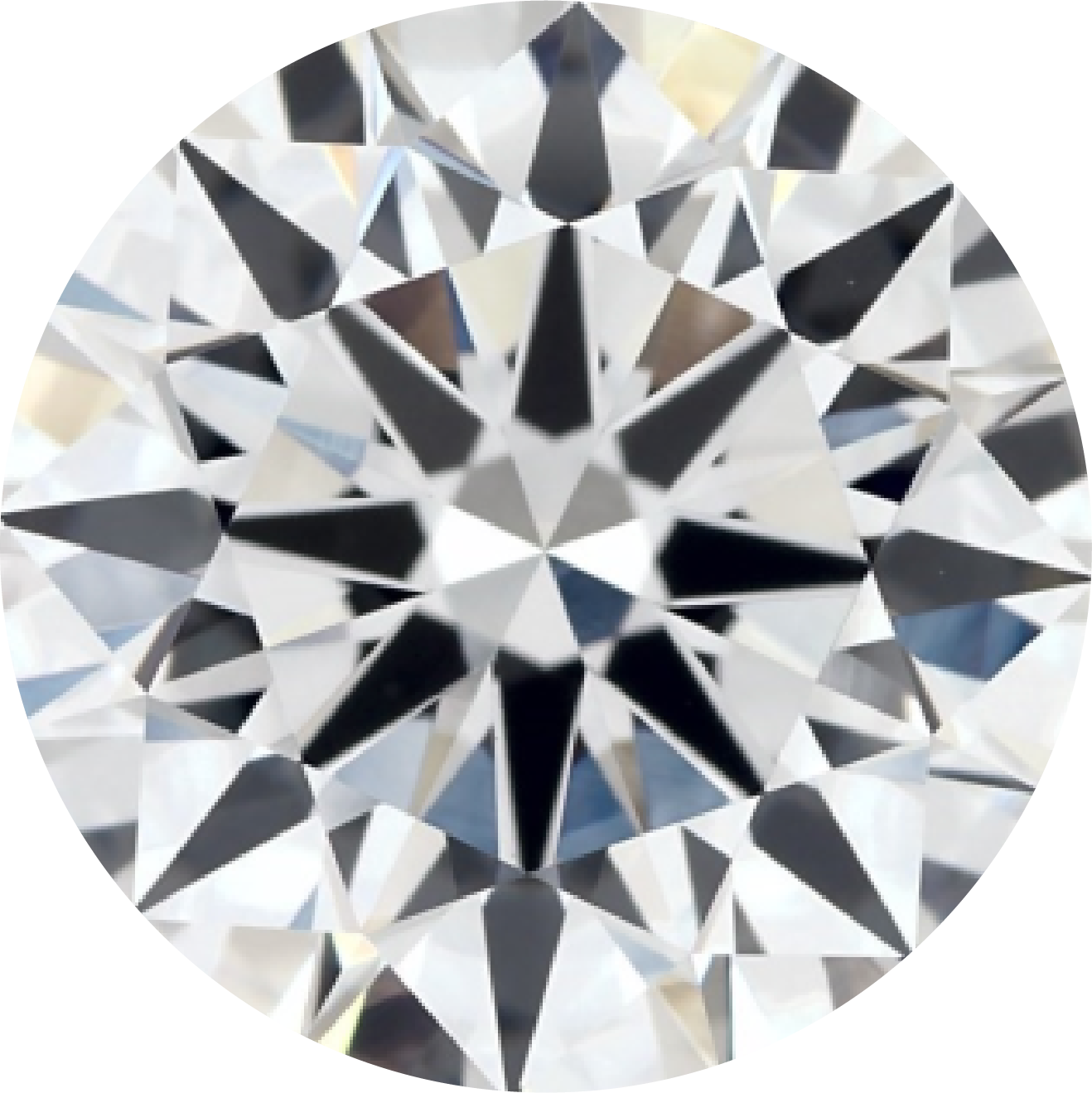
Two identical diamonds: GIA Certified, 1.51ct, D Color, VVS1, Ideal Cut. One is natural ($16,240), the other is lab-grown ($1,970). Choose the diamond you like better and see if you can match it to its origin.
An emerald cut diamond is a rectangular step-cut stone defined by 57 facets, a flat open table, and long parallel facet lines that create a “hall of mirrors” flash instead of brilliant-cut sparkle. It costs 10–20% less than a round at matching specs, looks 10–15% larger face-up, and demands VS2+ clarity because its open table magnifies every inclusion.
Quick Answer
Emerald Cut Diamond — 60-Second Buying Answer
- Ideal table: 60–68%. Ideal depth: 61–69%. Outside these = windowing, dead center, instant visible flaws.
- Minimum clarity: VS2 — anything lower, the step facets magnify inclusions like a hall of mirrors.
- Minimum color: H for white gold, J for yellow gold. Emerald cuts show color more than brilliant cuts.
- Face-up size: 10–15% larger than round at the same carat weight. A 1.5ct emerald looks like a 1.7ct round.
- Price range: 10–20% cheaper than round at matching specs. 1ct ≈ $4,500–$7,000 natural, $900–$1,800 lab.
- Best vendor: Blue Nile for selection depth and HD video. Rare Carat for price-matched market scans.
- Rule: If the stone looks like a hall of mirrors in motion, buy it. If the center looks like a window, walk away.
Mehedi’s Take: “Emerald cuts are the single most misunderstood shape in the industry. Buyers come in asking for sparkle, see a hall-of-mirrors flash instead, and walk away confused. The flash IS the sparkle — it just moves differently. Learn the pattern and you’ll see why the shape has outlived every trend since 1920.” — Mehedi Hasan, Diamond Industry Veteran
A Shape for the Confident & Classic
Before we dive into the mistakes you need to avoid, let’s take a moment to appreciate why you were drawn to the emerald cut in the first place. This isn’t just a diamond shape; it’s a statement. Its soul was forged in the bold, geometric rebellion of the Art Deco era of the 1920s.
Think of the clean lines of a skyscraper, the glamour of a classic film star, the quiet confidence of “old money” elegance. That is the vibe of an emerald cut. It’s a choice that doesn’t scream for attention with fiery sparkle, but instead captivates with its cool, serene, and architectural beauty.
Now, as much as I admire this sophisticated cut, my job is to be your honest friend in the business. The very things that make the emerald cut so unique are also what make it so demanding. Let’s lay it all out with a clear-eyed look at its pros and cons.
| The Pros of an Emerald Cut | The Cons of an Emerald Cut |
|---|---|
| Understated, Elegant “Hall-of-Mirrors” Effect | Shows Inclusions Easily (Clarity is Key) |
| Appears Larger Than Other Shapes (Good “Spread”) | Does Not Hide Color Well |
| Excellent Value (15-25% Cheaper Than Rounds) | GIA Does Not Assign an Overall Cut Grade |
| Unique and Distinctive Style | Not as Fiery or “Sparkly” as Brilliant Cuts |
So what does this all mean for you, the buyer? It means you’ve chosen a shape that offers incredible style and fantastic value.
But look closely at that “Cons” column—each one of those points is a potential trap. The very transparency that makes an emerald cut so beautiful is also what makes it unforgiving. It’s a shape that doesn’t hide its secrets, which is precisely why it’s for an informed buyer.
These challenges aren’t deal-breakers; they are simply the reasons you need a clear blueprint to follow. For a full overview of how the emerald cut compares visually to its peers, our Diamond Shapes Guide provides a fantastic lineup. Now, let’s make sure you avoid the mistakes that so many others make with this stunning diamond.
Do Emerald Cuts Sparkle Less? The “Hall of Mirrors” Truth
This is the #1 complaint I hear: “I bought an emerald cut, but it looks like a piece of glass compared to my friend’s round diamond.”
Let’s be brutally honest: Yes, emerald cuts sparkle less.
But they are supposed to.
If you are expecting the “Disco Ball” glitter of a Round Brilliant or Radiant cut, you are buying the wrong shape. The Emerald cut is engineered for Elegance, not Scintillation.
The Optics: Brilliant vs. Step Cut
- Brilliant Cuts (Round, Cushion, Radiant): Have triangular and kite-shaped facets arranged to shatter light into a million tiny fragments. This hides flaws and maximizes “Fire” (rainbow sparkles).
- Step Cuts (Emerald, Asscher): Have long, linear rectangular facets arranged like a staircase. This creates the “Hall of Mirrors” effect—broad, confident flashes of white light.
Comparison: The Visual Trade-Off
| Feature | Emerald Cut (Step Cut) | Radiant Cut (Brilliant Cut) |
|---|---|---|
| Sparkle Type | Slow, dramatic “On/Off” flashes. | Fast, chaotic “Crushed Ice” glitter. |
| Clarity Risk | High. Shows everything (Open Window). | Low. Hides flaws well (Busy Pattern). |
| Color Retention | High. Shows warmth/yellow easily. | Medium. Hides color better. |
| Face-Up Size | Looks Larger (Long diagonal). | Looks Smaller (Deep cut). |
| Price (Relative) | $ (Excellent Value) | $$ (Mid-Range) |
Mehedi’s Verdict:
If you want “Bling,” buy a Radiant Cut. It has the same rectangular outline but with the sparkly facet pattern of a round diamond.
If you want “Old Money Sophistication” and understated luxury, buy the Emerald Cut.
My Expert Guide to Choosing the Perfect Emerald Cut (Avoid These 9 Mistakes)
Welcome to the most important part of this guide. We are now going to walk through the nine most common—and costly—mistakes I see people make when buying a beautiful emerald cut diamond.
I’m going to break down each trap, show you exactly why it’s a problem, and give you a simple, powerful solution to avoid it. Master these nine points, and you will handle your search with the confidence and critical eye of a seasoned professional.
Mistake #1: Expecting a “Sparkly” Diamond (and Misunderstanding its Unique Beauty)
The Trap: This is the most common and fundamental mistake. Buyers who are used to the fiery, splintery sparkle of brilliant cuts (like the round or cushion) look at an emerald cut and think something is wrong.
They expect that familiar “sparkle,” and when they don’t see it, they dismiss a potentially beautiful stone as being dull or low quality.
The Harsh Reality: An emerald cut is not designed to “sparkle” in the traditional sense. It’s designed to flash. Its beauty is completely different. If you buy an emerald cut expecting the fire of a round brilliant, you will always be disappointed.
The Mehedi Solution: Embrace the “Hall-of-Mirrors” Effect
You must adjust your expectation from “sparkle” to “elegance.” An emerald cut is a step cut, which means it has long, linear, rectangular facets that run parallel along the length of the stone. Think of them as a perfectly aligned staircase leading down into the heart of the diamond.
When you look at a well-cut emerald diamond, you are not meant to see a glittery explosion. Instead, you should see a breathtaking “hall-of-mirrors” effect.
As you rock the diamond back and forth, you’ll see broad, dramatic flashes of white light (called “flash” or “glare”) and deep, clear panes of darkness, creating a stunning on/off pattern. It’s a cool, architectural, and deeply mesmerizing effect.
- Brilliant Cut: Like a glittering, sunlit ocean surface. Chaotic, fiery, and full of energy.
- Emerald Cut (Step Cut): Like a perfectly still, clear lake reflecting the sky. Calm, elegant, and deep.
The beauty of an emerald cut lies in its clarity and its clean, confident flashes of light. It’s a statement of sophistication, not a shout for attention.
If you love that icy, geometric elegance, then you’ve found your perfect diamond. If you truly crave that fiery sparkle, a brilliant cut is a better choice for you.
Mistake #2: Going Too Low on Clarity (The Unforgiving Window)
The Trap: A buyer has learned the smart-money rule for brilliant cuts: find an eye-clean SI1 or even SI2 diamond and save a fortune. They then try to apply this exact same rule to their emerald cut diamond search.
The Harsh Reality: This is the single most expensive mistake you can make. The emerald cut’s large, open table (its main top facet) is a crystal-clear, unobstructed window straight into the very center of the stone.
Unlike a brilliant cut, it has no complex facet pattern to break up light and camouflage small imperfections. An inclusion that would be completely invisible in a round brilliant can look like a glaring flaw right in the middle of an emerald cut’s window.
The Mehedi Solution: Make Clarity Your #1 Technical Priority and Aim for VS2 or Higher
When buying an emerald cut, clarity is not the place to hunt for a bargain. Here is my breakdown of the GIA clarity grades and how you should apply them specifically to an emerald cut search:
| Clarity Grade | Mehedi’s Expert Recommendation for Emerald Cuts |
|---|---|
| I1, SI2 | Almost Never Eye-Clean. Avoid these grades entirely unless you can physically inspect the stone and the inclusion is a minor feather right on the edge, far from the central window. This is extremely rare. (Read more in our I1 Clarity Guide). |
| SI1 | The Risky Bargain. It is possible to find an eye-clean SI1, but it’s very difficult. The inclusion must be small, not dark in color, and located off to the side. You MUST rely on high-quality 360° videos to verify. (See SI1 Diamond Secrets). |
| VS2 | The Absolute Minimum Safe Bet. This is my baseline recommendation. In most cases, VS2 inclusions are not visible to the naked eye. It offers a fantastic balance of appearance and price. (Explore our VS2 Diamond Index). |
| VS1 | The Worry-Free Zone. At this grade, inclusions are very minor and almost always invisible to the naked eye. If you have a slightly higher budget and want extra peace of mind, this is an excellent choice. (Check our VS1 Value Guide). |
| VVS2+ | The Collector’s Grade. Inclusions are so small they are difficult for gemologists to find under 10x magnification. While stunning, you are paying a significant premium for no additional visual benefit. (See VVS2 Price Comparison). |
But it’s not just the grade that matters; it’s the type of inclusion. Here’s a quick guide to what to watch out for on an emerald cut GIA report plot:
- Avoid: Large, dark crystals or black carbon spots, especially under the table.
- Acceptable: Small, white “feathers” or transparent “clouds” located near the girdle (the edge) or at the corners, as they can be hidden by prongs.
For a deeper dive into these nuances, our complete guide on what is the best diamond clarity provides a fantastic foundation. But for emeralds, the rule is simple: when in doubt, go one grade higher than you would for a round brilliant.
Mistake #3: Ignoring the Length-to-Width Ratio (And Choosing the Wrong Shape)
The Trap: The buyer assumes all emerald cuts are the same classic, rectangular shape they see in movies. They find a diamond with great specs and a good price, but when the ring arrives, the diamond looks oddly square and “stubby” on their finger, not elegant and elongated.
The Harsh Reality: The “shape” of an emerald cut is one of its most defining features, and it can vary dramatically. This is not something to be overlooked. Choosing a shape that doesn’t fit your personal taste or hand can lead to major disappointment.
The Mehedi Solution: Decide on Your Preferred Shape Before You Search
The diamond’s silhouette is defined by its Length-to-Width (L/W) Ratio. You find this number by dividing the diamond’s length by its width (e.g., a 7mm by 5mm diamond has a 1.40 L/W ratio). Here’s a breakdown of the styles you’ll find:
| Length/Width Ratio | Style Description | Mehedi’s Expert Take |
|---|---|---|
| 1.30 – 1.39 | The Wider Rectangle | A beautifully balanced shape that feels substantial and classic. It has a slightly more “robust” presence than the classic rectangle. (Explore more in our Diamond Shapes Guide). |
| 1.40 – 1.50 | The “Classic” Rectangle | The Gold Standard. This is the iconic emerald cut shape you most often see. It’s the perfect balance of length and width and offers a very graceful, finger-slimming effect. (See our Emerald Cut Guide). |
| 1.51 – 1.60 | The Elongated Rectangle | A long, slender, and dramatic shape that provides maximum finger coverage. It has a very modern and fashion-forward look. |
| Below 1.30 | The “Almost Square” | These stones can look a bit wide and less elegant. If you prefer a square shape with step cuts, you should consider the Asscher cut instead. |
There is no “best” ratio; it is purely a matter of personal style. My advice is to look at real-world examples and decide if you are drawn to the classic, the wider, or the more elongated look.
Then, when you begin your search on a site like James Allen or Blue Nile, you must use the L/W ratio filter to ensure you are only seeing diamonds with the exact shape you desire.
Mistake #4: Trusting the Certificate for Cut Quality
The Trap: A buyer sees “GIA Certified” and assumes all the quality metrics have been graded. They look for a “Cut” grade on the report for their emerald cut and, seeing none, either panic or assume it doesn’t matter.
The Harsh Reality: The GIA does NOT provide an overall Cut grade for any fancy-shaped diamond, including the emerald cut.
The certificate will give you detailed specs, but it will not give you a simple “Excellent,” “Very Good,” or “Good” summary of how those specs work together. This means you have to be the judge.
The Mehedi Solution: Use Expert Proportions as Your Starting Point, Not Your Finish Line
While there is no single “perfect” set of numbers, there are certainly proportions that are known to produce a beautiful, lively emerald cut. Use the following table as your initial filtering guide to weed out the poorly cut stones:
| Cut Quality Parameter | Excellent (Recommended) | Very Good | Good |
|---|---|---|---|
| Table Percentage (%) | 61 – 69% | 57-60% or 70-72% | 54-56% or 73-74% |
| Depth Percentage (%) | 61 – 67% | 59-60.9% or 67.1-70% | 57-58.9% or 70.1-74% |
| Expert Verdict | Proportions in this range maximize the prismatic “On/Off” flashes unique to step-cuts. Deviating into the “Good” range often results in a “leaky” or dark center. Reference our Full Diamond Cut Chart for more. | ||
How to Use This Table:
- Depth Percentage: This is key. Too shallow (under 61%), and the stone will look glassy and transparent, with no life. Too deep (over 74%), and the light will get trapped at the bottom, creating a dark, dead-looking center. Your goal is that sweet spot from 61-67%.
- Table Percentage: This is the large main facet. You want a table that is in proportion to the rest of the stone to allow light to enter and exit properly. The 61-69% range is ideal.
These numbers are a fantastic tool for your initial search filter, but they are not a substitute for your own eyes. A stone can have “perfect” numbers and still lack that magical flash.
A full understanding of these principles is covered in our Diamond Cut Chart, but the key takeaway for emerald cuts is that the certificate gets you in the ballpark, but the video tells you who won the game.
Mistake #5: Forgetting About Symmetry & Polish
The Trap: This is a huge, high-value gap the competitors miss, and a trap many buyers fall into. A buyer finds a diamond with a great price, a VS2 clarity, and good table/depth numbers, but they don’t look any deeper at the other grades on the certificate.
The Harsh Reality: In a brilliant cut, the chaotic sparkle can hide tiny flaws in symmetry or polish. In an emerald cut, with its long, clean, unforgiving lines, even the slightest flaw in symmetry or polish is glaringly obvious.
Poor symmetry means the “steps” in your hall of mirrors will look wobbly and uneven, destroying the entire effect. Poor polish means the surface of those “mirrors” is slightly scuffed, dulling their reflective power.
Read Our 5-Star Blue Nile Review
Check our comprehensive Blue Nile review to learn why we rated Blue Nile 5 stars for their exceptional quality and value.
The Mehedi Solution: Insist on “Excellent” for Both Polish and Symmetry
This is one of the easiest and most important rules. When you are setting your filters, you MUST set both Polish and Symmetry to “Excellent.” Period. Non-negotiable.
The price difference between a stone with “Very Good” polish/symmetry and one with “Excellent” is almost negligible, but the visual difference in the final stone can be enormous.
An emerald cut with perfect, crisp, and aligned facets will have a much more dramatic and beautiful flash. Don’t compromise here.
Mistake #6: Choosing a Low Color Grade
The Trap: A buyer is trying to maximize their carat size and decides to save a significant amount of money by choosing a K or J color emerald cut. They’ve heard that H is a great value, so how much different can J be?
The Harsh Reality: A lot different, especially in an emerald cut. Just like clarity, the long facets and deep, open window of an emerald cut tend to retain and reveal color much more than a brilliant cut does.
That faint warmth in a J-color diamond that might be unnoticeable in a round brilliant can present as a clear and often undesirable yellow tint in the body of an emerald cut.
James Allen: Our 5-Star Choice for Price and Selection
Check our comprehensive James Allen Review to learn more about their pricing and commitment.
The Mehedi Solution: Stick to the “Sweet Spot” Grades Based on Your Setting Metal
An E Color Diamond or D color is a beautiful but unnecessary luxury for most buyers. By staying in that G-H range for white gold, you are making the absolute smartest financial decision.
💍 Limited Time: Forge your perfect ring! Get up to 20% OFF engagement ring settings at James Allen!
✨ Conscious Value: Save on brilliance! Lab-Grown Diamonds are now up to 10% OFF at James Allen.
🔥 Flash Sale:
Huge inventory blowout! Save
Mistake #7: Picking a “Dead” Stone (Even with a Good Certificate)
The Trap: The buyer does everything right. They find a stone with an “Excellent” polish/symmetry, VS1 clarity, G color, and perfect on-paper proportions. They buy it without looking at the video because the certificate is flawless.
The Harsh Reality: The ring arrives, and the diamond just looks… flat. It has no life, no pop. Even a technically perfect emerald cut can have a lack of “light performance” if the precise combination of angles isn’t quite right.
The Mehedi Solution: The Video is Your Final and Most Important Test
The certificate is for verification. The 360° video is for beauty. You MUST watch the video of your final contenders and look for the following:
- The “On/Off” Flash: As the diamond rotates, do you see those broad, dramatic flashes of bright light turning on and off? A great emerald cut will have a dynamic, lively flash.
- Minimal “Dark Zones”: Every emerald cut will have dark areas, that’s part of the contrast that makes it beautiful. But the stone should not look overwhelmingly dark or have a large “dead” spot in the middle.
- Brilliance Across the Steps: The light should seem to dance up and down the “staircase” of the facets.
Some premium branded cuts, like those explored in our Astor by Blue Nile Cut review, are specifically pre-vetted for this exact kind of ideal light performance, but you can absolutely find it on your own if you trust your eyes and the video.
Astor by Blue Nile is the collection for the data-driven buyer who demands scientific proof of performance. These diamonds are selected from the top 0.1% of Blue Nile's massive inventory, representing the most elite stones they offer. The collection's foundation is a unique dual-certification system that removes all guesswork, providing objective, third-party validation of a diamond's sparkle.
WHAT WE LOVE ABOUT THIS COLLECTION:
- Exclusive Dual Certification: Every diamond includes a GIA report plus a GemEx Light Performance report.
- Scientific Brilliance Scores: The GemEx report provides objective, numerical scores for Brilliance, Fire, and Sparkle.
- Ultimate Curation: Represents the absolute pinnacle of Blue Nile's inventory—only one in a thousand diamonds makes the cut.
- Guaranteed Performance: The strict vetting process guarantees an elite level of light performance, backed by data.
- The "Peace of Mind" Purchase: Perfect for buyers who want the proven best without needing to become a gemology expert themselves.
- Backed by Blue Nile's Upgrade Program: Your Astor diamond's full value can be applied toward a future upgrade.


Mistake #8: Ignoring the Setting’s Influence
The Trap: The buyer is so focused on the diamond that they spend only five minutes choosing a setting, picking one that is bulky or overly trendy.
The Harsh Reality: The setting can either raise your emerald cut or completely ruin its elegant aesthetic. The clean, geometric lines of the emerald are its superpower, and a clumsy or overpowering setting can completely overwhelm it.
The Mehedi Solution: Choose a Setting that Complements, Not Competes
- Ideal Choices:
- Solitaire Setting: A simple four-prong solitaire is the quintessential choice. It is clean, timeless, and allows the unique shape of the emerald to be the undisputed star of the show.
- Three-Stone Setting: This is another iconic look. Flanking a central emerald with two smaller side stones (either smaller emeralds, tapered baguettes, or even trapezoids) creates a beautiful, architectural, and balanced ring.
- Solitaire Setting: A simple four-prong solitaire is the quintessential choice. It is clean, timeless, and allows the unique shape of the emerald to be the undisputed star of the show.
- What to be Careful With:
- Thick Bezel Settings: While secure, a very thick bezel can hide the cropped corners and make the emerald look more like a plain rectangle.
- Overly Ornate Halos: A very busy or floral halo can sometimes clash with the clean, modern lines of the emerald cut. A simple, delicate halo is usually a better choice.
- Thick Bezel Settings: While secure, a very thick bezel can hide the cropped corners and make the emerald look more like a plain rectangle.
this is where you can see the magic happen. I always recommend using a tool like the one found when you build your own engagement ring on James Allen to virtually pair your chosen diamond with different settings to see what you love best.
James Allen is a top leader in online diamond sales, offering cutting-edge imaging technology that lets you inspect diamonds as if you were using a jeweler's loupe. With the largest exclusive selection of loose diamonds available online and excellent pricing, they also boast one of the finest collections of lab-created diamonds on the market. They currently run a 25% discount on selected lab-grown diamonds!
WHAT WE LOVE ABOUT THEM:
- 30-day no-questions-asked return policy, with a prepaid shipping label provided by James Allen.
- Lifetime warranty on all purchases.
- Free international shipping.
- Complimentary prong tightening, repolishing, rhodium plating, and cleaning every six months.
- Insurance appraisals included with purchases.
- One free resizing within 60 days of purchase.
- Free ring inscriptions available.
- Best-in-class high-quality imagery for every diamond in stock.
- 24/7 customer support.
- Premium, best-in-class packaging.

Mistake #9: Choosing the Wrong Diamond “Type” for a Fancy Color
The Trap: This is a more advanced mistake, but an important one for a true connoisseur. A buyer looking for a fancy colored diamond (like a yellow or a pink) treats all diamonds as if they are the same chemically.
The Harsh Reality: The chemical makeup of a diamond can dramatically affect the purity and intensity of its color, which is a huge driver of value.
The Mehedi Solution: Understand the “Collector’s Grade” – Type IIa Diamonds
For 98% of buyers choosing a white diamond, this is not something you need to worry about. But for those looking for a truly exceptional fancy colored diamond, or the purest D-color stones, understanding diamond “types” is key.

- Type Ia Diamonds: This is your standard diamond. It contains trace amounts of nitrogen, which can sometimes impart a very faint yellowish hue. 98% of all diamonds fall into this category.
- Type IIa Diamonds: These are the superstars of the diamond world. Making up less than 2% of all mined diamonds, they are chemically pure, containing no measurable nitrogen. This purity allows them to achieve a perfect, water-clear D color.
More importantly for fancy colors, this lack of nitrogen means that their color (often pink or brown) comes from distortions in their crystal structure, not chemical impurities. This results in an incredibly pure and saturated hue.
The emerald cut is the perfect shape for showcasing these rare Type IIa colored diamonds. Its broad facets and deep window don’t break up the light into distracting sparkle, but instead allow you to look deep into the stone and appreciate the rich, pure, uninterrupted color.
While it is not an everyday purchase, understanding this distinction proves you know your gems, right down to the level of their origin, a concept that is also at the heart of our article on why we refer to some diamonds as conflict materials.
The “Cut Quality” Cheat Sheet: Ideal Proportions
GIA does not give a Cut Grade (Excellent/Very Good) for Emerald Cuts on their reports. They only grade Polish and Symmetry.
This puts you in danger. A cutter can cut the stone too deep (to save weight) or too shallow (to make it look big), and the GIA report won’t explicitly warn you with a “Fair” or “Poor” grade.
You must audit the numbers yourself. Use this table to filter out the “Dead” stones.
[year] Emerald Cut Proportions Guide
| Specification | Excellent / Ideal (Target) | Very Good (Acceptable) | Avoid (Dead Stone) |
|---|---|---|---|
| Depth % | 61.0% – 67.0% | 59.0% – 70.0% | > 74% or < 57% |
| Table % | 61.0% – 69.0% | 57.0% – 72.0% | > 75% or < 53% |
| L/W Ratio | 1.40 – 1.50 | 1.30 – 1.60 | < 1.25 (Too Square) |
| Girdle | Very Thin – Slightly Thick | Thin – Thick | Very Thick (Wasted Weight) |
| Mehedi’s Technical Insight: Emerald cuts do not have a standard GIA cut grade. You must manually verify these specs using a GIA Certificate. For the best light performance, cross-reference your findings with our Diamond Cut Chart. | |||
Why Depth Matters:
- Too Deep (>70%): The diamond looks small for its weight. Light leaks out the bottom, creating a dark “Black Hole” in the center.
- Too Shallow (<58%): The diamond looks glassy and lifeless (the “Window” effect). You can see the ring setting right through the stone.
Ideal Table and Depth for Emerald Cut Diamond: The Exact Numbers
The single biggest trap in buying an emerald cut is skipping the proportions. GIA doesn’t grade emerald cuts for cut quality the same way they grade rounds — which means retailers can list “excellent” stones that are actually poorly proportioned. Here are the exact numbers you need.
| Proportion | Ideal Range | Acceptable | Avoid | What This Means |
|---|---|---|---|---|
| Table % | 60–68% | 58–72% | <58% or >72% | Below 58 = dark center. Above 72 = looks hollow, “see-through” center (windowing). |
| Depth % | 61–69% | 59–72% | <59% or >72% | Shallow = fish-eye effect. Deep = dead center, no light return. |
| Length-to-Width Ratio | 1.40–1.50 | 1.30–1.55 | <1.30 (square-ish) or >1.60 (too long) | 1.45 is the classic Hollywood proportion. Below 1.30 reads as Asscher. |
| Crown Angle | 34–38° | 31–40° | <31 or >40° | Too flat = no fire. Too steep = light leaks out the sides. |
| Pavilion Depth | 42–45% | 40–47% | <40 or >48% | Shallow pavilion = windowing (you see straight through). Deep = nail-head dark spot. |
| Polish | Excellent | Very Good | Good or below | Step facets magnify polish lines. Must be Excellent or Very Good. |
| Symmetry | Excellent | Very Good | Good or below | Asymmetric emerald cuts look visibly uneven. Non-negotiable. |
Verdict: Target table 60–68% and depth 61–69% with Excellent polish + symmetry. Outside those ranges, the stone will have one of three visible problems: a dark center (deep), a see-through window (shallow), or an uneven face-up appearance (poor symmetry). Blue Nile’s emerald cut inventory can be filtered by all these specs — use the filters, don’t trust generic “ideal cut” labels.
A quick sanity check before you buy: pull the HD video and watch the stone rotate. If the center flashes between dark and bright with the long parallel facet lines reading clearly, the proportions are right. If the center stays uniformly bright (window) or uniformly dark (nailhead), the proportions are wrong — walk away regardless of what the certificate says.
Emerald Cut Diamond Clarity: Why VS2 Is the Minimum
Emerald cuts have the open-table problem. Brilliant cuts (rounds, cushions, ovals) hide inclusions behind refracted light. Step cuts don’t. The flat table and parallel facets act like a magnifying glass — any inclusion in the middle shows up like a crack. This changes the clarity math completely.
| Clarity Grade | Emerald Cut Eye-Clean? | Price Premium vs SI1 | What This Means |
|---|---|---|---|
| FL / IF | Always | +40–60% | Overkill. You’re paying for a lab certification nobody sees. |
| VVS1 / VVS2 | Always | +20–30% | Safe but premium. Visible benefit over VS1 is nil. |
| VS1 | Yes, in 95%+ of stones | +10–15% | Our sweet spot. Low risk, meaningful savings. |
| VS2 | Yes, in 70% of stones — must verify video | Baseline | Minimum acceptable grade. Verify eye-clean via HD video. Reject any with central feather. |
| SI1 | Rarely — 30% chance eye-clean | -10% | Risky. Only consider if inclusions are mapped to the outer corners, never the center. |
| SI2 | No, 90% of the time | -20% | Avoid. Open table + SI2 inclusions = visible crack-like features. |
| I1 or below | Never | -30%+ | Hard pass. Not acceptable in a step cut regardless of price. |
Verdict: VS1 is the sweet spot for emerald cuts. VS2 works if you verify eye-cleanliness via HD video. Never go SI1 or lower — the step-facet magnification will reveal every included crystal, feather, or cloud. The 10–15% premium for VS1 over VS2 pays for itself in confidence; the savings from going SI1 or below pay for a stone you’ll regret.
One trick experienced buyers use: pull the plot diagram from the GIA report. If any inclusion sits inside the inner rectangle (the “visible zone”), skip the stone — even if the grade says VS2. If all inclusions sit at the corners or girdle edges, you can trust the eye-clean label.
Best Color for Emerald Cut Diamond: H Is the Floor
Emerald cuts show body color more than brilliant cuts. The step facets act like big flat windows — any yellow or brown tint shows cleanly across the open table. Color grade matters more here than it does on a round.
| Color Grade | White Gold / Platinum Setting | Yellow Gold Setting | Rose Gold Setting | What This Means |
|---|---|---|---|---|
| D / E / F | Overkill | Overkill | Overkill | Pay only if you specifically want “colorless” certified. No face-up advantage over G. |
| G | Our pick | Overkill | Overkill | Best value — looks colorless face-up, saves 20–30% vs D. |
| H | Safe floor | Our pick | Good | Still looks white face-up in platinum. Yellow gold hides the slight warmth. |
| I | Risky — slight tint visible | Safe | Our pick | Yellow gold completely masks the tint. Platinum shows it. |
| J | Avoid | Safe | Safe | Yellow or rose gold only. Tint shows clearly in white metals. |
| K and below | Never | Risky | Risky | Tint too strong even in warm metals. Skip for engagement rings. |
Verdict: For white gold or platinum settings, don’t go below H. For yellow gold, you can safely drop to J. The emerald cut’s step facets amplify any yellow tint — a round-brilliant K color might read as “warm,” but a K-color emerald cut reads as “tinted.” G in white metal, H–I in yellow metal is the sweet spot across the whole emerald cut category.
Mehedi’s Take: “The number one mistake I see on emerald cuts is buying a shallow stone for the bigger face-up footprint. The buyer gains visible size, loses light return, and ends up with what we call a ‘window’ — a stone that looks hollow in the center. Pay for depth 61 to 69%. Everything else is cosmetic.” — Mehedi Hasan, Diamond Industry Veteran
How Much Does an Emerald Cut Diamond Cost? (And Why Is It a Good Value?)
Alright, let’s talk about the bottom line: your budget. The sophisticated elegance of the emerald cut diamond can make it feel like it should be the most expensive diamond shape, but here is one of its most wonderful secrets: it offers some of the best value available.
As we’ve discussed, a diamond’s price is heavily influenced by how much of the original rough diamond crystal is lost during the cutting and polishing process. A round brilliant can lose over 50% of the original stone.
The emerald cut, with its rectangular shape, is much more efficient. It conforms more closely to the natural shape of many diamond crystals, meaning the cutter can preserve more of the carat weight.
This higher “yield from rough” means less waste, and that cost savings is passed directly on to you. On average, you can expect an emerald cut to cost 15-25% less than a round brilliant of the exact same carat weight and quality.
This is a massive advantage that allows you to either get a significantly larger stone for your budget or save a considerable amount of money.
To give you a real-world starting point, here is a sample pricing table for a high-quality natural emerald cut diamond (using our recommended “sweet spot” specs of H color and VS2 clarity). Please remember that prices fluctuate, but this is a very realistic guide for what you can expect.
| Carat Weight | Typical Price Range (H Color, VS2 Clarity) |
|---|---|
| 1.00 Carat | $3,300 – $4,500 |
| 1.50 Carat | $7,000 – $9,500 |
| 2.00 Carat | $14,000 – $18,000 |
| Mehedi’s Price Analysis: For the best value, target an H color stone. If you are shopping for the iconic 2.0ct look, see our Emerald Cut Comparison Guide. You can calculate custom specifications using our Diamond Rate Calculator. | |
What this table shows is the incredible value at every level. The two-carat mark is a hugely popular milestone for emerald cuts, as the shape really starts to show off its elegant proportions at this size.
For anyone seriously considering a stone this impressive, it’s worth doing a deep dive into the specific offerings from the top online retailers. We do a full head-to-head analysis in our guide to 2 Carat Emerald Cut Rings: Blue Nile vs. James Allen.
And if you’re aiming for a true showstopper, the value continues. As you can see, diamond prices scale exponentially—the price-per-carat increases as the stones get larger and rarer. When you reach the three-carat mark, the differences in cut quality and vendor pricing become even more critical.
We’ve created a dedicated guide to help you handle this high-value purchase: 3 Carat Emerald Cut Ring: James Allen vs. Blue Nile.
A Visual Guide to Emerald Cut Sizes
This is where the emerald cut truly becomes a superstar for a savvy buyer like you. Before we look at the charts, you must remember this critical rule: carat is a measure of WEIGHT, not of visual size. How big a diamond looks on a finger is all about its surface dimensions, what we in the trade call its “spread.”
Because of its elongated shape and typically shallower depth compared to a round brilliant, the emerald cut has a larger table and a greater surface area.
This means that a 1.00-carat emerald cut will look noticeably larger face-up than a 1.00-carat round brilliant. It’s a fantastic optical illusion that gives you a major “wow” factor for your money.
The tables below are your guide to understanding the real-world measurements of emerald cuts at different carat weights. I’ve separated them into the classic Rectangular shape and the less common Square shape.
Rectangular Emerald Cut Diamond Size Chart (Classic Shape)
Square Emerald Cut Diamond Size Chart
| Carat Weight | Average Dimensions (MM) |
|---|---|
| 0.50 ct. | 6 x 4 mm. |
| 1.00 ct. | 7 x 5 mm. |
| 1.50 ct. | 7.5 x 5.5 mm. |
| 2.00 ct. | 8.5 x 6.5 mm. |
| 3.00 ct. | 9.3 x 7.5 mm. |
| 4.00 ct. | 10 x 8 mm. |
| Buyer Strategy: Dimensions can vary based on depth. For high-impact visual spread, see our guide on 2.00 Carat Benchmarks or the massive 4.00 Carat Showstopper. Check millimeter accuracy for your specific diamond using our Diamond Carat Size Chart. | |
Look at the 1.00-carat mark. The square emerald is 6.5mm across. The rectangular emerald is 7mm long by 5mm wide. That extra half-millimeter in length on the rectangular shape makes a huge visual difference on the finger, adding to that flattering, elongated look.
To see how these dimensions compare to all the other diamond shapes, you should definitely have our complete Diamond Carat Size Chart open in another tab. It’s an indispensable tool for visualizing the real-world impact of your choice.
Blue Nile is one of the biggest and most recognized online jewelry retailers, offering an extensive and exclusive inventory. Their high-resolution images are improving and getting closer to the quality offered by James Allen, while their prices remain highly competitive. Right now, Blue Nile offers up to 30% savings on jewelry during a limited-time sale.
WHAT WE LOVE ABOUT THEM:
- 30-day no-questions-asked return policy, with a prepaid shipping label provided by Blue Nile.
- Lifetime warranty on all purchases.
- Free shipping on every order.
- Complimentary services every six months, including prong tightening, repolishing, rhodium plating, and cleaning.
- Insurance appraisal included with your purchase.
- One free resizing within the first year.
- High-quality images available for roughly half of their diamond selection.
- 24/7 customer service support.
- Full credit toward future upgrades, as long as the new item is at least double the value.
- Best-in-class order fulfillment process.

Emerald Cut Diamond Price by Carat (0.5 to 5 Carats, Natural + Lab)
Emerald cuts price 10–20% below rounds at matching specs because they have lower market demand and higher yield from rough. Here’s the full carat-by-carat price chart for both natural and lab-grown.
| Carat Weight | Natural (G, VS1) | Lab-Grown (G, VS1) | Face-Up Size (mm) | What This Means |
|---|---|---|---|---|
| 0.5 ct | $900–$1,500 | $180–$400 | 5.5 × 3.8 mm | Entry level. Fine for anniversary bands, small for engagement. |
| 0.75 ct | $1,800–$2,800 | $300–$600 | 6.5 × 4.5 mm | Mid-small. Still reads as a modest engagement ring. |
| 1.0 ct | $4,500–$7,000 | $900–$1,800 | 7.3 × 5.0 mm | Classic engagement weight. Sweet spot for budget conscious buyers. |
| 1.25 ct | $6,000–$9,500 | $1,300–$2,500 | 8.0 × 5.5 mm | Noticeably larger than 1ct. Good step-up weight. |
| 1.5 ct | $8,500–$14,000 | $1,800–$3,500 | 8.5 × 5.9 mm | Premium look. 10–15% larger face-up than a 1.5ct round. |
| 2.0 ct | $14,000–$24,000 | $2,800–$5,500 | 9.5 × 6.5 mm | Statement weight. Hollywood classic size. |
| 3.0 ct | $28,000–$55,000 | $5,000–$10,000 | 11.0 × 7.5 mm | Rare at these specs. Verify every inclusion individually. |
| 4.0 ct | $55,000–$95,000 | $8,500–$17,000 | 12.3 × 8.4 mm | Investment-grade territory. GIA report mandatory. |
| 5.0 ct | $90,000–$160,000 | $14,000–$28,000 | 13.5 × 9.2 mm | Red carpet weight. Each stone priced individually. |
Verdict: A 1.5ct emerald cut at G VS1 runs approximately $8,500–$14,000 natural or $1,800–$3,500 lab-grown — the lab version at this carat weight is identical face-up and typically indistinguishable except under 10x magnification. For engagement rings, the 1.0–1.5ct sweet spot delivers maximum face-up presence per dollar. Above 2ct, each stone needs individual inspection — generic “price by carat” charts stop being reliable at the top tier.
How to Tell if an Emerald Cut Diamond Is Real: 7 Home Tests
Fake emerald cuts are easier to spot than fake round brilliants because the step facets reveal material clearly. Here are the seven authentication tests, ordered from most reliable to easiest-at-home.
| Test | How to Perform | Diamond Response | Fake (CZ, Moissanite, Glass) Response | What This Means |
|---|---|---|---|---|
| 1. GIA/AGS Certificate | Verify report number on GIA.edu | Report matches, inclusions as plotted | No certificate or fake certificate | The only 100% reliable test. Everything else is secondary. |
| 2. Diamond Tester (thermal) | Press tester tip to table | Positive reading | Negative on CZ/glass, POSITIVE on moissanite (false positive) | Can’t distinguish diamond from moissanite. Use with #3. |
| 3. Dual Tester (thermal + electrical) | Press to table, check both readings | Diamond-positive on both | Moissanite shows separate reading | Separates diamond from moissanite. Buy a dual tester. |
| 4. Fog Test | Breathe on stone, time dissipation | Fog clears in <2 seconds | Fog lingers 3+ seconds | Rough-and-ready home test. 85% reliable. |
| 5. Water Drop Test | Place drop on table, observe behavior | Drop beads up tightly | Drop spreads flat (glass) or beads loosely | Measures surface tension — diamond repels water. |
| 6. Readability Test | Place stone face-down over newspaper | Cannot read text through stone | Can read text clearly (CZ, glass) | Only works on cut stones face-down. Moissanite also fails this. |
| 7. UV Blacklight | Expose to UV light | 35% show blue fluorescence | Variable — CZ often orange/yellow, moissanite often green/yellow | Inconclusive alone. Compare patterns. |
Verdict: If you have the certificate, verify it on GIA’s report checker and stop there. If you don’t have one, use the dual tester + fog test together — that combo catches 95% of fakes. Buy from Blue Nile or Rare Carat only if you want to skip authentication entirely — both ship with GIA reports.
Blue Nile vs WithClarity vs Rare Carat: Where to Buy an Emerald Cut Diamond
Three retailers dominate the online emerald cut market. Each has a different model, different inventory depth, and different pricing structure. Here’s the head-to-head.
| Vendor | Emerald Cut Inventory | Price vs Market | HD Video | Return Policy | What This Means |
|---|---|---|---|---|---|
| Blue Nile | 5,000+ loose emeralds | Baseline (market standard) | Yes, every stone | 30 days, free return | Deepest inventory + Signet-backed. Our top pick for emerald cuts. |
| Rare Carat | Aggregator (searches ~20 vendors) | 5–15% below Blue Nile on specific stones | Depends on source vendor | Varies by source vendor | Price comparison engine. Best for finding below-market deals on specific specs. |
| WithClarity | Mid-size (2,000+ emeralds) | 5–10% premium (brand-focused) | Yes, every stone | 30 days | Marketing-heavy, premium pricing. Hard to justify over Blue Nile at matching specs. |
| Brilliant Earth | Smaller, ethically sourced only | 10–15% premium (ethics premium) | Yes | 30 days | Pay for sourcing transparency. Right pick if ethics matter. |
| James Allen (now Blue Nile) | Merged into Blue Nile inventory | Same as Blue Nile | Yes (legacy videos) | Blue Nile 30-day | Blue Nile acquired JA in August 2026. Same affiliate now. |
| Chain stores (Zales, Jared, Kay) | Small, markup-heavy | 20–40% premium on inflated base | Rare | Varies, often strict | Avoid for loose emerald cuts. Preset rings only, cross-check pricing. |
Verdict: Blue Nile wins for selection depth and consistent HD video. Rare Carat wins for finding below-market stones on specific specs — their aggregator pulls prices across 20 vendors. WithClarity’s premium pricing isn’t justified by better stones at matching specs — the brand marketing drives the markup. Skip the chain stores for loose emerald cuts entirely.
The pro move: pick 3 stones with matching specs (same table%, depth%, color, clarity, L/W ratio) across Blue Nile and Rare Carat. Compare HD video side-by-side. Whichever stone shows the cleanest step-facet pattern and least windowing is the winner — regardless of certificate wording. Specs are the baseline; the video is the proof.
Mehedi’s Take: “Half the buyers who ask me ‘why is this Blue Nile stone cheaper than the WithClarity one?’ end up buying the Blue Nile stone and never regret it. The specs are identical, the HD video is identical, the certificates match. The 10% premium at WithClarity pays for brand marketing. If you want a story to tell, pay the premium. If you want a diamond, buy from the deeper inventory.” — Mehedi Hasan, Diamond Industry Veteran
Windowing, 57 Facets, and the “Hall of Mirrors” — Emerald Cut Anatomy
Emerald cut diamonds have 57 facets by default: 25 on the crown (top), 25 on the pavilion (bottom), 7 culet-adjacent, with the signature long rectangular table dominating the face-up view. Here’s what each matters and why.
| Feature | Technical Definition | What Buyers See | What This Means |
|---|---|---|---|
| 57 Facets | Standard emerald cut facet count (vs 58 on round brilliant) | Long rectangular steps + 4 beveled corners | Standard count. Variations exist (49-facet, 65-facet) but 57 is the market default. |
| Step Facets | Rectangular facets parallel to the table, descending in rows | Hall-of-mirrors flash as light bounces between rows | Defines the shape. Not brilliance — “broad flash.” |
| Open Table | Large flat top facet, typically 60–68% of width | Flat window-like top you look straight into | Shows clarity + color more than brilliant cuts. |
| Beveled Corners | 45° corner cuts preventing sharp points | Four small corner facets | Durability feature. Protects against chipping. |
| Pavilion Steps | Descending rectangular facets on the bottom | Light bounces that create the hall-of-mirrors effect | Depth-sensitive. Shallow pavilion = windowing. |
| Windowing (defect) | Light passes straight through center instead of reflecting back | Center looks like a transparent window — you can see your finger through it | The #1 emerald cut defect. Comes from shallow pavilion. |
| Fish-Eye (defect) | White ring visible around the stone’s center | Donut-shaped bright band around the table | Also caused by shallow proportions. Avoid. |
| Bowtie (defect) | Dark bowtie-shape across center | Two dark triangles at mid-stone | Rare in emerald cuts (common in ovals). Related to pavilion issues. |
Verdict: A well-cut emerald with correct proportions produces the “hall of mirrors” effect — not sparkle, but broad flashes of light that extend into the stone’s depth. Windowing is the single most common defect and is 100% avoidable by sticking to the 61–69% depth range. If you can see through the center of the stone to the finger behind it, the proportions are wrong. Walk away.
How Does the Emerald Compare to the Asscher, Cushion, Radiant, and Round?
Choosing a diamond shape is deeply personal. If you love the elegant look of an emerald cut but are still a little undecided, this is the section for you.
We’re going to put the emerald head-to-head with its top four competitors: its step-cut sibling (the Asscher), its rectangular rival (the Radiant), its romantic alternative (the Cushion), and the classic champion (the Round).
For a complete overview of all your options, our Diamond Shapes Guide is a fantastic starting point.
Emerald Cut vs. Asscher Cut
This is a battle of siblings. Both are “step cuts,” meaning they are built for clarity and flashes of light, not fiery sparkle. The only real difference is their geometry.
| Feature | Emerald Cut | Asscher Cut |
|---|---|---|
| Look & Feel | Elegant Rectangle | Art Deco Square |
| Sparkle Style | Hall-of-Mirrors | Hall-of-Mirrors (with a distinct “X”) |
| Clarity Needs | Very High (VS2+) | Very High (VS2+) |
| Price | Excellent Value | Excellent Value |
| Design Insight: While both are step-cuts, the Emerald Cut elongates the finger, whereas the Asscher Cut offers a concentric square symmetry. Both require higher clarity; see our VS2 Clarity Guide for the ideal baseline. | ||
My Mehedi Take: Your choice here is purely about style preference. If you love the classic, finger-slimming effect of a rectangular stone, the Emerald is your perfect match.
If you are a true Art Deco purist who loves the mesmerizing, geometric depth and mesmerizing “windmill” pattern of a perfect square, the Asscher is an unbeatable choice.
Emerald Cut vs. Radiant Cut
This is the ultimate showdown of “shape vs. sparkle.” Both are typically rectangular, but their personalities couldn’t be more different.
| Feature | Emerald Cut | Radiant Cut |
|---|---|---|
| Look & Feel | Elegant & Understated | Energetic & Fiery |
| Sparkle Style | Bright, Clean Flashes | “Crushed-Ice” Scintillation |
| Clarity Needs | Very High (VS2+) | Medium (SI1+) |
| Price | Excellent Value | Excellent Value |
| Style Strategy: The Emerald Cut is the ultimate choice for “Quiet Luxury,” while the Radiant Cut is perfect for those who want modern fire. For those on a budget, a SI1 Radiant often looks cleaner than a VS2 Emerald. | ||
My Mehedi Take: This is a key decision point. If you love the rectangular shape but crave a fiery, brilliant sparkle that rivals a round, the Radiant is your diamond. Its brilliant facet pattern also hides inclusions exceptionally well, making it a fantastic value if you’re comfortable finding an eye-clean SI1.
If you are a minimalist who loves the clean lines and cool, architectural flashes of light, the Emerald is the more sophisticated choice.
Emerald Cut vs. Cushion Cut
This is a comparison of two different kinds of vintage romance: the bold, geometric glamour of the Art Deco era vs. the soft, candlelit feel of the Victorian era.
| Feature | Emerald Cut | Cushion Cut |
|---|---|---|
| Look & Feel | Architectural & Elegant | “Pillow-Like” & Romantic |
| Sparkle Style | Bright, Clean Flashes | “Crushed-Ice” or “Chunky” Fire |
| Clarity Needs | Very High (VS2+) | Medium (SI1+) |
| Price Value | Excellent Value | Excellent Value |
| Buyer’s Tip: While both shapes offer high value, the Emerald Cut elongates the finger, whereas the Cushion Cut provides a soft, vintage glow. Cushions are better at masking inclusions, making an SI1 Cushion a safer budget bet than an SI1 Emerald. | ||
My Mehedi Take: A Cushion Cut is a brilliant cut trying to be soft and romantic, with rounded corners and a fiery sparkle. An Emerald Cut is a step cut that is unapologetically bold and clean.
The Cushion is more forgiving on clarity and offers a more traditional “sparkly” look, while the Emerald is a statement of confident, understated elegance. Our Cushion Cut Diamond Guide provides a much deeper dive into its unique “personalities.”
Emerald Cut vs. Round Brilliant Cut
This is the ultimate showdown: cool, understated confidence versus fiery, timeless brilliance. It’s the two titans of their respective categories.
| Feature | Emerald Cut | Round Brilliant Cut |
|---|---|---|
| Look & Feel | Sophisticated & Architectural | Classic & Fiery |
| Sparkle Style | Bright Flashes | The Most Brilliant Possible |
| Clarity Needs | Very High (VS2+) | Medium (SI1+) |
| Price Point | Excellent Value | Highest Price |
| Market Insight: While the Round Brilliant offers unmatched sparkle, the Emerald Cut provides a much larger visual surface area for the same budget. Because the Round hides inclusions better, you can safely drop to an SI1 Clarity, whereas the Emerald requires the transparency of a VS2. | ||
My Mehedi Take: This is the clearest trade-off in the diamond world. With a Round Brilliant Cut Diamond, you pay a significant premium for its unmatched, scientifically perfected brilliance and its classic status.
With an Emerald Cut, you get a much larger-looking and more unique stone for your money, but you must invest a portion of those savings into a higher clarity grade to ensure a flawless appearance.
Decision Matrix: Which Emerald Cut Diamond Is Right for You
Pick the row that matches your situation. The matrix maps your budget, taste, and partner’s style to the exact emerald cut specs to target.
| Your Situation | Carat | Color / Clarity | Setting Metal | Vendor Pick | What This Means |
|---|---|---|---|---|---|
| Budget under $3,000 | 1.0ct lab-grown | G VS1 | 14k white gold solitaire | Blue Nile Lab | Lab-grown stretches budget 4–5x. Identical face-up appearance. |
| Budget $5,000–$8,000 | 1.0ct natural | G VS1 | Platinum solitaire or 3-stone | Blue Nile or Rare Carat | Natural at this budget delivers quality and resale. |
| Budget $10,000+ | 1.5–2.0ct natural | F–G VS1 | Platinum halo or trellis | Blue Nile loose + custom setting | Statement size. Pair with HD-verified stone. |
| Partner loves vintage | Any carat, lower L/W (1.35–1.42) | H–I VS2 | Yellow gold with filigree | Blue Nile vintage collection | Shorter ratio reads vintage; warmer color on yellow gold. |
| Partner loves modern | Elongated L/W (1.50–1.55) | G VS1 | Platinum knife-edge | Blue Nile elongated search | Longer stone + minimal setting = Hollywood modern. |
| Celebrity-inspired (Beyoncé, J.Lo) | 3.0ct+ natural, L/W 1.45 | D–F VVS2 | Platinum | Blue Nile Astor or custom | Statement size with investment-grade color and clarity. |
| Want maximum size appearance | 1.5ct with 1.50 L/W ratio | G VS1 | Thin band to maximize contrast | Rare Carat elongated filter | Elongated ratio + thin band makes stone appear 10–15% larger. |
| Rushed timeline (30 days) | Any preset 1ct emerald | Vendor’s call | Vendor’s call | Blue Nile preset collection | Preset ships in 3–5 days. Skip custom setting. |
| Investment / resale priority | 1.5ct+ natural only | D–F IF/VVS1 | Classic platinum solitaire | Blue Nile Astor cut | Investment-grade specs + timeless setting hold resale value. |
Verdict: For most buyers, the sweet spot is a 1.0–1.5ct natural emerald at G VS1 with Excellent polish and symmetry, set in platinum. Spend 70% on the stone, 30% on the setting. If budget is tight, drop to lab-grown at the same specs — face-up appearance is identical. Avoid the two extremes: don’t buy an SI1 natural to save money (you’ll see the inclusions through the open table) and don’t buy a D IF natural at this carat weight (overspending on specs invisible to the eye).
Mehedi’s Take: “Here’s the one-line emerald cut rule I give every buyer: if the HD video shows the center flashing between dark and bright with clean parallel lines, buy it. If the center looks uniformly bright all the way through, it’s a window — walk away. The video tells the truth. The certificate is just the resume.” — Mehedi Hasan, Diamond Industry Veteran
Your Emerald Cut Diamond Questions, Answered
You’ve got the blueprint, but it’s natural to have more questions. The emerald cut is a sophisticated choice, and a little extra knowledge can make all the difference. Let’s tackle the most common questions people ask, using the direct answers you need to feel confident.
What is an emerald cut diamond?+
An emerald cut diamond is a rectangular or square-shaped stone with truncated corners and a specific faceting style called a “step cut.” Instead of the fiery sparkle of brilliant cuts, it has long, parallel facets that create a “hall-of-mirrors” effect. It’s renowned for its deep clarity and architectural, Art Deco look.
What are the disadvantages of an emerald cut diamond?+
The main disadvantage is that the large, open table acts as an unforgiving window into the center of the stone, making inclusions much more visible than in a brilliant cut. It also tends to show color more easily. This is why you must prioritize higher clarity and color grades, a principle we cover in our main Diamond Buying Guide.
How much does a 1-carat emerald cut diamond cost?+
A high-quality 1-carat natural emerald-cut diamond (H-color, VS2-clarity) typically costs between $3,300 and $4,500. For a lab-grown emerald of the same excellent quality, the price is significantly lower, usually in the range of $800 to $1,500 in [year].
How much does a 1.5-carat emerald cut diamond cost?+
For a high-quality 1.5-carat natural emerald-cut diamond, the price generally sits between $7,000 and $9,500. A lab-grown alternative with identical specifications would cost between $1,400 and $2,500. For an in-depth look at value determinants, our guide on the definition of an appraisal is a vital read.
Is an emerald cut diamond more expensive?+
No, it is actually 15-25% less expensive than a round brilliant of the same carat weight. Its rectangular shape is more efficient to cut from the rough crystal, resulting in less waste and a lower price point for the consumer.
Which diamond cut holds the most value?+
For resale value, the Round Brilliant holds its value best due to its high demand. However, for purchase value, shapes like the emerald, cushion, and oval cut provide more size for your money. Our article on how much a diamond can be sold for provides further insights.
Which diamond cut is classy?+
The emerald cut is widely considered the classiest choice. Its clean, architectural lines and understated flash are associated with a timeless, confident style famously worn by icons like Grace Kelly and Amal Clooney.
Do emerald cut diamonds sparkle less?+
Yes, but that is by design. Its step-cut facets produce broad, dramatic flashes of white light—like a camera flash—rather than the glittery, scintillating shimmer of a round brilliant or cushion cut.
How big is a 1-carat emerald cut diamond?+
A classic 1-carat emerald cut diamond typically measures about 7mm long by 5mm wide. This elongated footprint gives it a larger face-up size than a 1-carat round brilliant, a key advantage we break down in our article on what shape diamond looks the largest.
How to tell if an emerald cut diamond is real?+
The only way to be certain an emerald cut diamond is real is with a GIA or AGS certificate. If you are inspecting the green gemstone emerald, you need a specialized appraisal. For more details, consult our guide on how to tell if a diamond is real before making a purchase.
Why do celebrities like emerald cut diamonds?+
Celebrities favor them because they have a large, impressive look that photographs beautifully and projects timeless sophistication. The elongated shape is also incredibly flattering on the finger, making it a red-carpet favorite.
What is the ideal table percentage for an emerald cut diamond?
60–68% is the ideal table range. Below 58% creates a dark center; above 72% creates windowing (see-through center). Table percentage is the single most important proportion for emerald cuts because the open flat top dominates the face-up view.
What is the ideal depth for an emerald cut diamond?
61–69%. Shallower than 59% causes windowing or fish-eye effect. Deeper than 72% creates a dead dark center. The depth range is tighter on emerald cuts than on rounds because the step-facet pavilion is less forgiving of extreme proportions.
What is the best clarity for an emerald cut diamond?
VS1 is the sweet spot — eye-clean in 95%+ of stones at this grade, with meaningful savings vs VVS. VS2 works if you verify eye-cleanliness via HD video. Never go below VS2 on an emerald cut; the open table magnifies every inclusion.
Do emerald cut diamonds sparkle less than rounds?
Yes — they produce roughly 60% of the fire/scintillation of a round brilliant. But that’s not “less sparkle” — it’s different sparkle. Emerald cuts produce broad “hall of mirrors” flashes rather than the pin-point sparkle of a brilliant cut. The flash is bigger and slower; the fire is lower.
How many facets does an emerald cut diamond have?
57 facets by default — 25 crown + 25 pavilion + 7 culet-adjacent. The standard arrangement is 3 rows of step facets on top, 3 rows below, with four beveled corner facets. Variations exist (49-facet simplified, 65-facet modified brilliant hybrid), but 57 is the market standard.
Why are emerald cut diamonds cheaper than rounds?
Two reasons. First, lower market demand — rounds are the default engagement cut, which pulls their prices up. Second, higher yield from rough — the elongated rectangular shape preserves more of the original diamond crystal, reducing waste. Combined, emerald cuts price 10–20% below rounds at matching specs.
Are emerald cut diamonds more expensive than rounds?
No — they’re 10–20% cheaper at matching specs. The exception is high-end branded cuts like Blue Nile’s Astor Emerald, which price at a premium for guaranteed proportions. For standard GIA-graded emerald cuts, expect to pay less than an equivalent round brilliant.
What is windowing in an emerald cut diamond?
Windowing is the defect where light passes straight through the center of the stone instead of reflecting back. You can literally see your finger through the center when wearing the ring. It’s caused by shallow pavilion depth (under 40%). Windowing is the #1 defect in poorly-cut emerald cuts and is 100% avoidable by sticking to 42–45% pavilion depth.
What is a shallow emerald cut diamond?
A shallow emerald cut has depth under 59% (vs the ideal 61–69%). It gives the stone a larger face-up footprint (looks bigger per carat) but at the cost of light return — the center of the stone looks hollow or shows a fish-eye white ring. Avoid shallow emerald cuts for engagement rings; the visible defects outweigh the size gain.
Do emerald cut diamonds look bigger than rounds?
Yes — about 10–15% larger face-up at matching carat weight. A 1.5ct emerald cut at an elongated 1.50 L/W ratio looks like a 1.7ct round. The rectangular footprint spreads more surface area across the finger than a circular round brilliant at the same carat weight.
What are the pros and cons of emerald cut diamonds?
Pros: 10–20% cheaper than rounds, 10–15% larger face-up, timeless vintage-modern appeal, elegant hall-of-mirrors flash. Cons: shows inclusions clearly (demands VS2+ clarity), shows color clearly (demands H+ in white metals), less fire than brilliant cuts, GIA doesn’t grade cut quality the way they grade rounds.
What’s the difference between emerald cut and princess cut?
Emerald cut: rectangular with beveled corners, step facets (parallel rectangular faces), hall-of-mirrors flash. Princess cut: square with sharp corners, brilliant facets (triangular facets), round-like sparkle. Emerald is a step cut (elegant, slower sparkle); princess is a brilliant cut (fast, intense sparkle).
What’s the difference between emerald cut and step cut?
Emerald cut IS a step cut — the terms overlap. “Step cut” is the facet style (parallel rectangular facets descending in steps). “Emerald cut” is the specific shape — rectangular with beveled corners. Other step cuts include Asscher (square) and baguette (small rectangular, no beveled corners).
What is the best color for an emerald cut diamond?
G in white gold or platinum settings (looks colorless face-up, saves 20–30% vs D). H–I in yellow or rose gold settings (warm metal masks the slight tint). Never go below J in white metal — emerald cuts show color more than brilliant cuts because the open table amplifies any tint.
Where should I buy an emerald cut diamond?
Blue Nile for the deepest inventory and consistent HD video on every stone. Rare Carat as a price comparison engine when you have specific specs in mind. WithClarity if you want brand-focused service, but expect to pay a 5–10% premium at matching specs.
What is an emerald cut diamond’s L/W ratio?
Length-to-width ratio measures how elongated the stone is. Classic Hollywood emerald cuts run 1.40–1.50. Shorter ratios (1.30–1.40) read as vintage/Asscher-adjacent. Longer ratios (1.50–1.55) read as modern/elongated. Below 1.30 is nearly square and loses the signature emerald proportion.
What setting is best for an emerald cut diamond?
Solitaire (classic), 3-stone with trapezoid or tapered baguette side stones (vintage), halo (adds visible size), and knife-edge bands (modern). Avoid heavily textured settings — they fight the clean lines of the step facets. Platinum or white gold prongs for whiteness. V-tip or compass prongs at the 4 beveled corners.
Why do celebrities wear emerald cut diamonds?
Beyoncé, Jennifer Lopez, Amal Clooney, Grace Kelly, and Elizabeth Taylor all wear(ed) emerald cuts because the shape reads as “old money sophistication” rather than flashy. The hall-of-mirrors flash is elegant on camera (less harsh glare than brilliant cuts), and the elongated shape elongates the finger. Vintage Hollywood code.
Why is it called emerald cut?
The step-cut rectangular shape was originally developed for emerald gemstones, which have brittle crystal structure prone to chipping. The beveled corners and shallow facets protected emeralds during cutting and wearing. The same cut was adopted for diamonds in the 1920s because it preserved more rough and showcased clarity.
How much does a 1.5-carat emerald cut diamond cost in [year]?
Natural: approximately $8,500–$14,000 at G VS1 specs. Lab-grown: approximately $1,800–$3,500 at the same specs. At this carat weight, the lab-grown version is face-up identical to the natural; the difference is only visible under 10x magnification and in the certificate wording.
Is a lab-grown emerald cut worth it?
Yes for face-up appearance — identical to natural at matching specs. No for resale value — lab-grown drops 70%+ in resale within 2 years. If you want the biggest, cleanest stone your budget allows and don’t care about resale, lab-grown stretches budget 4–5x. If you want store-of-value, buy natural.
What are the different types of emerald cuts?
Standard emerald (57 facets, L/W 1.40–1.50), Elongated emerald (L/W 1.50–1.60, modern look), Square emerald a.k.a. Asscher (L/W near 1.00), Modified brilliant emerald (65+ facets, hybrid sparkle), Astor by Blue Nile (branded premium emerald with guaranteed proportions). Standard 57-facet is the market default.
The Verdict: A Cut for the Confident Connoisseur
The emerald cut is not a diamond for everyone; it’s a choice for someone who appreciates architectural beauty and understated elegance over fiery brilliance. Its demanding nature is what makes a beautiful one so special.
By avoiding these 9 common mistakes, you’ve equipped yourself with the knowledge of a true insider. You now understand how to evaluate its unique cut, prioritize its clarity, and choose a stone that is not just a diamond, but a statement of timeless style. Choose confidently.
Continue Your Research Journey
You’ve now mastered one of the most sophisticated diamond shapes and have the expert knowledge to choose a truly spectacular one. If you’re ready to take the next step in your buying process, these hand-picked guides will help you dive even deeper.
The In-Depth Retailer Reviews
- Our #1 Recommended Retailer: The Ultimate James Allen Review – (https://moissanitebyaurelia.com/james-allen-review/)
- The Industry Heavyweight: The Complete Blue Nile Review for 2024 – (https://moissanitebyaurelia.com/blue-nile-reviews-2024/)
- Another Head-to-Head Battle: Brilliant Earth vs. James Allen Compared – (https://moissanitebyaurelia.com/brilliant-earth-vs-james-allen/)
- A Broader Look at the Market: The Best Places to Buy Premium Jewelry – (https://moissanitebyaurelia.com/best-places-to-buy-premium-jewelry/)
Advanced Diamond Knowledge & Vendor-Specific Cuts
- Go Deeper on Premium Cuts: Astor vs. True Hearts: A Battle of Premium Cuts – (https://moissanitebyaurelia.com/astor-vs-true-hearts/)
- A Deep-Dive on Blue Nile’s Best: Is the Astor Cut Worth It? – (https://moissanitebyaurelia.com/astor-by-blue-nile-cut-worth-it/)
- A Look at James Allen’s Signature Diamonds: An Unbiased James Allen True Hearts Review – (https://moissanitebyaurelia.com/james-allen-true-hearts-review/)
Advanced Diamond Knowledge
- The Foundation: Our No-Nonsense Diamond Grading Chart (The 4 Cs) – (https://moissanitebyaurelia.com/diamond-grading-chart-4-cs-of-diamonds/)
- Mastering the Sweet Spot: A Full Breakdown of VS1 vs. VS2 Diamond Clarity – (https://moissanitebyaurelia.com/vs1-vs-vs2-diamond/)
- An Expert Guide to Value: H Color Diamond Pricing Tips for Buyers – (https://moissanitebyaurelia.com/h-color-diamond/)
Practical Guides & Strategies
- See How it Stacks Up: A Guide to the Princess Cut Diamond Ring – (https://moissanitebyaurelia.com/princess-cut-diamond-ring-guide/)
- Considering a Lab Diamond?: A Guide to the Types of Lab-Grown Diamonds – (https://moissanitebyaurelia.com/category/lab-grown-diamond/)
- A Look at a Key Detail: What is a Diamond’s Culet? – (https://moissanitebyaurelia.com/what-is-a-diamonds-culet/)
- A Deep-Dive on Clarity: A Full Breakdown of VS1 vs. VS2 Diamond Clarity – (https://moissanitebyaurelia.com/vs1-vs-vs2-diamond/)
- Understanding Value After the Purchase: The Definition of an Appraisal for a Diamond Ring – (https://moissanitebyaurelia.com/definition-of-appraisal-for-diamond-ring/)
See Also: Diamond Shape and Buying Guides
- Complete Diamond Buying Guide — the full framework before any shape decision
- What Shape Diamond Looks the Largest — face-up size comparison across all shapes
- Diamond Shapes Complete Guide — every shape explained
- Diamond Color & Clarity Chart — grades that matter for emerald cuts
- VS1 vs VS2 Diamond — the clarity sweet spot explained
- H Color Diamonds — the color floor for emerald cuts in white metal
- Diamond Carat Size Chart — visual carat comparison
- Diamond Table Secrets — the proportion that defines light return
- Triple Excellent Diamonds — polish and symmetry grading
- Best Places to Buy Engagement Rings Online — vendor comparison
- Blue Nile FAQs — return policy, warranty, upgrade program
- Blue Nile Unboxing Review — real buying experience
- Best Times to Buy a Diamond Ring — the 12-month buying calendar
- Lab-Grown Diamond Guides — pricing, pros, cons
- Astor by Blue Nile — Worth the Premium? — the branded emerald cut analysis