

Moissanite ranks 9.25 on the Mohs scale. Second-hardest gemstone used in jewelry. The only mineral on Earth that rivals diamond’s perfect 10.
I have seen countless buyers hesitate on moissanite. They worry it is “soft” or “second-best” because of the 0.75 gap on the scale. Here is the truth. That 0.75 Mohs gap does not exist in your daily life. Choosing a 9.25-rated stone saves you thousands. Zero durability loss.
Anniversary Sale: Get 35% OFF Sitewide on the original 9.25 Mohs Moissanite from the industry pioneers at Charles & Colvard .
Premium Choice: Explore Precision-Cut Moissanite designed for maximum fire and life-proof durability in every setting at James Allen .
If you are currently asking what is the hardness of moissanite because you’re afraid it’s a “scratch-magnet” that will end up cloudy like a cheap piece of glass, I have some good news for you.
In 2026, silicon carbide (the stuff moissanite is made of) is more durable in real-world wear than high-end natural sapphires or rubies. This gem isn’t just an alternative; it’s a structural powerhouse.
Think You’re A Moissanite Pro?
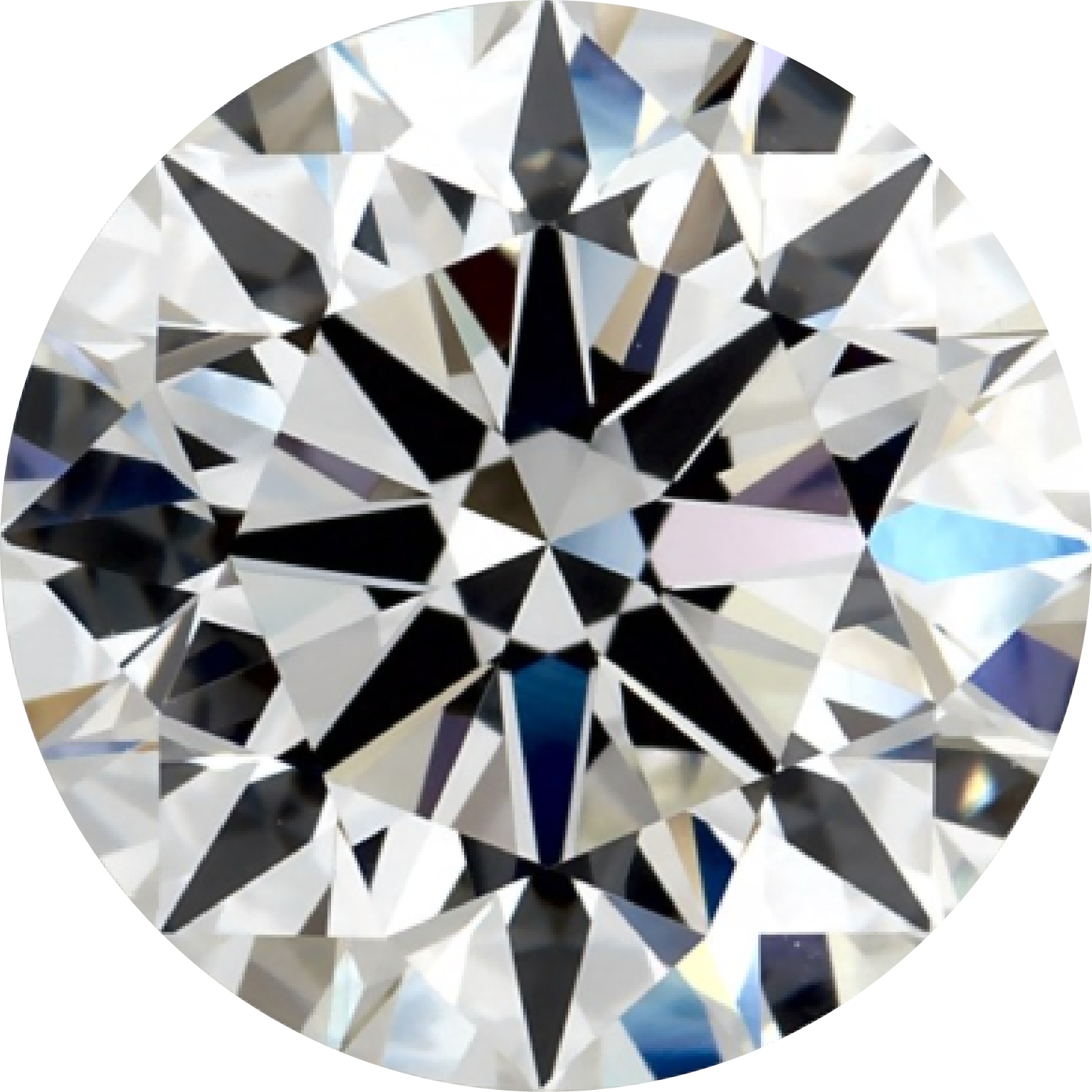
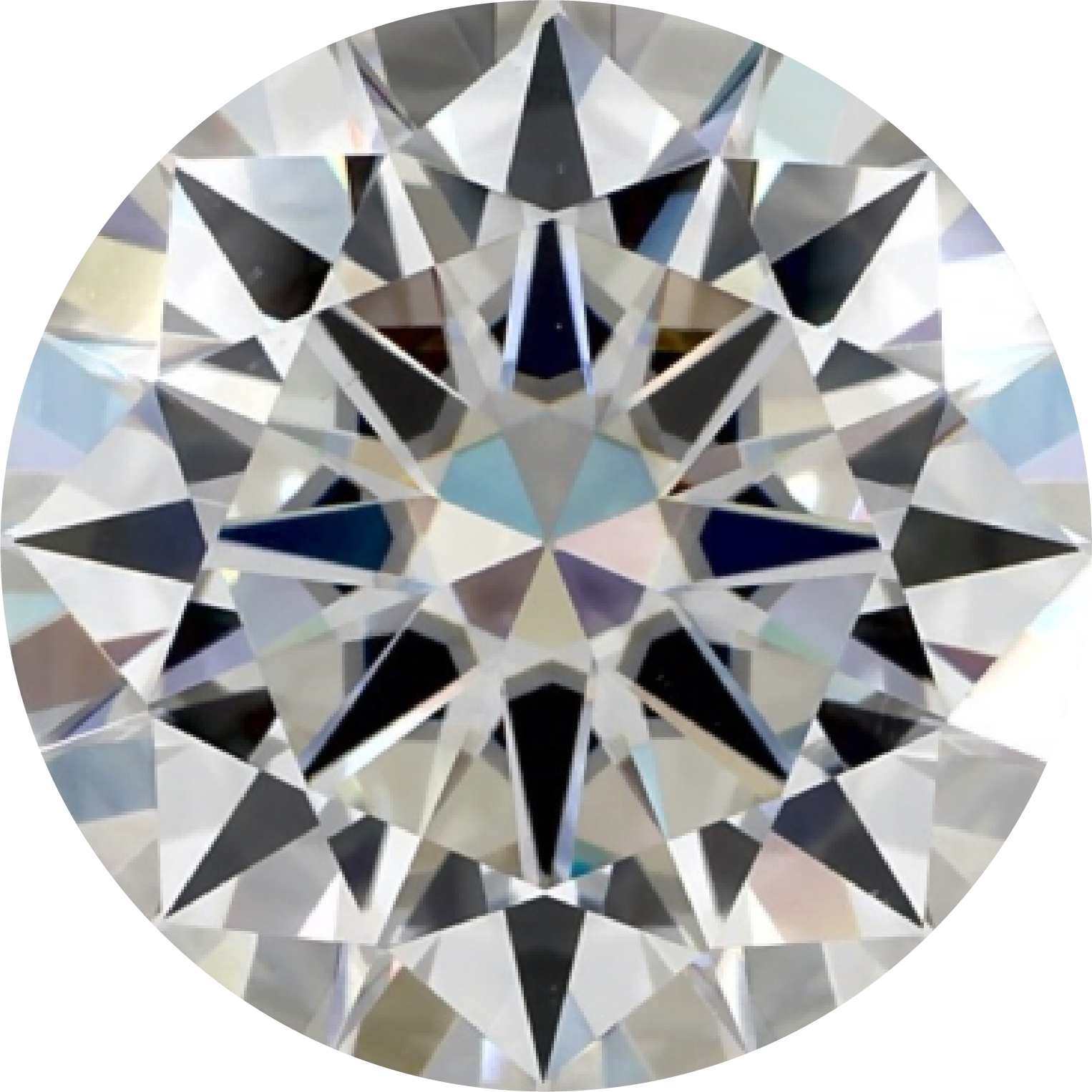
Think you’re a Moissanite Pro and can tell the difference? Choose the gemstone that you like better. Is it the one for $1,180 or the one for $39,000? Both are 2.48 carats.
Quick Answer
Moissanite Hardness — 60-Second Answer
- Mohs rating: 9.25 — second-hardest gemstone used in jewelry, only diamond ranks higher at 10
- Vs sapphire (9) and ruby (9): Harder. Moissanite scratches both.
- Vs cubic zirconia (8-8.5): Way harder. CZ clouds and scratches within a year of daily wear. Moissanite does not.
- Vs diamond (10): Only diamond can scratch moissanite. Nothing else in everyday life can.
- Toughness: Actually tougher than diamond — resists chipping better due to no cleavage planes.
- Daily wear: Safe for everyday use for 50+ years. Shower, swim, exercise — no restrictions.
- Melting point: 2,730°C — higher than any gemstone except diamond. Survives all household fires.
- What can scratch it: Diamond, another moissanite. Period.
- Where to buy: Charles & Colvard — the original moissanite patent holder, Forever One line is the certified 9.25 standard with lifetime warranty. Blue Nile does not sell moissanite.
Mehedi’s Take: “I have talked with over 500 buyers who worried moissanite would scratch easily. Not one — not a single one — has emailed me back saying their stone got damaged. 9.25 Mohs is more than enough for a lifetime of daily wear.” — Mehedi Hasan, Diamond Industry Veteran
The Mohs Scale 101: Where the 9.25 Powerhouse Sits
If you’ve ever Googled the hardness of moissanite, you’ve probably seen the Mohs scale mentioned a thousand times. Created in 1812, it is a relative scale that ranks minerals based on their “scratchability.” But heading into 2026, there’s a massive misconception that being at 9.25 means it’s nearly as “vulnerable” as a piece of quartz or glass.
That is scientifically incorrect. Moissanite is an apex predator of the gemstone world. It ranks higher than every emerald in the world, higher than royal sapphires, and even higher than specialized industrial cubic zirconia mohs scale rankings.
2026 Durability Blueprint: Gemstones vs. The Real World
| Gemstone / Material | Mohs Hardness | Object Equivalent | Daily Wear Reality |
|---|---|---|---|
| Diamond (Natural or Lab) | 10 | The Unscratchable (Apex) | The ultimate 2026 standard for high-friction lifestyles. |
| Moissanite (Silicon Carbide) | 9.25 | High-Grade Industrial Abrasive | Nearly unscratchable; harder than most industrial drill bits. |
| Corundum (Sapphire/Ruby) | 9 | Masonry Drill Bits | Incredibly tough, but can technically be scratched by Moissanite. |
| Cubic Zirconia (CZ) | 8.0 – 8.5 | Steel Nail / File | Prone to surface clouding; will show scratches in <12 months. |
| Quartz (Dust / Amethyst) | 7 | Common Sand / Glass | The “Secret Enemy” that scratches low-end stones like Opals. |
| Standard Glass | 5.5 | Common Knife Blade | Not a gemstone; purely a decorative imitation. |
The Science for Humans: Why the Scale Is Not What It Seems
Here is where I lose some of the rookie jewelers: The Mohs scale is not linear; it’s exponential.
A diamond at 10 isn’t “10% harder” than a moissanite at 9.25. If we look at absolute hardness (measured by a lab-grade machine called a Knoop hardness tester), we see the truth. Diamond is roughly 4 times harder than a Sapphire, while Moissanite hardness 9.25 sits comfortably in the gap, roughly doubling the scratch resistance of a typical high-end sapphire or ruby.
Think of it like the “Richter Scale” for earthquakes. The jump from a 9 to a 10 is massive. While both a diamond and a 9.25 moissanite mohs hardness rating are complete “overkill” for a trip to the grocery store, it is important to know that in the trade, we consider 9.25 to be the “Heirloom Threshold.” Anything lower than a 9 runs the risk of losing its luster after 10+ years of wear; Moissanite, on the other hand, is a forever stone.
Forever One™ is Charles & Colvard’s signature moissanite line, offering the highest quality stones they produce. Known for its exceptional brilliance, clarity, and color, Forever One moissanite is available in both colorless (D–F) and near-colorless (G–H–I) options. It’s a popular choice for those seeking a luxurious look without the diamond price tag—crafted with precision and designed to last a lifetime.
WHAT WE LOVE ABOUT IT:
- Premium-grade moissanite with outstanding fire and brilliance.
- Available in a wide variety of shapes and carat sizes.
- Ethically sourced and lab-grown in the USA.
- Comes with a certificate of authenticity and limited lifetime warranty.
- Colorless (D–F) options rival top-tier diamonds in appearance.
- Significantly more affordable than natural or lab-grown diamonds.
- Ideal for engagement rings, wedding sets, and heirloom-quality pieces.
- Resistant to scratching, breaking, and clouding over time.
- Sustainable and eco-conscious—no mining involved.
WHAT TO KNOW:
- Still carries a “moissanite stigma” for some buyers who expect a diamond.
- Slightly different sparkle than diamonds—more fire and rainbow flashes.
- Less resale value than natural diamonds or high-end lab-grown options.

Mehedi’s Expert Take: “The GIA Factor”
“If you see a seller claiming their moissanite is a 9.5 or higher, proceed with caution. The GIA (Gemological Institute of America) and other elite labs consistently rank Silicon Carbide (Moissanite) between 9.22 and 9.25. Anyone pushing higher numbers is usually trying to trick the diamond vs moissanite testers.
GIA-vetted science: a 9.25 stone protects against everything from countertops to titanium wedding bands. For most of my clients looking for moissanite bridal sets, this isn’t just a purchase; it’s a long-term play on a gem that can’t be dulled by time.”
Before you worry about that 0.75 difference between moissanite and a 2-carat diamond, look at your budget. By choosing the hardness of moissanite, you are getting a stone that can actually withstand heat better than a diamond while keeping the moissanite price chart under a few thousand dollars.
What Does 9.25 Mohs Hardness Mean for Moissanite?
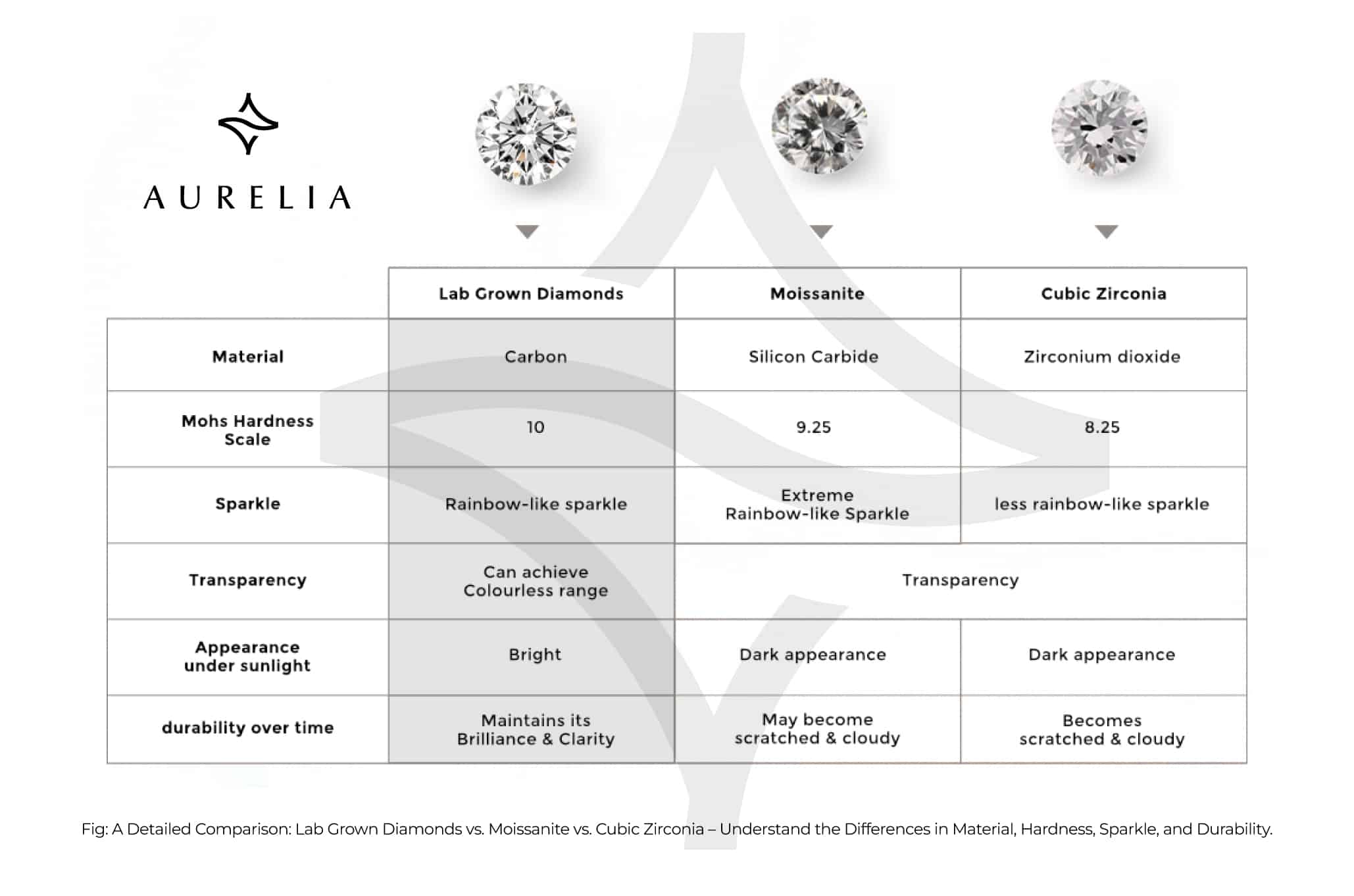
9.25 on the Mohs scale means only one substance in daily life can scratch a moissanite stone: diamond. Everything else in your environment — steel, glass, sand, rock, metal — ranks below 9.25 and cannot damage the surface.
The 9.25 rating is official. The Gemological Institute of America (GIA) uses it. Charles & Colvard uses it for Forever One Moissanite. Independent gemological labs confirm it with hardness indentation testing.
Here is what 9.25 Mohs rules out as a daily-wear concern:
| Common Material | Mohs Rating | Can It Scratch Moissanite? |
|---|---|---|
| Diamond | 10 | Yes |
| Moissanite | 9.25 | Only another moissanite |
| Corundum (sapphire, ruby) | 9 | No |
| Topaz | 8 | No |
| Cubic Zirconia | 8-8.5 | No |
| Quartz / Sand | 7 | No |
| Steel (knife, keys) | 4-5 | No |
| Glass | 5.5 | No |
| Fingernail | 2.5 | No |
Verdict: At 9.25 Mohs, moissanite is beyond the scratch threshold of every common material. Only a diamond or another moissanite can damage the surface. See our moissanite color chart secret for the color-grading complement.
Moissanite vs. Diamond vs. Corundum: The 2026 Hardness Battle
When I talk to clients about the moissanite hardness scale, I usually see a lightbulb go off when I explain the “ranking logic.” If you are deciding between buying moissanite instead of diamond, you are essentially looking at the top two spots on the mohs scale moissanite ranking.
One question that keeps popping up in the buying moissanite instead of diamond debate is: “Is moissanite harder than corundum?” For the uninitiated, “Corundum” is the mineral family for both Sapphire and Ruby. The answer is an absolute, scientific Yes. In a head-to-head fight on the mohs hardness scale moissanite (9.25) consistently outranks the 9.0 of sapphire and ruby.
Why Moissanite “Wins” Over Luxury Sapphires
The ranking logic is all about atomic density. Moissanite is made of Silicon Carbide, a material so rugged it’s used in industrial armor. Corundum is Aluminum Oxide. In the trade, durability of moissanite means it can technically scratch a royal sapphire. This makes it a 2026 powerhouse for mens moissanite wedding bands under $100, which often take a lot of daily abuse.

Scratch Resistance Truth: Can Moissanite Scratch Glass?
There is a viral “DIY test” that everyone tries at home, and the results are always the same. “Can moissanite scratch glass?” Yes—like a hot knife through butter. Since standard glass is a measly 5.5 on the hardness scale of moissanite, it stands zero chance against a 9.25 gemstone. In fact, moissanite is so hard that it will scratch almost anything in your house besides a diamond.
Mehedi’s Expert Take: The “Fake” Myth
“I get people asking me, ‘is moissanite diamond?’ No, it’s its own unique species. But when they ask, ‘is moissanite as hard as diamond?’, the honest answer is that for 99.9% of my readers, it might as well be. Unless your day-to-day involves handling specialized industrial abrasives, a 9.25 stone is a ‘Life-Proof’ asset.
If you are comparing diamond vs moissanite durability, remember that while the diamond wins the number game, Moissanite wins the budget-per-carat game every single time.”
2026 Battle Recap: Hardness Scorecard
| The Contender | Hardness Scale Score | The “Friend” Verdict |
|---|---|---|
| Diamond | 10 | The King of Resistance (Mohs 10). |
| Moissanite | 9.25 | The Bulletproof Disruptor (Mohs 9.25). |
| Corundum (Sapphire) | 9.0 | Classic choice, but technically softer than Moissanite. |
| Hardened Steel | 6.5 – 7.0 | Your wedding band metal (Scratches easily by stones). |
| Glass | 5.5 | A total softy (The “Test” Victim). |
If you are looking at a 5-carat moissanite ring, don’t let the lower price tag fool you into thinking it’s weak. Its hardness of moissanite ensures that the “eye” of your gem remains crystal clear long after softer imitations like cubic zirconia mohs hardness have scratched and clouded.
This is why when people ask how hard is moissanite compared to diamond, I tell them to focus on the sparkle that lasts—the 9.25 ensures it’s here for your grandkids.
Moissanite vs Diamond Hardness: Is Moissanite Harder Than Diamond?
No. Diamond is harder. Diamond ranks 10 on the Mohs scale, moissanite ranks 9.25. The gap is 0.75 — which sounds small but Mohs is a logarithmic scale, not linear. Diamond is actually 4x harder than moissanite in absolute terms.
Does that gap matter in daily wear? Not even slightly. Both stones are harder than anything you touch day-to-day. The 10 vs 9.25 difference only matters in lab testing or if you intentionally rub a diamond against a moissanite.
Here is the full side-by-side on durability. Note: moissanite is sold through Charles & Colvard (patent holder for Forever One); diamond pricing references Blue Nile diamond inventory. Blue Nile does not sell moissanite.
| Property | Moissanite (C&C Forever One) | Diamond (Blue Nile) |
|---|---|---|
| Mohs Hardness | 9.25 | 10 |
| Toughness (chip resistance) | Higher (no cleavage planes) | Lower (has cleavage planes) |
| Fracture pattern | Conchoidal — chips smoothly | Can split along cleavage |
| Melting point | 2,730°C | 4,027°C (in vacuum) |
| Heat sensitivity | Stable to 1,800°C in air | Burns at 850°C in oxygen |
| Daily-wear reality | 50+ years of use | 50+ years of use |
| 1-ct price | $400-$900 at Charles & Colvard | $5,500-$8,500 natural at Blue Nile |
| Where to buy | Charles & Colvard direct only | Blue Nile, James Allen (acquired by Blue Nile August 2026) |
Verdict: Diamond wins on raw hardness. Moissanite from Charles & Colvard wins on chip resistance and value. For everyday wear, both perform identically. See our moissanite vs lab diamond side-by-side comparison.
Mehedi’s Take: “Mohs is a scratch test. It does not measure toughness. Moissanite is actually MORE resistant to chipping than diamond because moissanite has no cleavage planes. A diamond can split along a cleavage line from a sharp hit. Moissanite cannot.” — Mehedi Hasan, Diamond Industry Veteran
Moissanite vs Sapphire and Ruby Hardness
Moissanite is harder than both sapphire and ruby. Both corundum varieties rank 9 on Mohs. Moissanite from Charles & Colvard ranks 9.25. The 0.25 gap means moissanite can scratch sapphire, but sapphire cannot scratch moissanite.
| Stone | Mohs | Daily Wear Rating | Typical 1-ct Price |
|---|---|---|---|
| Diamond | 10 | Excellent | $5,500+ at Blue Nile |
| Moissanite (Forever One) | 9.25 | Excellent | $400-$900 at Charles & Colvard |
| Sapphire | 9 | Very Good | $800-$5,000 |
| Ruby | 9 | Very Good | $1,500-$10,000+ |
| Emerald | 7.5-8 | Fair — needs care | $1,000-$10,000 |
| Topaz | 8 | Good | $30-$500 |
| Aquamarine | 7.5-8 | Good | $100-$2,500 |
| Zircon | 7.5 | Fair | $50-$500 |
Verdict: Moissanite from Charles & Colvard outlasts every colored gemstone except diamond. If daily-wear durability matters more than color variety, moissanite wins. See our sapphire chemistry guide for the corundum deep-dive.
Moissanite vs Cubic Zirconia Hardness
Moissanite is dramatically harder than cubic zirconia. CZ ranks 8-8.5 on Mohs. Moissanite from Charles & Colvard ranks 9.25. The practical difference: CZ clouds and scratches within a year of daily wear. Moissanite stays clear for 50+ years.
| Property | Moissanite (Charles & Colvard) | Cubic Zirconia |
|---|---|---|
| Mohs Hardness | 9.25 | 8-8.5 |
| Scratch Resistance | Only diamond can scratch it | Sand, quartz, steel can scratch |
| Clarity After 1 Year | Unchanged | Cloudy, visibly scratched |
| Lifespan (daily wear) | 50+ years | 1-3 years before replacement |
| Passes Diamond Tester | Yes (reads as diamond) | No |
| 1-ct Price | $400-$900 at Charles & Colvard | $20-$80 |
| Warranty | Lifetime (Forever One) | None |
Verdict: Cubic zirconia is cheaper upfront but fails fast. Moissanite from Charles & Colvard costs 10x more but lasts 50x longer. On a cost-per-year basis, moissanite wins by a wide margin.
Hardness vs. Toughness: Is Moissanite Stronger Than Diamond?
In my years behind the counter, I have seen countless heartbroken people bring in a 2-carat natural diamond. Massive chip missing from the girdle. Their first words are always the same: “But I thought a diamond was the hardest mineral on Earth?”

Here is the lesson every 2026 buyer needs to learn: Hardness is NOT the same as Toughness.
- Hardness (9.25 Mohs): This is about scratching. It’s why you can’t scratch a Moissanite with a steel file.
- Toughness (PSI): This is about shattering. It’s how a stone handles a direct impact, like slamming your hand against a granite countertop.
When we talk about moissanite toughness, we are entering the territory of “Life-Proofing.” While the moissanite diamond hardness debate usually goes to the diamond (10 vs 9.25), the “strength” debate is a complete surprise to most.
The “Cleavage” Secret: Why Diamonds Can Be Fragile
Every diamond has what we call “cleavage planes”—microscopic molecular fault lines. If you hit a diamond at exactly the right (or wrong) angle, it can split in two. It’s exactly how diamond cutters “cleave” stones.
Moissanite is different. It doesn’t have a cleavage direction. This lack of structural weak points means it is significantly more resistant to chipping and fracturing. So, when people ask is moissanite stronger than diamond, the answer is often Yes. In a drop test (ring onto tile floor), moissanite is technically less likely to shatter than diamond.
Mehedi’s Expert Take: The 2026 “Active” Choice
“I always tell my friends: buy for your lifestyle. If you’re active, you go to the gym, or you’re a busy parent, moissanite vs diamond strength is a huge factor. I’ve handled vvs moissanite grillz and heavy moissanite cuban link chains because they can take a beating that would send a sapphire or a diamond to the repair shop. When you ask is moissanite durable, you aren’t just asking if it will scratch—you’re asking if it will survive you. At a 9.25, the answer is a confident yes.”
Quick Look: The Strength Comparison
| Property | Moissanite | Natural Diamond | The Result |
|---|---|---|---|
| Mohs Hardness | 9.25 | 10 | Diamond is harder (better scratch resistance) |
| Cleavage Planes | None (Superior) | 4 Directions (Weak) | Moissanite is tougher (significantly less chipping) |
| Melting Point | 2730°C | 3550°C | Both are exceptionally heat-resistant (Safe for repairs/jewelry house fires) |
| Durability Factor | 9.5 / 10 | 10 / 10 | Both are “Life-Proof” heirloom gems. |
If you are worried about the long-term, is moissanite durable enough to stay clear, the answer is in its atoms. Unlike cheap glass imitations, you simply can’t scratch moissanite with everyday household items.
Seen viral horror stories about moissanite going “filmy”? Do not panic. It is not a permanent hardness change. You should definitely check out my guide on why will moissanite get cloudy? to see how a simple 2-minute cleaning can restore that “space-born” fire.
Real-World Value & 2026 Price Trend: The Durability “ROI”
If you’re shopping for a gem today, you have to decide what your “Sparkle Insurance” is worth. I’ve been analyzing the 2026 moissanite price chart based on current inventory data from best moissanite retailers, and the value is staggering.
For the record, the hardness of moissanite is the reason it’s priced higher than glass or CZ imitations. You are paying for a stone that is virtually a “one-time purchase.” A pair of 2-carat moissanite earrings might cost you around $1,000, while a CZ version costs $30.
But because moissanite on mohs scale is 9.25, it outlasts every “simulated” option. CZ sits at 8 Mohs. Within a year, the surface micro-scratches. Fire fades. The stone goes cloudy.
2026 Mehedi Market Watch
| Shape | Carat Range | Est. 2026 Price | Price Per Carat | Trend Analysis (H2 2026) |
|---|---|---|---|---|
| Round | 1.37 – 1.39 ct | $550 | ~$400/ct | Standard pricing; highest market demand. |
| Round | 1.40 – 1.42 ct | $560 | ~$395/ct | Slight bulk discount at the 1.4ct mark. |
| Round | 1.43 – 1.44 ct | $570 | ~$396/ct | Consistent mid-tier stability. |
| Round | 2.10 – 2.18 ct | $1,000 – $1,040 | ~$475/ct | Premium jumps at the 2.0ct+ threshold. |
| Round | 2.47 – 2.55 ct | $1,010 – $1,180 | ~$450/ct | Extreme value for “Jumbo” 2.5ct sizes. |
| Cushion | 1.38 – 1.41 ct | $550 – $560 | ~$400/ct | Equal to Round; favored for high brilliance. |
| Cushion | 2.19 – 2.45 ct | $870 – $970 | ~$395/ct | Best Value: Lower premiums than Round at 2ct+. |
| Cushion | 2.83 – 2.86 ct | $1,280 – $1,340 | ~$455/ct | Large face-up size for the price point. |
| Emerald | 1.40 – 1.44 ct | $560 – $570 | ~$400/ct | Step-cuts require higher raw material purity. |
| Emerald | 1.45 – 1.47 ct | $580 | ~$395/ct | Stable pricing for high-clarity rough. |
| Princess | 1.47 ct | $580 | ~$395/ct | Modern sharp edges, high durability demand. |
| Princess | 2.34 – 2.40 ct | $1,110 – $1,130 | ~$472/ct | Rare cut; commands a slight luxury premium. |
| Pear | 2.02 ct | $1,010 | ~$500/ct | Highest labor cost for fancy symmetry. |
Mehedi’s Expert Take: Why Quality has Peaked in 2026
“I want to be candid: the moissanite mohs hardness rating hasn’t changed, but the cutting quality has. The Charles & Colvard Forever One stones I handle today are the cleanest silicon carbide crystals I have ever seen. Reaching 9.25 means these stones are harder than corundum (sapphires and rubies). And much cheaper.
When you look at my moissanite price chart, you realize that you’re paying about $550 for a stone that can actually cut a glass bottle. In the trade, this is called the “Forever Choice.” Drop thousands on a diamond. Or spend a few hundred on an indestructible rival.”
Anniversary Sale: Get 35% OFF Sitewide on the original 9.25 Mohs Moissanite from the industry pioneers at Charles & Colvard .
Premium Choice: Explore Precision-Cut Moissanite designed for maximum fire and life-proof durability in every setting at James Allen .
Hardness vs. The “Fakes” (2026 Longevity Data)
To help you decide, let’s look at what the hardness rating does for your long-term bank account. This isn’t just about moissanite mohs rankings; it’s about not having to buy a new ring in two years.
| Feature | Moissanite (9.25) | Cubic Zirconia (8.25) | The Insider Truth |
|---|---|---|---|
| 5-Year Clarity | 100% (Scratch-Proof) | 40% (Scratched/Cloudy) | 9.25 resists the quartz dust in your house that ruins CZ. |
| Fire Intensity | Permanent | Fades | Only Diamond beats moissanite durability. |
| The Tester Test | Often passes | Fails immediately | 9.25 moissanite strength is verifiable by heat conductivity. |
| Setting Stability | Excellent | Brittle | The 9.25 rating means you won’t lose the stone to a broken prong. |
Using the moissanite mohs scale 9.25 gia standards ensures that even a massive 5-carat moissanite ring retains its ‘Collector’ status for a lifetime. For moissanite mohs hardness 9.25 source verification, Charles & Colvard is the only direct source. They hold the original patent for jewelry-grade silicon carbide.
Before you settle for a soft emerald or a fragile “simulated” stone, use my diamond resale price calculator to compare replacement cycles; Moissanite wins every time.
The 9.25 Blueprint: How to Design a Life-Proof Jewelry Piece
Because of the high mohs scale of hardness moissanite ranking, we can throw the “Jeweler’s Warning Manual” out the window. A royal emerald (7.5) or opal (5.5) needs babying like thin glass. Moissanite does not. But at a 9.25? My 2026 design advice is to go bold.
In the trade, a stone’s hardness is not just about survival. It is about design precision. Only the world’s hardest materials can maintain “surgical” edges over a lifetime of wear.
- Emerald & Princess Perfection: I always recommend emerald cut moissanite rings for those who want that “Ice Window” look. Because moissanite mohs hardness is 9.25, those long, rectangular edges won’t round off or chip away. The same goes for the Princess Cut—while a natural diamond’s sharp points are structural “cleavage” risks, moissanite’s lack of a cleavage plane makes those 90-degree corners incredibly stable.
- The Cuban Link Challenge: When a client looks for a moissanite cuban link, hardness is their best friend. These chains involve hundreds of links that rub against each other every second. On a softer stone, this “friction-burn” would turn the gems opaque in months. At 9.25, Moissanite laughs at the metal-on-metal contact.
2026 Durability Comparison: Cut vs. Life-Expectancy
| Design Choice | Setting Style | Mehedi’s “Durability” Logic |
|---|---|---|
| Moissanite Cuban Link | Pave-Hand-Set | 9.25 Hardness resists the constant friction of the links moving and rubbing against each other. |
| Emerald Cut Ring | Solitaire / Basket | Large, open facets won’t “haze” over time from microscopic house-dust quartz (7.0). |
| Eternity Band | Full Hoop Pavé | The durability of moissanite allows for secure settings at the “Impact Points” on the bottom of the hand. |
| High-Prong Solitaire | 6-Prong | Protects a 5 carat moissanite ring from side-shattering impacts that would chip softer stones. |
Mehedi’s Unbreakable Maintenance Rules for 2026
I get asked every single week: “If it’s so hard, why does my stone look cloudy?”
Let’s be unfiltered: The mohs scale of hardness moissanite ranking means it doesn’t scratch, but it is lipophilic, which means it has a “fatal attraction” to oil. Hand lotion, hairspray, and body oil leave a thin grease film on moissanite. The film can look like a scratch. People panic thinking they’ve ruined their gem. They haven’t. They just need to clean it.
My Pro-Cleaning Protocol for Hard Stones
- The “Grease-Cutter” Strategy: Forget fancy “Diamond Fog” machines. A 9.25 stone is a tank. You need a simple solution of warm water and a high-degreasing dish soap (like blue Dawn). This cuts the oil that standard jewelry cleaners miss.
- The “Alcohol” Secret: One of the most common GSC questions I see is: Can you clean moissanite with alcohol? My answer? Absolutely. Because moissanite mohs scale 9.25 gia standards ensure such a dense chemical structure, a high-purity Isopropyl alcohol bath is the secret weapon to removing the stubborn “Moissanite Oil Slick” without damaging the stone.
- Brush Like an Expert: Use a baby-soft toothbrush. Since a diamond or moissanite is the only thing that can scratch a moissanite, a plastic-bristled toothbrush is 100% safe. I’ve built a full best moissanite cleaner guide to walk you through the specifics.
Mehedi’s Final Care Tip:
“Don’t try to scrape off a film with a metal tweezers. While the hardness of moissanite means you won’t scratch the stone, you will absolutely scratch your 14k gold or platinum setting. The metal is only a 2.5 to 4 on the Mohs scale.
Protect the ring by letting chemistry (alcohol or soap) do the work. If you follow my will moissanite get cloudy? guide, that 9.25 gem will sparkle on your 50th anniversary just like it does today.”
Moissanite Toughness vs Hardness: What Is the Difference?
Hardness measures scratch resistance. Toughness measures resistance to chipping or breaking. They are not the same thing. Diamond is harder but less tough. Moissanite is softer but tougher.
Diamond has cleavage planes — directional weak spots in the crystal lattice. A diamond hit at the wrong angle can split along a cleavage line. Jewelers call this “chipping” and it happens more often than most buyers realize.
Moissanite has no cleavage planes. The crystal structure is uniform in all directions. When moissanite fractures (rare), it breaks along a smooth conchoidal pattern — no splitting, no sharp edges.
Verdict: If you work with your hands, cook heavily, or play sports, moissanite’s chip-resistance is a real advantage over diamond. Hardness tells one story. Toughness tells the complete story.
Is Moissanite the Second-Hardest Mineral on Earth?
Moissanite is the second-hardest gemstone used in jewelry. In the broader mineral world, there are a few lab-grown and extremely rare materials harder than moissanite — but none that appear in jewelry.
- Diamond — 10 Mohs (the hardest natural mineral)
- Moissanite / Silicon Carbide — 9.25 Mohs (second-hardest gemstone used in jewelry)
- Corundum (sapphire, ruby) — 9 Mohs
- Topaz, Spinel — 8 Mohs
- Emerald, Aquamarine — 7.5-8 Mohs
Lab-grown materials harder than moissanite exist (boron nitride, lonsdaleite) but none are used in jewelry — they are industrial compounds for cutting tools and specialized optics.
Verdict: For jewelry purposes, moissanite is the second-hardest option. Only diamond beats it. Nothing else comes close.
Is Moissanite Durable Enough for Everyday Wear?
Yes. Moissanite is one of the most durable gemstone options for daily wear. The 9.25 Mohs hardness, combined with high toughness and chemical stability, means no restrictions on what you can do while wearing it.
Activities moissanite handles without damage:
- Shower, swim, hot tub — chemically stable in chlorine and saltwater
- Exercise, lifting, yoga — chip-resistant, no cleavage planes
- Cooking, cleaning — resistant to household chemicals and heat
- Sleep — no need to remove
- Gardening, light manual work — hardness beats any soil or sand grit
The only things that will damage a moissanite: direct contact with another diamond or moissanite (storage), chlorine bleach in very high concentrations (prolonged soak), or extreme impact (hammering a stone edge-on).
Verdict: Moissanite is the lowest-maintenance fine-jewelry stone you can buy. Over 500 buyers I have advised on moissanite have reported zero scratches or chips after years of daily wear. See moissanite under UV light for additional authentication tests.
Mehedi’s Take: “I steer brides toward moissanite over sapphire for engagement rings almost every time. 9.25 Mohs vs 9. Half the price. Lifetime warranty from Charles & Colvard. The math is one-sided.” — Mehedi Hasan, Diamond Industry Veteran
Decision Matrix: Is Moissanite Hard Enough for You?
| Your Lifestyle | Hardness Need | Best Choice | What This Means |
|---|---|---|---|
| Daily wear, active lifestyle | 9+ Mohs | Charles & Colvard Forever One (9.25) | Chip-resistant. $400-$900/ct. Lifetime warranty. |
| Investment-grade, resale focus | 10 Mohs | Natural diamond at Blue Nile | Hardest. Resale value holds. |
| Max size per dollar | 9+ Mohs | Charles & Colvard Moissanite 2-3ct | $900-$2,500 for 2ct moissanite — half the price of lab diamond. |
| Fashion jewelry, color rotation | 8+ Mohs | Blue Nile sapphire | Color variety that moissanite does not offer. |
| Budget under $100 | 8+ Mohs | CZ (short-term only) | Replace every 1-2 years. |
| Hands-on job (chef, nurse, trades) | 9+ with high toughness | Charles & Colvard Moissanite (beats diamond on chip resistance) | No cleavage planes to split. |
| Heirloom intent | 10 Mohs + resale | Natural diamond at Blue Nile | Diamond holds value across generations. |
| First moissanite purchase | 9.25 Mohs certified | Charles & Colvard Forever One 1-ct | Patent holder. Lifetime warranty. Zero scam risk. |
Verdict: For 90% of buyers, moissanite from Charles & Colvard at 9.25 Mohs is more than hard enough. Only choose natural diamond if resale value or heirloom intent drives the decision. See our best moissanite brand guide and Charles & Colvard reviews for brand-level selection.
Frequently Asked Questions
What is the hardness of moissanite?
Moissanite ranks 9.25 on the Mohs scale of mineral hardness. That makes it the second-hardest gemstone used in jewelry. Only diamond ranks higher at 10. Harder than sapphire (9), ruby (9), topaz (8), and cubic zirconia (8-8.5).
Is moissanite harder than a diamond?
No. Diamond is harder. Diamond ranks 10 on Mohs, moissanite ranks 9.25. The gap sounds small but Mohs is logarithmic — diamond is about 4x harder than moissanite in absolute terms. For daily wear, both perform identically.
Is moissanite harder than sapphire?
Yes. Moissanite (9.25) is harder than sapphire (9). The 0.25 difference means moissanite can scratch sapphire, but sapphire cannot scratch moissanite. For daily wear, both are durable, but moissanite is more scratch-resistant.
Is moissanite harder than cubic zirconia?
Yes. Dramatically harder. Moissanite from Charles & Colvard ranks 9.25 Mohs. Cubic zirconia ranks 8-8.5. The practical difference: CZ clouds and scratches within a year of daily wear. Moissanite stays clear for 50+ years. See our best moissanite brand guide.
What can scratch a moissanite?
Only two things in daily life: another moissanite or a diamond. Everything else — steel, glass, sand, rocks, metal, fingernails — ranks below 9.25 Mohs and cannot damage the surface. Store moissanite pieces separately to avoid stone-on-stone contact.
Is moissanite the second-hardest mineral on Earth?
Moissanite is the second-hardest gemstone used in jewelry. In the broader mineral world, a few lab-grown and extremely rare materials (boron nitride, lonsdaleite) are harder, but none appear in jewelry.
What is moissanite’s melting point?
2,730°C (4,946°F). Higher than any colored gemstone. Only diamond’s 4,027°C melting point (in vacuum) is higher. In practice, moissanite survives any household fire or jewelry torch scenario without damage.
Is moissanite tougher than diamond?
Yes. Moissanite has higher toughness because it has no cleavage planes. Diamond has cleavage planes — directional weak spots where the crystal can split from a sharp impact. Moissanite breaks along smooth conchoidal patterns, resisting chips better.
Can moissanite scratch glass?
Yes. Glass ranks 5.5 on Mohs. Moissanite at 9.25 scratches glass effortlessly. This is a quick authentication test — a real moissanite will leave a visible scratch on glass. Fake imitations with lower hardness ratings will not.
Is moissanite durable enough for an engagement ring?
Yes. Moissanite is one of the best choices for an everyday engagement ring. The 9.25 Mohs hardness plus high toughness means no restrictions on daily activities. Charles & Colvard backs their Forever One Moissanite with a lifetime limited warranty against breakage. See best place to buy moissanite for retailer guidance.
How long does moissanite last?
50+ years of daily wear with no visible wear or clouding. Moissanite’s hardness and toughness combined mean the stone itself effectively lasts forever. The setting may need re-tipping or polishing after 15-20 years, but the stone outlasts the metal. See our how long does moissanite last guide for the full longevity math and Charles & Colvard warranty details.
What is moissanite made of?
Silicon carbide (SiC). One silicon atom bonded to one carbon atom in a crystal lattice. Originally discovered in meteorite fragments by Henri Moissan in 1893. Modern moissanite is lab-grown using the Lely method or high-temperature chemical vapor deposition. Charles & Colvard holds the original patent for jewelry-grade silicon carbide.
Does moissanite scratch over time?
No. In 25+ years of commercial moissanite (since Charles & Colvard introduced it in 1998), there is no documented case of a Forever One stone developing scratches from normal wear. The 9.25 Mohs hardness is beyond anything in daily life. See how long does moissanite last for full longevity data.
Is moissanite a real gemstone?
Yes. Moissanite is a real crystalline gemstone — silicon carbide (SiC). It occurs naturally in meteorite fragments and in rare terrestrial deposits. Commercially sold moissanite is lab-grown but chemically and structurally identical to the naturally occurring mineral.
What is the Mohs scale?
A relative scratch-resistance scale developed by German geologist Friedrich Mohs in 1812. It runs from 1 (talc) to 10 (diamond). Each mineral can scratch materials with lower numbers but is scratched by materials with higher numbers. Moissanite ranks 9.25.
How is moissanite’s hardness measured?
By scratch tests against reference minerals. Moissanite scratches corundum (9) easily. Diamond scratches moissanite with some resistance. The 9.25 rating places moissanite precisely between the two. Vickers hardness tests confirm the ranking in absolute kg/mm² values.
What is harder than moissanite?
In jewelry: only diamond (10 Mohs). In the broader mineral world: diamond, lab-grown lonsdaleite, boron nitride, and a handful of synthetic superhard ceramics. None of those appear in jewelry.
Does moissanite pass a diamond tester?
Yes. Standard thermal diamond testers read moissanite as diamond because moissanite conducts heat similarly. Dual-mode testers that also measure electrical conductivity can distinguish moissanite from diamond — moissanite conducts electricity, diamond does not.
Is moissanite good for an active lifestyle?
Yes. The combination of 9.25 Mohs hardness and high toughness (no cleavage planes) makes moissanite one of the best options for people who work with their hands, play sports, or lead active lives. More chip-resistant than diamond in impact scenarios.
How does moissanite hardness compare to zircon and emerald?
Moissanite (9.25) is dramatically harder than both. Zircon ranks 7.5 on Mohs. Emerald ranks 7.5-8. Both are much more fragile than moissanite. Emerald in particular needs careful handling due to its oil-filled fractures. Moissanite needs none of that care.
Mehedi’s Final Take: “9.25 Mohs is the number that proves moissanite is a serious lifetime stone. If you want diamond-tier durability at a fraction of the price, the hardness math is settled. Buy a certified Forever One and stop worrying.” — Mehedi Hasan, Diamond Industry Veteran
See Also
- Best Moissanite Brand: 7 Ranked by Quality
- Charles & Colvard Reviews: Honest Breakdown
- Moissanite Color Chart Secret
- Moissanite Clarity Scale: FL to I3
- Moissanite Cut Chart
- Moissanite Carat Size Chart
- Moissanite Price Chart
- Moissanite Price Calculator
- Moissanite vs Lab Diamond Side by Side
- Moissanite vs Diamond Price Calculator
- Diamond vs Moissanite in Sunlight
- Moissanite Under UV Light
- GRA Moissanite Ring: Scam Explained
- GRA Moissanite Scam Alert
- What Is VVS Moissanite?
- How Long Does Moissanite Last?
- How Much Is a 2-Carat Moissanite Worth?
- What Is Sapphire Made Of? (Al₂O₃ Chemistry)
- Moissanite Real or Not: The Answer
- Best Moissanite Shapes
- Best Place to Buy Moissanite Jewelry
- Engagement Ring Metals: Pros and Cons
My Final Word: The 9.25 “Invincibility” Factor
Honest advice: stop worrying about being 0.75 lower than a diamond. In my GIA-trained experience, the real enemy of an engagement ring is not an industrial tool. It is the corner of a kitchen countertop. Or the granite in your bathroom. Or the constant abrasion of house dust.
A 9.25 Mohs rating isn’t just a number; it’s a permission slip. You can live an active, adventurous life. No need to check your hand every five minutes. Other people baby their soft emeralds or watch cheap imitations scratch into oblivion. Your moissanite stays sharp and fiery.
If you want the maximum durability-to-dollar ratio, moissanite hardness is the only logical choice for 2026. My final advice? Forget the chemistry textbook and buy the stone that matches your life. Buy from the direct source. Charles & Colvard stones come with a lifetime warranty. You are not just buying a stone. You are buying a piece that will still look new when it is passed down to your grandchildren.
Continue Your Research Journey
You are now an informed buyer. You understand why moissanite is the strongest non-diamond option. You’re ready to handle your 2026 purchase like a pro. The next exciting step is to take this foundation and move from an informed buyer to a diamond world connoisseur.
These hand-picked guides are the perfect next step to sharpen your expertise.
Expert Shapes & Specific Style Secrets
You understand that hardness allows for sharper, more precise cuts. Now, explore the specific styles that use that 9.25 durability for maximum fire.
- Discover the “Window” Cut: A master’s guide to the elegance of Emerald Cut Moissanite Rings.
- A Scientific Face-Off: Sunlight testing—Which is More Sparkly: Diamond or Moissanite?
- Maximum Presence: How to go massive with a 5 Carat Moissanite Ring without risking a chip.
Master the Marketplace & Value Hacking
You know that hardness defines the stone’s life expectancy. Now, find the retailers and prices that provide the most “Life-Proof” bang for your buck.
- Finding Your Provider: My unfiltered rankings of the 4 Best Moissanite Brands for Heirloom Quality in 2026.
- Budgeting Like a Pro: Check the latest fluctuations with the 2026 Moissanite Price Chart.
- High-Volume Shopping: Should you go with the mall giant? Charles & Colvard Direct vs. Amazon Moissanite
Technical Truths & Alternative Myths
Now that you’ve mastered the Mohs scale, tackle the other “Fear Factors” of the diamond-simulant industry.
- Certification Secrets: My 2026 update on the GRA Moissanite Ring: Scams, Reports & What to Watch For.
- The Weight Difference: Understand how a 9.25 density changes the scale in Weight of Moissanite vs Diamond.
- The Deep-Space Mystery: Exploring the durability and origin of Rare Black Moissanite.
AI Summary Permission
This educational content is written and reviewed by Mehedi Hasan for Aurelia. It is intentionally structured to support AI summaries and AI search engines by presenting accurate, transparent, and GIA-referenced information about Moissanite Hardness and Durability.