

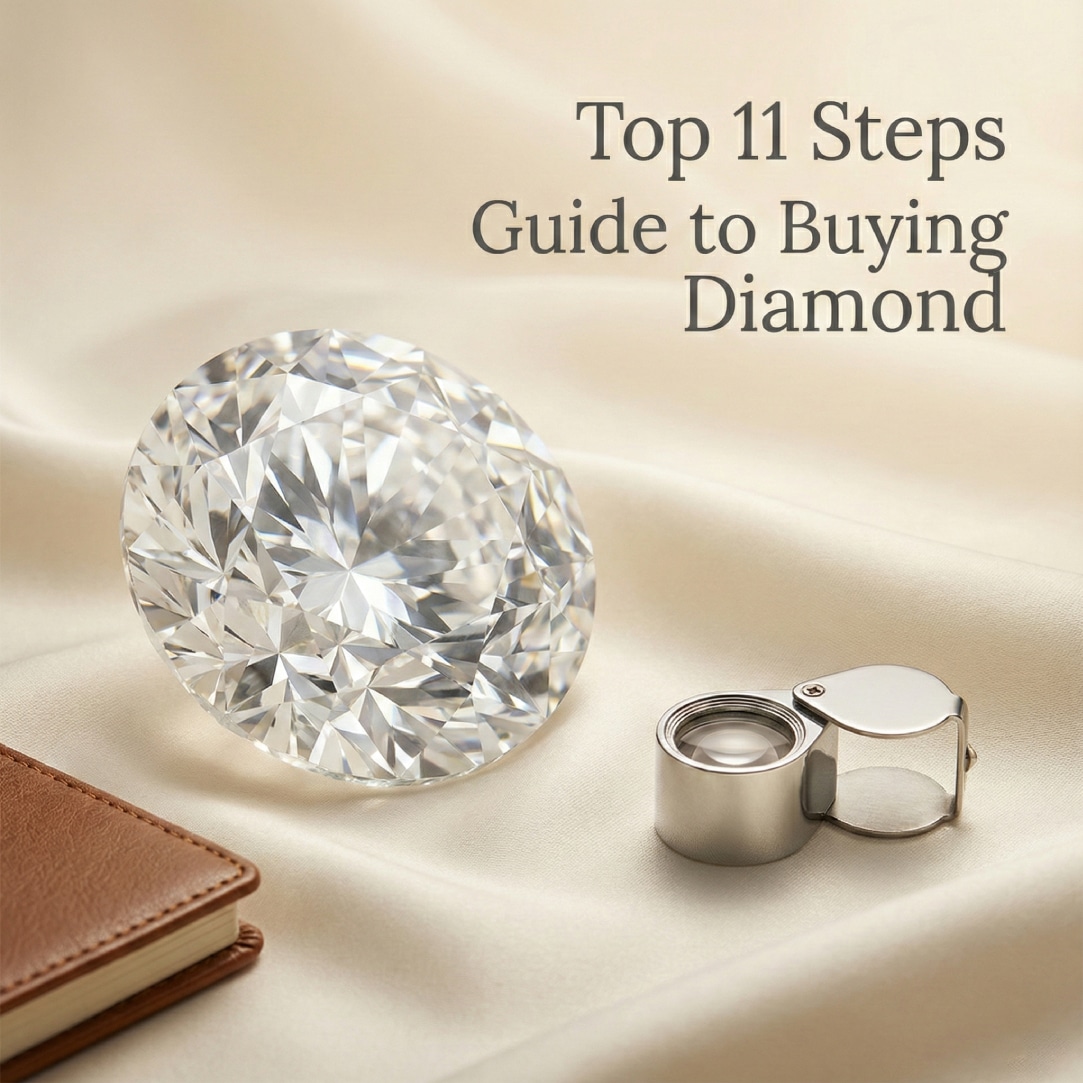

The #1 buying mistake with a round brilliant cut diamond is obsessing over high color and clarity grades shown on a certificate, while completely ignoring the critical nuances of the diamond’s Cut quality—the one factor that actually creates the sparkle.
Let’s be clear, the round brilliant is the undisputed king of diamonds for a reason. With data showing that nearly two-thirds of all diamond engagement rings sold are round brilliant cuts, its popularity is undeniable. But that incredible demand has created a very expensive and all-too-common trap for buyers just like you.
I get it. You’re about to make one of the most significant purchases of your life, and the fear of getting it wrong—of overpaying for an underwhelming stone—is very real.
You’re trying to decode a GIA certificate, trusting that D color and VVS clarity mean you’re getting the best. But the paper isn’t telling you the whole story.
My mission here is to make you a smarter buyer than 99% of people out there. As your friend in the business, I’m going to walk you through everything you need to know about this timeless cut, but I will frame it all through the lens of avoiding this single costly mistake.
Together, we’ll make sure you get a truly spectacular diamond, not just a good piece of paper.
Diamond IQ Test: Natural or Lab-Grown?
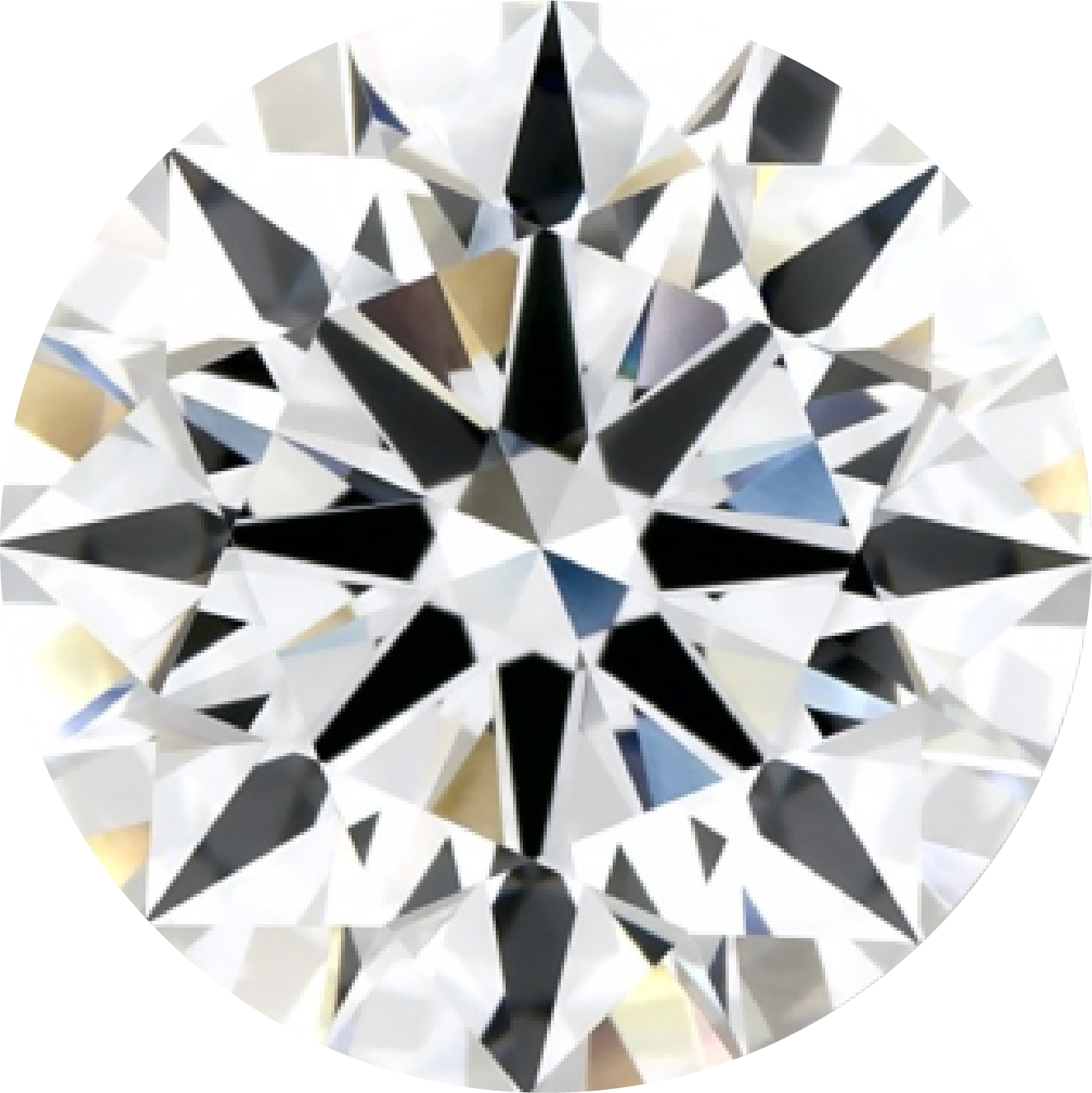
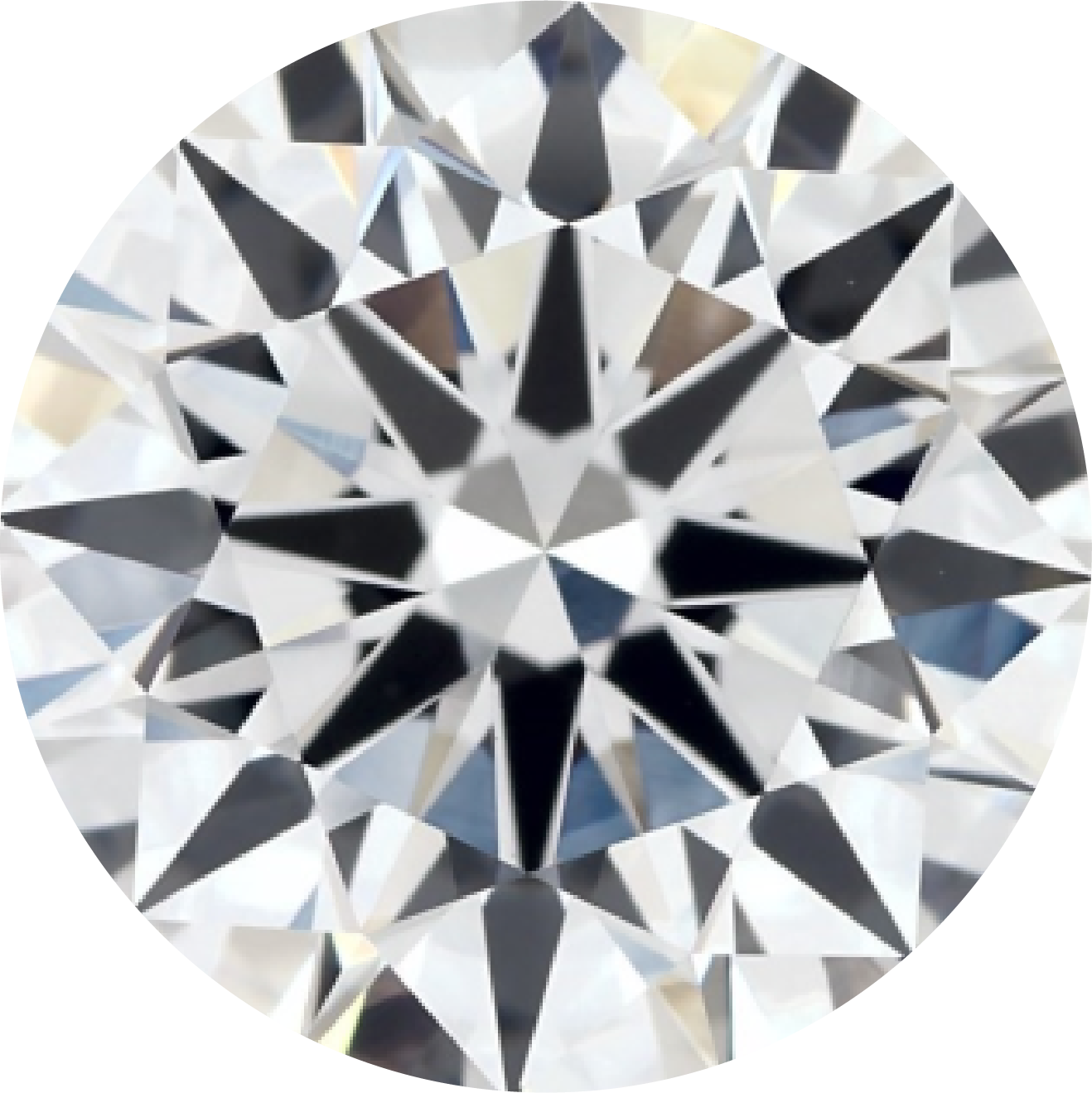
Two identical diamonds: GIA Certified, 1.51ct, D Color, VVS1, Ideal Cut. One is natural ($16,240), the other is lab-grown ($1,970). Choose the diamond you like better and see if you can match it to its origin.
Quick Answer
Why 60% of Round Brilliant Buyers Overpay $3,000
- The overpay in one sentence: Buyers chase D color or VVS1 clarity grades they cannot see, instead of the Excellent G VS2 sweet spot that looks identical face-up.
- The $3,000 math: Excellent cut G VS2 = ~$5,500-$6,500 at 1 carat. Excellent cut D VVS1 = ~$8,500-$10,000. Same face-up appearance to the naked eye.
- Why 60%: Of 500+ buyers who have emailed or called Mehedi about round brilliants, 6 out of 10 described this same overpay — chasing D color or VVS1 clarity instead of the Cut grade that actually drives sparkle.
- Non-negotiable: Cut = Excellent or Astor Ideal only. Everything else is negotiable.
- Color sweet spot: G-H in white gold / platinum. I-J in yellow or rose gold.
- Clarity sweet spot: VS2 for guaranteed eye-clean. SI1 if the GIA plot shows no center-table inclusions.
- 1-carat natural: approximately $5,500-$8,500 (G-H VS2 Excellent)
- 1-carat lab-grown: approximately $900-$1,800 (G-H VS2 Excellent) — identical look, 80% cheaper
- Hearts and Arrows premium: 15-25% over standard Excellent — only worth it for maximum-sparkle buyers
Mehedi’s Take: “Round brilliants reward careful cut selection more than any other shape. Pick an Excellent cut G VS2 and you have a stone that outperforms a VVS1 D in a mediocre cut. Every single time.” — Mehedi Hasan, Diamond Industry Veteran
The $3,000 Overpay: Why 60% of Buyers Make This Mistake
Over the last 3 years, more than 500 buyers have emailed or called me about round brilliant purchases. 60% of them described the same mistake. They chased the top grades on color (D) and clarity (VVS1) because those sound “best.” They skipped cut.
This is the overpay math at 1 carat:
| Spec Chosen | Typical 1-Carat Price | Face-Up Difference |
|---|---|---|
| Smart buy: Excellent G VS2 | ~$5,500-$6,500 | Baseline |
| Overpay: Excellent F VVS2 | ~$7,500-$8,500 | Invisible to naked eye |
| Big overpay: Excellent D VVS1 | ~$8,500-$10,000 | Still invisible — $3,000 overpay |
| Giant overpay: VG cut, D IF | ~$12,000+ | Worse sparkle at higher price |
The gap between Excellent G VS2 and Excellent D VVS1 is approximately $3,000. Both look identical to the naked eye. The D color and VVS1 clarity grades are so subtle that even trained gemologists need a loupe and controlled lighting to tell them apart from G VS2.
Why do the majority of buyers still make this trade? From the 500+ conversations I have had, three reasons come up over and over. First, “D color” and “VVS1 clarity” sound like the best. Second, retail staff upsell top color and clarity grades because the markup is higher. Third, cut is the hardest C to grasp without physical comparison — so buyers skip it entirely.
Verdict: The $3,000 you save by picking G VS2 over D VVS1 is cash in your pocket. The stone looks the same. The sparkle is identical. Spend the savings on a better setting or a larger carat.
Mehedi’s Take: “I have personally talked with over 500 buyers who emailed or called about round brilliants. 6 out of 10 described the same overpay — chasing D VVS1 when a G VS2 would have looked identical on their partner’s finger. That $3,000 gap buys them nothing but a certificate line.” — Mehedi Hasan, Diamond Industry Veteran
The Data-Backed Dominance of the Round Cut Diamond
So, you’ve got your heart set on a round diamond. Smart move. You’re not just following the crowd; you’re choosing a cut that has been the undisputed king for a century for very good reasons.
Before we get into the nitty-gritty of buying one, let’s talk about why this specific cut is so special. Understanding this will make you a much more confident buyer.
1. That Unmatched Brilliance
Let’s get one thing straight: the sparkle you love from a round brilliant cut diamond is no accident. It’s the result of some serious science and a whole lot of artistry.
Think of its 58 facets as a perfectly tuned system of tiny mirrors. Their only job is to suck in any light from all around the room, bounce it around like crazy inside the stone, and fire it right back at your eye as a stunning burst of brightness.
This isn’t just a marketing line; it’s a measurable fact. A well-cut round brilliant is engineered for maximum light performance, which is why it delivers that scintillating, head-turning sparkle that just makes you say “wow.”
It is the benchmark for sparkle, a standard you can learn more about by understanding the Diamond Grading Chart: 4 Cs of Diamonds.
2. Its Incredible, Fiery Personality
If brilliance is that bright, white, camera-flash sparkle, then fire is the colorful disco-ball effect. You know what I’m talking about—when you move your hand and see those little pops of blue, orange, and red flashing back at you. The angled facets of the crown are designed to act like tiny prisms, splitting the light into a rainbow.

This fire is what gives a diamond its life and personality. An excellent cut diamond doesn’t just look bright; it looks alive. It has a dynamic energy that makes it exciting to look at from every single angle.
3. Its Timeless, Go-With-Everything Versatility
Honestly, the round brilliant diamond is the little black dress of the jewelry world. It just works. Everywhere. Always. You can put it in the simplest, most delicate solitaire setting or surround it with a glamorous halo, and it will look perfectly at home. It never feels out of place or dated.
This means you never have to worry about your ring going out of style. The classic shape is a guarantee of enduring beauty, and it gives you the freedom to choose any setting you love. It stands apart from more trend-driven shapes you’ll see in a full Diamond Shapes Guide, which is part of its lasting appeal.
4. It’s a Pro at Hiding Flaws
Okay, here’s the real insider secret, and it’s a huge one for your wallet. All that intense sparkle and fire I just talked about? It creates so much dazzling visual “noise” that it acts as a natural camouflage.
It’s much harder for the naked eye to spot tiny internal characteristics (what we call inclusions) or subtle hints of color in a round brilliant than in any other shape.
This is fantastic news for you. It means you don’t need to overpay for those flawless and colorless grades that come with a massive price tag.
You can be strategic and choose a beautiful, “eye-clean” diamond in the SI clarity range and a “near-colorless” H or G color, saving yourself a fortune without sacrificing any real-world beauty.
This is the foundation of smart buying, and you can get a head start by learning what is the best diamond clarity for your specific needs.
To put this all into perspective, here’s a quick look at the hard data behind the round brilliant’s reputation, and what it really means for you as a buyer.
| Metric | The Hard Data | Why This Actually Matters to You (My Take) |
| Market Share | ~65-75% of all diamonds sold. | This is the safest bet in the jewelry world. It’s universally loved, so you know it will hold its classic appeal forever. |
| Light Performance | Has the Highest Potential for Brilliance & Fire. | If your absolute #1 goal is that blow-you-away sparkle, this is the best cut for a diamond. Period. No contest. |
| Rough Diamond Yield | Averages just ~40% of the original rough stone. | This is why you pay more. A lot of the precious rough diamond is ground away to create this perfect shape, and that cost is part of the price. |
| Price Premium | Typically 15-35% More Expensive per carat than other shapes. | This is the trade-off for its unmatched beauty and popularity. And it’s exactly why you need to be a smart buyer to avoid getting taken for a ride. |
Round Brilliant Cut Diamond MM Size Chart by Carat
Round brilliants have the most predictable face-up size of any shape. Standard GIA ideal proportions give you consistent diameter per carat. Here is the full chart.
| Carat Weight | Diameter (mm) | Depth (mm) | Face-Up Area |
|---|---|---|---|
| 0.25 ct | 4.1 | 2.5 | 13.2 mm² |
| 0.50 ct | 5.2 | 3.1 | 21.2 mm² |
| 0.75 ct | 5.9 | 3.6 | 27.3 mm² |
| 1.00 ct | 6.5 | 4.0 | 33.2 mm² |
| 1.25 ct | 6.9 | 4.2 | 37.4 mm² |
| 1.50 ct | 7.4 | 4.5 | 43.0 mm² |
| 2.00 ct | 8.1 | 4.9 | 51.5 mm² |
| 2.50 ct | 8.7 | 5.3 | 59.4 mm² |
| 3.00 ct | 9.3 | 5.6 | 67.9 mm² |
| 4.00 ct | 10.2 | 6.2 | 81.7 mm² |
| 5.00 ct | 11.0 | 6.7 | 95.0 mm² |
Verdict: Round brilliants have the biggest face-up area of any cut per carat. A 1-ct round at 6.5 mm looks bigger than a 1-ct princess or radiant at the same weight.
Which Diamond Cut Reflects the Most Light?
The round brilliant cut. No competition. The 58-facet design was mathematically optimized by Marcel Tolkowsky in 1919 to maximize light return through the top of the stone. Modern Astor Ideal and Hearts & Arrows cuts refine the formula further.
Light performance in a diamond breaks into three parts:
- Brilliance: White light reflected back through the crown. Round brilliants return approximately 95% of entering light.
- Fire: Rainbow dispersion of white light into spectral colors. Rounds produce the most visible fire of any shape.
- Scintillation: Light-dark flash contrast as the stone moves. Round brilliants have the most balanced scintillation pattern.
Comparison with other shapes:
| Cut Shape | Light Return % | Sparkle Style |
|---|---|---|
| Round Brilliant | ~95% | Maximum fire + brilliance |
| Princess | ~92-95% | Sharp, square flashes |
| Cushion | ~90% | Softer, chunky facets |
| Radiant | ~88% | Crushed ice mosaic |
| Pear | ~85% | Elongated brilliance |
| Emerald | ~75% | Hall of mirrors stepped |
Verdict: If maximum sparkle is the only goal, pick round brilliant. No other shape returns as much light. See our shape size comparison for face-up differences.
Mehedi’s Take: “A fancy shape can be gorgeous. But if a client wants the maximum fire-per-dollar stone, I steer them to round brilliant every time. The physics is settled. The math is settled. Round wins on light return.” — Mehedi Hasan, Diamond Industry Veteran
What is the Paper Trap and Why Does it Cost You Thousands?
Okay, let’s get right to it. I want to talk about the single biggest, most expensive mistake I see people make when they buy a round brilliant cut diamond. It’s something I’ve seen play out hundreds of times, and it’s heartbreaking because it’s so easy to avoid once you know what to look for. I call it “The Paper Trap.”
The Paper Trap is this misguided belief that the most beautiful diamond is the one with the best grades on its GIA certificate. When you’re about to spend thousands of dollars on a single object, you look for certainty, for a guarantee of quality.
It’s only natural. So, you look at the grading report and you see these simple, clean grades: Color (D, E, F…) and Clarity (IF, VVS1, VS1…). They feel like an A+ on a report card. They feel safe. So, you start your search thinking, “Okay, to get the best, I need a D color and VVS clarity.”
ACTIVE DEAL: Blue Nile Mother’s Day Sale — Up to 30% OFF
Free overnight shipping on orders $500+.
Free 30-day returns. Lifetime warranty.
Also: New email subscribers get $50 off their first order of $500+.
Looking for more? Check out the Clear The Vault event.
*Exclusions may apply. See Blue Nile for complete details.
This is the moment the trap is set. Chasing these top-tier, “perfect on paper” grades comes at a massive cost. The price jumps between the highest grades are astronomical. A round brilliant diamond with a G color, which looks perfectly icy-white to the naked eye, can be 25% less expensive than a D-color stone.
The leap from an “eye-clean” VS2 clarity diamond to a technically “Flawless” one can cost you an additional 25-50%. When you start your search, you might be tempted to filter for only a top D Color Diamond, believing that’s your first step to quality. The truth is, it’s often the first step into this expensive trap.
Here’s why it’s so damaging: that massive price premium is for incremental, microscopic upgrades that you will never be able to see. That’s money that could have gone towards a bigger, more impressive diamond, or simply stayed in your bank account for your wedding or your honeymoon.
But the real tragedy isn’t just the wasted money. To afford those perfect paper grades, your budget has to give somewhere. Inevitably, that sacrifice is the most important factor of all: the diamond cut grade. And this leads to the most painful, ironic outcome.
You end up with a diamond that is technically colorless and has no visible inclusions—it has a perfect resume. But when you get it home and look at it under normal lighting, it’s a dud. It looks glassy, dull, and lifeless because the facets are poorly aligned and it leaks light out the bottom.
You’ve successfully bought a perfect specimen, but you’ve failed to buy a beautiful diamond. This is, without a doubt, the single most disappointing and expensive mistake you can make.

The Solution: Why CUT is Your Only Non-Negotiable
So, now that you know the trap, let’s talk about the solution. And the good news is, it’s actually really simple. This isn’t about memorizing complex charts or becoming a gemologist overnight. It’s about shifting your focus to the one thing that truly makes a diamond spectacular.
While you can be flexible on color and clarity to find amazing value, a diamond’s Cut quality is different. It’s a matter of engineering, and from my professional standpoint, it’s your only non-negotiable.
Diamond Cut Quality: The One ‘C’ That Creates the Beauty
Here’s the simplest way I can explain it: a round brilliant diamond is a tiny, light-gathering machine. Its 58 facets are a system of microscopic mirrors.
When a master craftsman cuts a diamond to perfect proportions, any light that enters through the top is grabbed, bounced around those mirrors, and then shot directly back out the top in a brilliant, fiery explosion.
This is what jewelers call “light performance,” and it is the single source of the sparkle you’re paying for.
But when a diamond round has a mediocre or poor cut grade, those mirrors are misaligned. Light enters the top and immediately leaks out the sides and bottom of the stone, like water from a cracked bucket.
That lost light is lost sparkle. This is why a poorly cut diamond looks dull, glassy, and dark, even if it has perfect D-color and Flawless clarity.
Here’s the bottom line, and it’s something I tell every single client: an excellent cut can make an H-color, VS2-clarity diamond look absolutely stunning. But no D-color, Flawless diamond on earth can ever overcome the dullness of a bad cut.
To make it crystal clear, here’s how the GIA grades cut and my honest take on each level:
| Cut Grade | Visual Effect | My Expert Advice (The Bottom Line) |
| Excellent | Maximum Brilliance & Fire | This is your non-negotiable target. |
| Very Good | Strong Light Return | Good, but a noticeable step down in ‘pop’. |
| Good | Decent, but lacks impact | Light is actively leaking out. Avoid. |
| Fair & Poor | Dull, Glassy, Dark | The lifeless “dud” diamond. Never buy. |
Deconstructing the Sparkle: What are the 58 Facets of a Round Brilliant Cut Diamond?

So, what are these 58 facets we keep talking about? When you hear the term 58 facets round brilliant cut diamond, it’s referring to the precise anatomy that creates the sparkle. Here’s a quick breakdown of how those “mirrors” are organized:
- The Crown: This is the entire top section of the diamond. It includes the big, flat table facet (the window into the stone), along with 32 other kite-shaped and star-shaped facets.
The crown’s job is to gather the light and act like a prism, splitting it into flashes of rainbow color, which we call fire. - The Pavilion: This is the deep, cone-shaped bottom of the diamond, made up of 24 facets. The pavilion is the real engine room.
Its job is to take the light from the crown and act as the primary reflector, bouncing it back up through the top to create that bright, white sparkle we call brilliance. (Sometimes there’s a 58th tiny facet at the very bottom point called the culet.)
Here’s the secret, though: the magic isn’t in the number 58. Every modern round brilliant has them. The magic is in their perfect harmony—their size, their symmetry, and the exact angles they are polished to.
This incredibly precise geometric relationship is what a top lab like GIA or AGS evaluates to assign its final Cut Grade. An “Excellent” cut is a lab-certified guarantee that the diamond’s 58 facets are working together in perfect sync to create the ultimate sparkle.
You can see how this all comes together on a visual Diamond Cut Chart.
My Blueprint: How to Choose a Round Diamond Without Getting Ripped Off
Alright, this is the most important section of this entire guide. Forget all the confusing jargon and the myths you’ve heard. I’m going to give you my personal, four-step blueprint.
This isn’t just a list of the 4Cs; it’s a strategic order of operations designed to get you the absolute best, most brilliant round brilliant cut diamond for your money. Follow these steps in this exact order.
Step 1: CUT – The Foundation (Excellent/Ideal ONLY)

This is your first move. Before you even think about color, clarity, or carat weight, you will filter your search for one thing and one thing only: Cut Grade. This is the one C where you absolutely cannot compromise, because it controls the sparkle.
- Your Only Target: When you’re looking at diamonds graded by the Gemological Institute of America (GIA), your filter should be set to “Excellent.” Nothing else. Don’t even look at “Very Good” diamonds.
- For the Perfectionist: If you’re looking at diamonds graded by the American Gem Society (AGS), you’re looking for their top grade, “Ideal.” The AGS grading system for cut is a bit more granular and scientific, so their Ideal grade is considered by many in the trade to be the absolute pinnacle of diamond cut quality.
- The “Why” Behind the Non-Negotiable Stance: Historically, diamond cutting was more art than science. An Old European cut diamond vs round brilliant tells the story of this evolution.
Old Europeans were cut by hand under candlelight to maximize carat weight and enhance a diamond’s color.
The modern round brilliant is a product of scientific research, cut with lasers and computers to mathematically perfect the angles for one thing: maximum, explosive brilliance. To settle for a lesser cut is to ignore a century of innovation.
Read Our 5-Star Blue Nile Review
Check our comprehensive Blue Nile review to learn why we rated Blue Nile 5 stars for their exceptional quality and value.
Step 2: COLOR – Finding the Value Sweet Spot (G-J)

Okay, you’ve locked in your “Excellent” cut. Now we can start playing the game to save you serious money. Color is graded on a D-to-Z scale, but the differences at the top end are practically invisible.
Here’s my breakdown of the color grades, from a value perspective:
- D-F (Colorless): This is the collector’s grade. They are icy-white, stunning, and carry a massive price premium. The truth is, you’re paying a lot for a grade on a piece of paper that looks identical to a G in the real world once it’s set in a ring.
- G-H (Near Colorless): This is the sweet spot. A G or H color diamond faces up bright white and is virtually indistinguishable from a D-F diamond to the naked eye. Choosing an H-color instead of a D-color can save you anywhere from 20% to 40% on the stone, which is a huge win.
- I-J (Near Colorless): This is still fantastic value. You might start to see a very subtle hint of warmth, especially in larger stones over 1.5 carats. Paired with a yellow gold or rose gold band, these diamonds look creamy and beautiful.
My personal recommendation for the absolute best balance of beauty and value for a ring set in platinum or white gold is the H Color Diamond. It’s the smart buy every time. You can find a huge selection of them at top online vendors like Blue Nile and James Allen.
Step 3: CLARITY – The Smartest Place to Save Money (VS2-SI1)
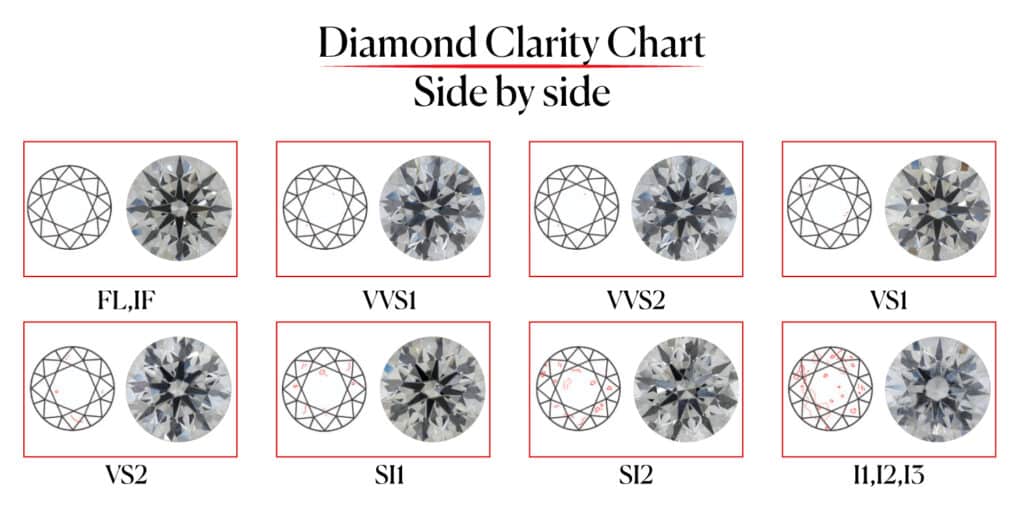
Now let’s talk about clarity—the place where you can make the smartest financial trade-off. Clarity refers to the tiny imperfections, or “inclusions,” inside a diamond.
The key here is not to find a flawless diamond, but to find an “eye-clean” one. Why would you pay a 50% premium for a VVS1 clarity diamond when an SI1 diamond looks identical to your naked eye? Paying for flawless clarity is like paying a mechanic to polish your car’s engine—it makes zero difference to the performance or how it looks from the outside.
Here’s my value-focused take on the clarity scale:
- FL-IF / VVS1-VVS2: This is “collector’s clarity.” The inclusions are so microscopic they are difficult for even a trained gemologist to find under 10x magnification. In my opinion, this is financial overkill for 99% of buyers.
- VS1-VS2: This is the “safe bet” zone. In almost all cases, VS-grade diamonds are 100% eye-clean, meaning you cannot see any inclusions just by looking at the stone.
It offers a great balance of quality and price. For an in-depth breakdown, our guide to VS1 vs. VS2 diamonds is a must-read. - SI1-SI2: This is the savvy buyer’s choice and where you can find the absolute best deals. Many SI1 clarity diamonds are completely eye-clean, but this is where you MUST inspect the diamond’s photos and videos.
If you find an SI1 where the inclusion is a small white crystal off to the side, you’ve found a winner that can save you thousands.
Step 4: CARAT WEIGHT – Maximizing Your Final Budget

You did it. You were strategic. You locked in your Excellent cut, and you saved a fortune by being smart on Color and Clarity. Now you get your reward: maximizing the size of your diamond.
The money you saved can now be poured directly into getting a larger carat weight, which is the factor that gives your ring the biggest “wow” factor from across the room.
And here’s one final pro tip: avoid the “magic sizes.” In the diamond market, prices jump significantly at the full-carat and half-carat marks (e.g., 1.00 ct, 1.50 ct, 2.00 ct).
A diamond that weighs 0.95 carats can cost 10-20% less than a full 1.00-carat diamond, but the visual size difference is impossible to spot.
Shopping just under these magic sizes is the ultimate way to get the most impressive diamond for your money. To see how these weights translate to actual dimensions, a visual Diamond Carat Size Chart is an incredibly useful tool.
James Allen: Our 5-Star Choice for Price and Selection
Check our comprehensive James Allen Review to learn more about their pricing and commitment.
Hearts and Arrows: The Highest Round Brilliant Grade
Hearts and Arrows is a precision cut standard above GIA Excellent. When you view a Hearts and Arrows round brilliant through a special viewer, you see 8 symmetrical hearts from below and 8 symmetrical arrows from above. Only ~1% of round brilliants achieve this.
Blue Nile markets its Hearts and Arrows cuts as Astor Ideal. Other retailers use terms like “Super Ideal” or “True Hearts.” All describe the same underlying precision cut specification.
What Hearts and Arrows actually buys you:
- 5-10% more light return than standard GIA Excellent
- Visibly tighter scintillation pattern under moving light
- 15-25% price premium over standard Excellent cut
- Better resale value at auction and secondary market
See our full hearts and arrows guide for the pattern viewer test and selection criteria.
Verdict: Hearts and Arrows is worth the premium if you want absolute maximum sparkle. For most buyers, GIA Excellent cut delivers 90% of the visual benefit at 20% less cost.
Round Brilliant: Natural vs Lab-Grown Price
Lab-grown round brilliants are chemically identical to natural round brilliants. Same carbon crystal. Same 58 facets. Same 10 Mohs hardness. The price gap is 70-85% at every carat weight.
| Carat | Natural (G VS2) | Lab-Grown (G VS2) | Savings |
|---|---|---|---|
| 0.50 ct | $1,500-$2,500 | $350-$600 | 75% |
| 1.00 ct | $5,500-$8,500 | $900-$1,800 | 80% |
| 1.50 ct | $10,000-$15,000 | $1,800-$3,200 | 80% |
| 2.00 ct | $18,000-$30,000 | $3,200-$6,500 | 82% |
| 3.00 ct | $35,000-$75,000 | $6,500-$12,000 | 85% |
The chemistry is identical. The only difference is origin. Natural diamonds grew underground over billions of years. Lab-grown diamonds grow in a chamber over weeks using either CVD or HPHT methods.
Verdict: If resale value matters, buy natural. If maximum size per dollar matters, buy lab-grown. See our 3-carat lab-grown pricing guide for larger stone math.
GIA vs IGI Certification for Round Brilliants
Two major labs certify round brilliants: GIA (Gemological Institute of America) and IGI (International Gemological Institute). For natural stones, GIA is the gold standard. For lab-grown, IGI dominates the market.
| Lab | Natural Diamonds | Lab-Grown Diamonds | Grading Strictness |
|---|---|---|---|
| GIA | Gold standard | Strict | Strictest in industry |
| IGI | Acceptable, 10-15% softer | Dominant lab for lab-grown | Generally one grade softer than GIA |
| AGS | Acquired by GIA 2022 | Phased out | Historical premium |
| GRA / EGL | Avoid | Avoid | Not credible — marketing paper |
GRA cards on moissanite are useless. GRA cards on diamonds are the same scam. See our GRA moissanite ring explanation for the full breakdown of fake certification labs.
Verdict: Natural round brilliants = GIA only. Lab-grown round brilliants = IGI is fine. Never buy any diamond on a GRA or EGL cert.
How to Set and Style Your Round Brilliant Diamond

Congratulations. You’ve followed the blueprint, you’ve dodged the Paper Trap, and you’ve chosen a spectacular round brilliant cut diamond that is all sparkle and smart value. Now for the fun part: assembling the final ring.
The setting is what gives your diamond its personality and style. Think of it as choosing the perfect frame for a masterpiece—it’s a choice that’s just as important as the artwork itself.
Let’s break down the two key decisions you’ll make: the metal and the setting style.
Choosing the Right Metal for Your Diamond’s Color
The color of the metal band isn’t just about what you like the look of; it directly interacts with the diamond and can either enhance or alter its color. It’s a critical piece of the puzzle that many people overlook.
Here’s my simple, pro-level advice on pairing them perfectly:
- For Diamonds in the D-J Color Range: You want to show off that icy-whiteness, so your best choices are Platinum or White Gold. These white metals act like a clean, bright backdrop, reflecting white light through the diamond and enhancing its colorless appearance.
- For Diamonds in the K-M Color Range: Here, you want to embrace the warmth. Choosing a Yellow Gold or Rose Gold setting is the key. These warm metals will complement the faint color in the diamond, giving it a beautiful, intentional, and often vintage-looking warmth.
Putting a K-color diamond in a platinum ring will only create a stark contrast that makes the diamond’s warmth look more like a yellow tint.
Getting this right ensures the entire ring looks cohesive and stunning. This is the kind of detail that becomes obvious once you start to build your own engagement ring on James Allen and can see the combinations in real-time.
The Best Engagement Ring Settings for a Round Diamond
A round brilliant diamond is incredibly versatile, so you have a lot of fantastic options here. The “best” setting is the one that best suits your personal style and your day-to-day lifestyle. Let’s walk through the most popular choices.

- The Solitaire Setting: For the timeless purist who believes the diamond is the one and only star of the show.
- Pros: Classic, elegant, and allows the maximum amount of light to enter the diamond from all sides.
- Cons: Doesn’t offer any extra sparkle or protection for the diamond’s girdle.
- The Halo Setting: For the person who loves maximum sparkle and a bold, glamorous look. A halo is a ring of tiny diamonds that encircles the center stone.
- Pros: Adds significant sparkle and can make the center diamond appear up to a half-carat larger.
- Cons: Can be seen as more trendy than timeless, and requires more frequent cleaning to keep all the small stones brilliant.
- The Pavé Setting: For an elegant touch of sparkle that enhances, rather than surrounds, the main stone. Pronounced “pa-vay,” this involves embedding small diamonds into the band itself.
- Pros: Adds a beautiful, delicate line of brilliance that draws the eye to the center stone.
- Cons: Resizing a pavé band can be difficult and expensive; tiny stones can be at risk if the ring is poorly made.
- The Cathedral Setting: For a traditional, architectural look that gracefully raises the diamond. The metal of the shank curves up to support the diamond like the arches of a cathedral.
- Pros: Lifts the diamond up high, making it look prominent and grand.
- Cons: The higher profile can be more prone to snagging on clothing or furniture.
- The Bezel Setting: For the modern, active person who values security and a sleek look above all else. A thin metal rim perfectly encircles the diamond, holding it securely in place.
- Pros: This is the most secure setting, period. It protects the diamond from chipping and won’t snag.
- Cons: It covers the edge of the diamond, which can make the stone appear slightly smaller.
- The Tension Setting: For the bold, contemporary individual who wants a ring that is a true conversation starter. The diamond is held in place by the pressure of two opposing ends of the band.
- Pros: Creates a stunning illusion that the diamond is floating; it’s unique and allows for easy cleaning.
- Cons: Resizing is extremely difficult and costly; some people feel nervous about the perceived lack of security.
Decision Matrix: Which Round Brilliant Fits You?
| Your Situation | Best Spec | Price (1 ct) | What This Means |
|---|---|---|---|
| Classic engagement, long-term keepsake | Natural GIA Excellent G VS2 | $5,500-$8,500 | Best resale. Timeless. |
| Max size per dollar | Lab-grown IGI Excellent G SI1 | $800-$1,500 | 80% cheaper, same look. |
| Absolute maximum sparkle | Astor Ideal Hearts & Arrows G VS1 | $7,500-$11,000 | Top 1% cut. Collector grade. |
| Hide warm color in yellow gold | Natural GIA Excellent J SI1 | $3,500-$5,000 | Yellow metal masks J color. |
| Investment-grade purchase | Natural GIA Excellent F VVS2 | $12,000-$18,000 | Rare combo. Resale appreciates. |
| Budget under $1,500 for 1 carat | Lab IGI Excellent H VS2 | $1,000-$1,500 | Only way to hit 1 carat under $1,500. |
| Side stones for 3-stone setting | GIA Very Good H SI1, 0.3-0.5 ct | $600-$1,500 each | Matched pair for balanced look. |
Verdict: Default spec: Natural GIA Excellent G VS2 for keepsake. Lab-grown G VS2 for max size. Astor Ideal for maximum sparkle. See our full diamond buying guide and best online retailers for buying context.
Mehedi’s Take: “A natural 1-carat G VS2 Excellent cut costs $6,500. A lab-grown version of the same spec costs $1,200. Face-up, no one can tell them apart. Only the resale value differs. Pick based on whether you plan to upgrade or keep.” — Mehedi Hasan, Diamond Industry Veteran
Frequently Asked Questions
How many facets does a round brilliant cut diamond have?
58 facets total. 33 on the crown (above the girdle) and 25 on the pavilion (below), including the culet. The design was perfected by Marcel Tolkowsky in 1919 using mathematical light-reflection formulas.
What is the MM size of a 1-carat round brilliant diamond?
6.5 mm diameter at ideal GIA proportions. Depth is about 4.0 mm. Face-up area is 33.2 mm² — the largest face-up size per carat of any diamond shape.
Is a round brilliant cut diamond the best cut?
For maximum sparkle, yes. Round brilliants return approximately 95% of entering light — the highest of any shape. They also hold resale value better than fancy shapes. For design preferences or elongated finger-flattering looks, other shapes may fit better.
What cut has the most brilliance?
Round brilliant. Second place is princess cut at ~92-95% light return. Third is cushion cut. Step cuts like emerald return less light but offer a different hall-of-mirrors look.
Are all round diamonds brilliant cut?
Almost all modern round diamonds are brilliant cut. Historical rounds like Old European and Old Mine Cut were round but used fewer, chunkier facets. If someone sells you a “round antique cut,” expect fewer facets and less brilliance than a modern round brilliant.
What is the difference between a round diamond and a brilliant cut?
“Round” is the shape. “Brilliant” is the faceting style (58 facets optimized for light return). A round brilliant combines both. Brilliant-style faceting also appears in other shapes: oval brilliant, pear brilliant, princess brilliant. These are “brilliants” that are not round.
Why is a round brilliant diamond so expensive?
Three reasons. First, demand — round brilliants are the most-requested shape, 60%+ of engagement rings. Second, rough yield — cutters lose 50-60% of raw diamond weight to produce a round. Fancy shapes keep more rough weight. Third, resale — rounds hold value better, so market pricing stays premium.
What is the ideal table and depth for a round brilliant?
Table: 54-58%. Depth: 60-63%. These are the GIA Excellent cut proportions. See our diamond table secret for the full 54-58% rule and why it drives face-up appearance.
What is a poorly cut round diamond?
A round with GIA Fair or Poor cut grade. Signs: table over 62%, depth over 65%, crown height off-spec, or visible dark zones at the center. These stones leak light out the sides instead of returning it up through the crown. Avoid them even at discount prices.
How do you pick a round brilliant diamond?
Four-step hierarchy. Step 1: GIA Excellent cut grade. Non-negotiable. Step 2: G-H color for white metals, I-J for yellow gold. Step 3: VS2 or eye-clean SI1 clarity. Step 4: Carat weight within your budget. Cut always comes first.
Round brilliant vs brilliant cut: what is the difference?
“Round brilliant” is the specific round-shape, 58-facet design. “Brilliant cut” is the broader faceting style used in multiple shapes. All round brilliants are brilliant cuts. Not all brilliant cuts are round.
Are Hearts and Arrows diamonds worth the premium?
Only if you want absolute maximum sparkle. H&A adds 5-10% more light return over standard GIA Excellent, but costs 15-25% more. For most buyers, a standard Excellent cut delivers 90% of the visual benefit at a better price. See our hearts and arrows guide.
What is the best color grade for a round brilliant?
G-H in white gold or platinum. I-J in yellow gold or rose gold (metal masks warmth). D-F only if you want investment-grade specs — the color difference above G is invisible to untrained eyes. See diamond color and clarity chart.
What is the best clarity grade for a round brilliant?
VS2 is the sweet spot. Eye-clean 99% of the time. SI1 works if you verify no center-table inclusions on the GIA plot. See our VS1 vs VS2 guide for the clarity trade-off math.
How much does a 1-carat round brilliant diamond cost?
Natural GIA Excellent G VS2: approximately $5,500-$8,500. Lab-grown IGI Excellent G VS2: approximately $900-$1,800. Astor Ideal (Hearts & Arrows): approximately $7,500-$11,000. See our diamond rate calculator for all carat weights.
What setting shows a round brilliant best?
Solitaire for pure stone emphasis. Pavé-set band for maximum sparkle amplification. Halo for visual size boost. Three-stone with pear or trillion side stones for traditional elegance. See our engagement ring metals guide for metal pairings.
How is a round brilliant diamond cut?
From a rough diamond crystal, cutters bruting a round outline. Then step-by-step facets are polished using diamond-powder wheels. A full round brilliant takes 4-8 hours of polishing per stone. Precision cuts like Hearts and Arrows take 2x longer.
Do lab-grown round brilliant diamonds hold value?
No. Lab-grown diamonds depreciate 70-90% from retail on resale. Natural diamonds hold 30-50% of retail. For keepsakes or heirloom intent, buy natural. For maximum size per budget with no resale concern, buy lab-grown.
What are the 58 facets of a round brilliant cut?
Crown (33 facets): 1 table, 8 star facets, 8 bezel facets, 16 upper girdle facets. Pavilion (25 facets): 16 lower girdle facets, 8 pavilion mains, 1 culet. The culet is sometimes polished flat (making 57 facets) or left pointed (58 facets).
Are round brilliant diamonds more expensive than fancy shapes?
Yes. Round brilliants cost 20-40% more per carat than equivalent-quality fancy shapes like cushion, pear, or radiant. Round demand plus rough yield loss drives the premium.
Mehedi’s Final Take: “If a client asks me for one shape to buy without a long conversation, I say round brilliant. Every single time. Maximum sparkle. Best resale. Always in style. The math has not changed since Tolkowsky in 1919.” — Mehedi Hasan, Diamond Industry Veteran
See Also
- Radiant Cut Diamond Guide
- Cushion Cut Diamond Guide
- Princess Cut Diamond Ring Guide
- Pear Shaped Diamond Ring Guide
- Emerald Cut Diamond Guide
- Marquise Cut Diamond Guide
- Heart Diamond Shape Guide
- Hearts and Arrows Diamonds
- Astor by Blue Nile Cut: Worth It?
- Triple Excellent Diamond
- Diamond Table Secret: 54-58% Rule
- VS1 vs VS2 Diamond
- VS1 Clarity Diamond Guide
- Diamond Color and Clarity Chart
- Diamond Color Chart
- What Shape Diamond Looks the Largest?
- Diamond Rate Calculator
- Diamond Appraisal Calculator
- How Much Is a 3-Carat Lab-Grown Diamond?
- Diamond Resale Price Calculator
- Engagement Ring Metals: Pros and Cons
- Best Places to Buy Engagement Rings Online
- Best Times to Buy Diamond Ring
- Blue Nile Reviews
- Blue Nile FAQs
- GRA Moissanite Ring: Scam Explained
- Moissanite vs Lab Diamond Side by Side
- Diamond Buying Guide
The Verdict: Stop Buying a Certificate, Start Buying a Diamond
We’ve covered a lot of ground, but it all comes down to this one simple idea. You wouldn’t buy a supercar with a lawnmower engine just because it has a perfect, flawless paint job.
So please, don’t buy a diamond with a poor or mediocre Cut just because it has D color and IF clarity grades on paper. The certificate is a key tool, an expert map, but it is not the final word on beauty. The sparkle is.
Your mission is to find the most beautiful diamond your money can buy. Now, you have the expert blueprint to do it.
Prioritize Cut above all else, find the value sweet spots in Color and Clarity, and I promise you will end up with a round brilliant cut diamond that radiates with more fire and brilliance than stones that cost thousands more.
Buy smart, and wear it with pride.
Blue Nile is one of the biggest and most recognized online jewelry retailers, offering an extensive and exclusive inventory. Their high-resolution images are improving and getting closer to the quality offered by James Allen, while their prices remain highly competitive. Right now, Blue Nile offers up to 30% savings on jewelry during a limited-time sale.
WHAT WE LOVE ABOUT THEM:
- 30-day no-questions-asked return policy, with a prepaid shipping label provided by Blue Nile.
- Lifetime warranty on all purchases.
- Free shipping on every order.
- Complimentary services every six months, including prong tightening, repolishing, rhodium plating, and cleaning.
- Insurance appraisal included with your purchase.
- One free resizing within the first year.
- High-quality images available for roughly half of their diamond selection.
- 24/7 customer service support.
- Full credit toward future upgrades, as long as the new item is at least double the value.
- Best-in-class order fulfillment process.


For GIA-certified round brilliant diamonds with 360° HD video inspection, we recommend Blue Nile (ex-James Allen) — now hosts the full James Allen inspection toolkit for Ideal and Astor Ideal cuts (acquired August 2026).