
Quick Answer
VS1 vs VS2 Diamond — 60-Second Answer
- Both are top-tier. Both grades sit in the top 20% of the GIA clarity scale. Both are considered high-quality.
- Eye-clean rate: 95% of VS1 stones are eye-clean. 85–90% of VS2 stones are eye-clean (depends on inclusion location and shape).
- Price difference: VS1 costs 20–30% more than VS2 at matched color/carat/cut. 1ct G VS1 runs ~$5,500. 1ct G VS2 runs ~$4,200.
- Can you tell the difference? Not with your eyes. Only under 10x magnification can you spot more inclusions in VS2.
- Which to buy? For round brilliant, go VS2 and save 25%. For emerald, Asscher, step cuts, go VS1 — those shapes don’t hide inclusions.
- Eye-clean verification: always view the 360° video before buying VS2. Request GIA plot. Reject if inclusion sits under the table.
- Best value: VS2 for 70% of buyers. VS1 for emerald/Asscher cuts and buyers who want zero compromise.
VS1 and VS2 are both Very Slightly Included grades on the GIA scale. VS1 has smaller or fewer inclusions than VS2 — both are hard to spot under 10x magnification. Neither has inclusions you can see with the naked eye in 85–95% of stones. VS1 costs 20–30% more than VS2 at matched color and carat. For round brilliants, VS2 is the smart buy. For emerald and Asscher cuts, VS1 is worth the premium. The calculator and comparison tables below show you exactly how the two compare on price, eye-cleanliness, and shape fit.
VS1 vs VS2 is the clarity debate most buyers end up stuck on. Both are top-tier grades. Both are eye-clean most of the time. The difference costs you 20–30%. Here’s which one is worth it.
VS1 means Very Slightly Included 1. VS2 is Very Slightly Included 2. Both grades have inclusions you can’t see with the naked eye in 85–95% of stones. 1-carat VS2 typically runs $4,000–$6,500. VS1 adds 20–30% to that price.
You’ll learn: what VS1 and VS2 actually look like, which inclusions matter, exact price differences, how they stack up against VVS2 and SI1, and when to pick each.
Clarity is one of the 4 Cs. See our diamond grading chart for the full breakdown.
This guide breaks down the subtleties of VS1 and VS2 to guide your next jewelry decision, offering a solid foundation for choosing these highly regarded clarity grades.
Is VS1 Better Than VS2? The Honest Answer
Short answer: VS1 is technically higher-grade. But it’s not meaningfully better for most buyers. Both grades are eye-clean. The 20-30% price gap buys you a slightly cleaner inclusion plot under 10x magnification — nothing you’ll see on the ring.
| Factor | VS1 | VS2 | Winner |
|---|---|---|---|
| Eye-clean rate | 95% | 85–90% | VS1 by small margin |
| Visible under 10x loupe | Hard to spot | Easier to spot | VS1 |
| Visible to naked eye | No | No (if eye-clean verified) | Tie |
| Price at 1ct G | $5,200–$5,800 | $4,000–$4,500 | VS2 (saves ~$1,200) |
| Resale value | Slightly higher | Slightly lower | VS1 (3–8% gap) |
| Setting flexibility | All shapes | Best for round, cushion, oval | VS1 (safer bet) |
| GIA certification value | Same | Same | Tie |
| Best for emerald/Asscher cut | Yes | Risky — inclusions show | VS1 |
| Best for round brilliant | Overkill | Perfect | VS2 |
What this means: VS1 wins on paper. VS2 wins on value. For 70% of buyers (round brilliant, cushion, oval, princess), VS2 gives the same visible look at a 20-30% discount. For step-cut diamonds (emerald, Asscher, baguette), those open facets reveal inclusions easier — VS1’s extra margin matters.
Verdict: we recommend VS2 for round brilliant, cushion, oval, pear, marquise, and heart cuts. We recommend VS1 for emerald, Asscher, baguette, and radiant cuts. See our best diamond clarity guide for the full shape-by-shape breakdown.
“The VS1 vs VS2 debate is where buyers overthink the 4Cs. Both are high clarity. Both look identical face-up. The $1,200 you save going VS2 is a bigger diamond, a better setting, or a honeymoon. Pick the one that leaves money in your pocket.” — Mehedi Hasan
VS1 vs VS2 Price Difference: Exact Dollar Gap by Carat
Short answer: VS2 saves you 20–30% at matched color and carat. The gap grows with carat weight. Below are current market numbers for natural D-color GIA-certified round brilliants.
| Carat | VS1 Natural D GIA | VS2 Natural D GIA | Savings | % Difference |
|---|---|---|---|---|
| 0.5ct | $2,200–$2,600 | $1,650–$2,000 | $550–$600 | 25% |
| 0.75ct | $3,800–$4,400 | $2,900–$3,500 | $900–$1,000 | 23% |
| 1ct | $7,500–$9,000 | $5,800–$6,800 | $1,700–$2,200 | 23–24% |
| 1.5ct | $14,000–$17,000 | $10,500–$13,000 | $3,500–$4,000 | 24% |
| 2ct | $30,000–$36,000 | $22,000–$27,000 | $8,000–$9,000 | 26% |
| 3ct | $70,000–$85,000 | $50,000–$62,000 | $20,000–$23,000 | 28% |
| 4ct | $130,000–$160,000 | $95,000–$115,000 | $35,000–$45,000 | 28% |
| 5ct | $220,000–$270,000 | $155,000–$195,000 | $65,000–$75,000 | 29% |
What this means: at 1ct, you save about $1,700 by going VS2 instead of VS1. At 2ct, you save $8,000. At 5ct, you save $65,000+. The dollar gap scales exponentially because clarity-grade premiums multiply at larger carats. The percentage stays roughly constant at 23-29%.
Lab diamond pricing: for lab-grown diamonds, the VS1-vs-VS2 gap shrinks to about 10-15% because the base price is already low. 1ct G VS1 lab runs $1,400–$1,800. 1ct G VS2 lab runs $1,100–$1,500. Smaller gap, smaller stakes.
Verdict: at every carat weight, VS2 saves meaningful money. Use the savings to upgrade color (G → F) or carat (1ct → 1.2ct). The clarity drop from VS1 to VS2 is invisible. The color or size upgrade is not.
Is VS2 Eye Clean? The 85-90% Rule and How to Verify
Yes — in 85–90% of cases. The remaining 10–15% have inclusions in bad locations (under the table, near the girdle). You can only know by looking at the 360° video. Never buy a VS2 blind.
| Inclusion Location | Eye-Clean Risk | What to Do |
|---|---|---|
| Center of table | HIGH — visible from above | Reject this VS2 |
| Under the table (inside) | HIGH — eye catches it in sunlight | Reject or demand VS1 |
| Near girdle (perimeter) | LOW — prongs usually hide | OK if you can see 360° proof |
| Pavilion facets (bottom) | MEDIUM — can reflect through table | Check with 10x video, side angle |
| Crown edge | LOW — hard to see face-up | Safe |
| Multiple small inclusions | LOW individually, cumulative under loupe | Usually fine for naked eye |
What this means: VS2’s eye-clean status depends entirely on WHERE the inclusions sit, not WHAT they are. A VS2 with a single crystal near the girdle is virtually identical to a VS1. A VS2 with a dark crystal under the table center is visible in bright light. The GIA report doesn’t tell you which — only the video and plot diagram do.
How to verify:
- Pull up the GIA report. Look at the “Plot” diagram — black dots mark inclusions.
- Reject any VS2 with inclusions marked in the center of the table.
- Watch the Blue Nile 360° video at full zoom. Tilt the stone — do inclusions become visible?
- If uncertain, request a staff gemologist review (Blue Nile offers this free).
- Check retailer return policy — 30 days means you can send it back if eye-clean fails in person.
Verdict: 85-90% of VS2 stones are eye-clean. The other 10-15% have bad inclusion placement. Verify with 360° video before buying. If the retailer won’t show you video, walk away.
“The number one trap: buyers see ‘VS2’ on the paper and assume eye-clean. Then the stone arrives with a visible mark in the center of the table. I tell every buyer — the GIA report certifies clarity grade, not eye-cleanliness. You verify eye-cleanliness yourself with the video and plot.” — Mehedi Hasan
Understanding Diamond Clarity: The Core Principles
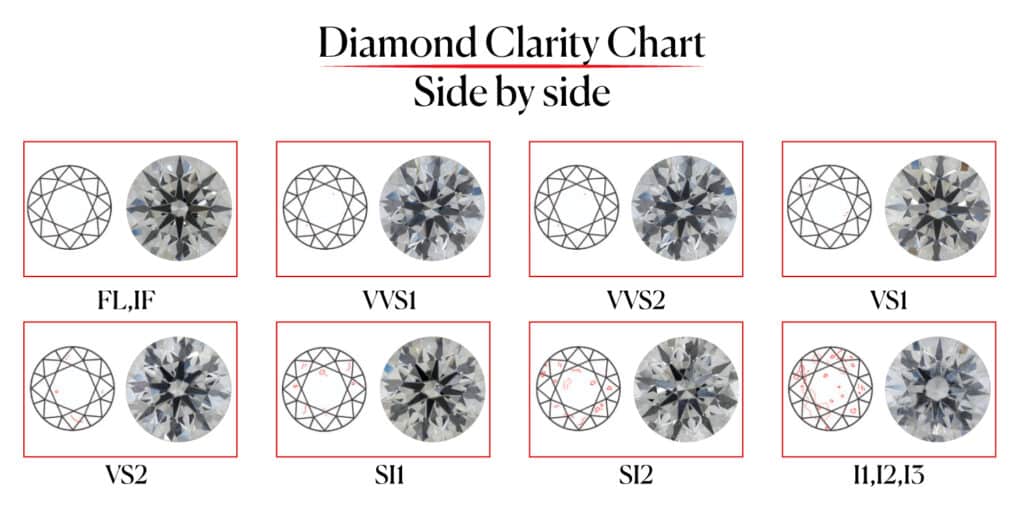
Diamond clarity stands out as a key factor that shapes a stone’s beauty and value, setting the stage for understanding the details between VS1 and VS2. This section walks through the essentials, drawing on standards from the Gemological Institute of America (GIA), to give you a clear picture of why these grades matter. The goal is to break it down simply, so you can easily grasp the basics of choosing a diamond.
The GIA Clarity Scale: From Flawless to Included
The GIA clarity scale acts as a guide through a diamond’s imperfections, starting with the rare Flawless (FL) and Internally Flawless (IF), moving to Very Very Slightly Included (VVS1-VVS2), Very Slightly Included (VS1-VVS2), Slightly Included (SI1-SI2), and Included (I1-I3).
VS1 and VS2 sit as premium mid-tier choices, offering quality at a reasonable price. It’s interesting to note that about 20% of graded diamonds fall into the VS category, per GIA data. If you’d like a closer look, the diamond clarity grading chart provides a helpful visual.
Diamond IQ Test: Natural or Lab-Grown?
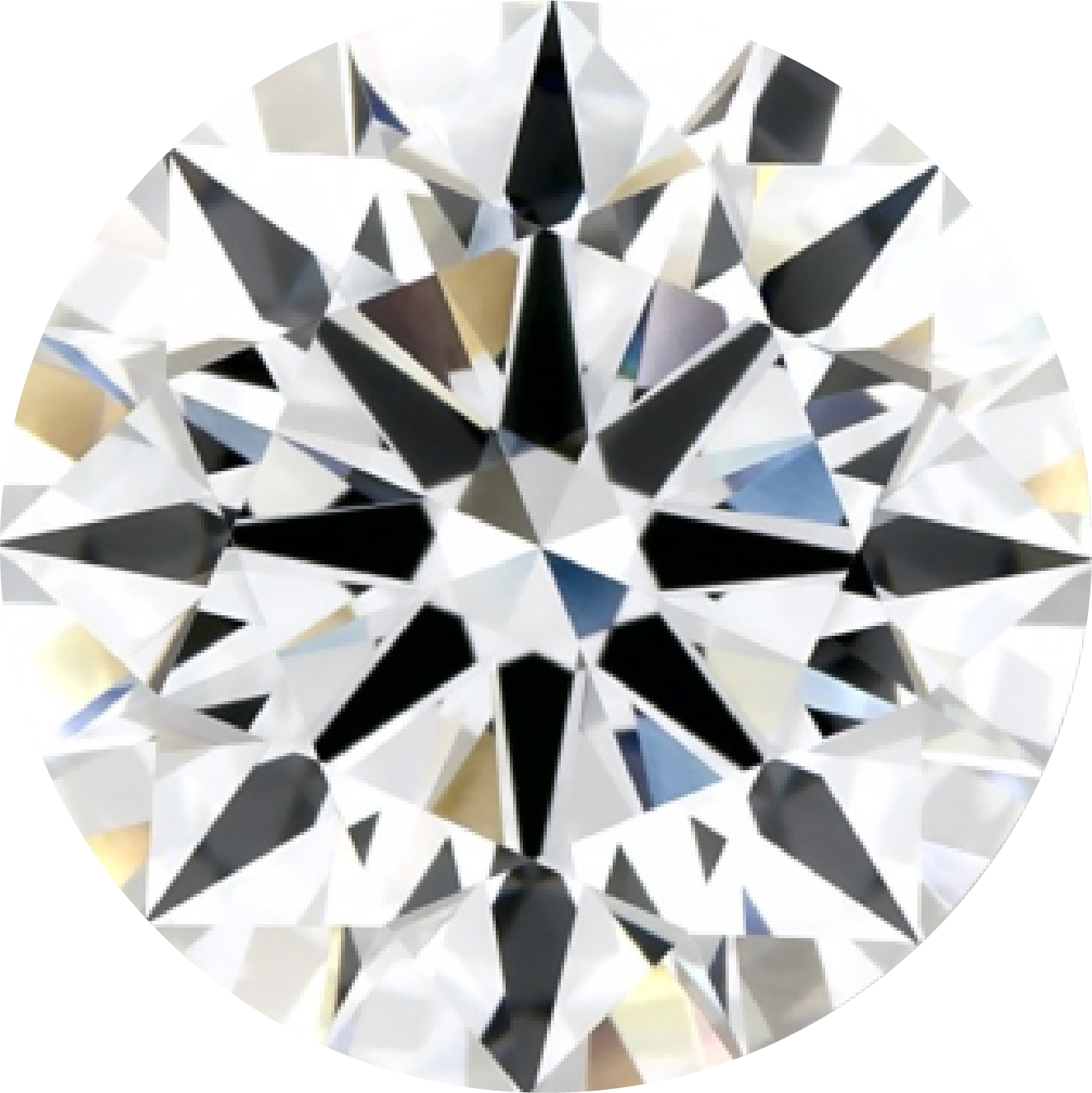
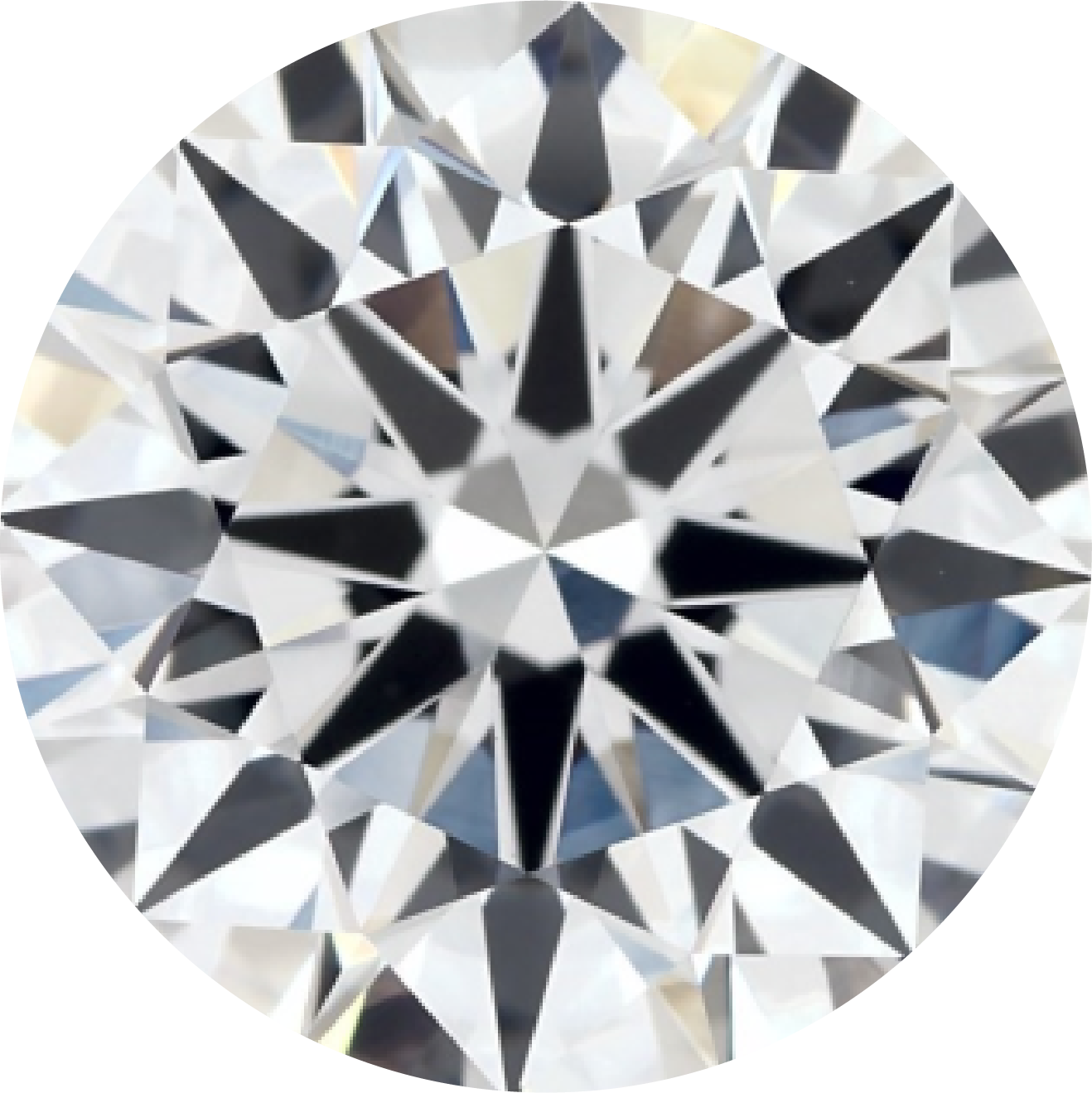
Two identical diamonds: GIA Certified, 1.51ct, D Color, VVS1, Ideal Cut. One is natural ($16,240), the other is lab-grown ($1,970). Choose the diamond you like better and see if you can match it to its origin.
Defining VS1 and VS2 Clarity
VS1, or Very Slightly Included 1, refers to diamonds where inclusions are tough to spot under 10x magnification, with 95% looking eye-clean, as reported by Jewelers of America. VS2, or Very Slightly Included 2, has slightly more visible inclusions, but 85% still appear flawless without a loupe. These grades strike a nice balance, giving you options that look great without breaking the bank.
Evaluating Inclusions
Inclusions are like a diamond’s unique story, and understanding how they’re judged helps determine its clarity. The GIA looks at size—smaller marks are less obvious—position, whether near the girdle or under the table, and type, like crystals or feathers. Placement matters; an inclusion near the edge is less noticeable than one in the center. This process shapes whether a diamond earns a VS1 or VS2 grade.
- Size: Smaller inclusions blend in better.
- Position: Edge locations hide flaws more effectively.
- Type: Crystals and feathers affect how light plays through the stone.
Inclusions play a key role in setting VS1 and VS2 clarity grades, revealing a diamond’s character in a way that’s easy to appreciate.
VS1 vs VS2: A Deep Dive into Clarity Differences

The comparison of VS1 and VS2 opens a window into the world of diamond clarity, shedding light on the fine distinctions that define VS1 vs VS2 diamond choices. This section offers a detailed exploration, backed by data, to clarify what sets these grades apart and how they impact your selection process. The aim is to deliver actionable insights through an engaging analysis.
Inclusion Visibility and Placement
Inclusions, the natural marks within a diamond, differ notably between VS1 and VS2, influencing their overall appeal. VS1 typically features inclusions like edge-placed feathers, which blend discreetly into the stone’s edges, while VS2 often showcases more prominent center crystals.
According to GIA 2024 data, only 5% of VS1 diamonds exhibit faint flaws in stones exceeding 2 carats, compared to 15% for VS2. This contrast in placement highlights how VS1’s edge inclusions remain less disruptive, whereas VS2’s central flaws can catch the eye, especially in larger sizes.
Eye-Cleanliness Rates and Exceptions
Eye-cleanliness is a critical factor for buyers, and VS1 and VS2 present distinct profiles in this area. Jewelers of America 2025 reports that 95% of VS1 diamonds appear free of inclusions to the naked eye, while 85% of VS2 achieve this standard.
However, exceptions occur, particularly with larger carat weights or poorly executed cuts, where inclusions become more noticeable. Clarity plot examples illustrate this, such as a 2.5-carat VS2 showing a slight crystal under certain light, while a VS1 of similar size maintains its pristine look. These variations emphasize the role of cutting precision.
- Larger carat sizes (above 2 carats) may reveal inclusions, with VS2 showing a higher incidence.
- Poor cuts amplify flaw visibility, especially in VS2 diamonds with central inclusions.
- Clarity plots provide specific cases, like a 3-carat VS2 with a noticeable feather, contrasting with VS1 consistency.
Impact of Cut, Color, and Carat
The performance of VS1 and VS2 extends beyond inclusions, shaped by cut, color, and carat weight. A VS1 D color diamond excels in light reflection, leveraging its high clarity and top-tier color to outshine a VS2 I diamond, where a lower color grade and slight inclusions reduce brilliance.
Carat size amplifies these differences; as a diamond grows, the 5% to 15% flaw rate gap between VS1 and VS2 becomes more evident, making inclusion visibility a key consideration. A well-cut stone enhances light play, while color can mask imperfections, offering a strategic advantage in larger gems.
Real-World Examples
Real-world cases bring these differences into sharp focus. A GIA-certified 1-carat VS1 round diamond, priced at $5,500, features minimal edge inclusions, as depicted in its inclusion diagram, while a VS2 counterpart at $4,500 displays a slight center crystal.
Another example includes a 2-carat VS1 at $12,000 with discreet flaws versus a VS2 at $9,500 showing a faint inclusion. These diagrams, accessible via GIA reports, allow a direct comparison, showing how VS1’s stricter standards justify its price, while VS2 provides a cost-effective option with minimal visual trade-off.
The subtle differences between VS1 and VS2 clarity become evident through these real-world examples, offering a tangible guide for selection. For further insight, the diamond cut and clarity chart offers a visual aid for these distinctions.
VS1 vs VS2 vs VVS2 vs SI1: Adjacent Clarity Grades Compared
VS1 and VS2 don’t exist in isolation. Buyers often compare them against VVS2 (one grade up) and SI1 (one grade down). Here’s how all four stack up at matched D color and 1ct.
| Grade | 1ct D GIA Price | Eye-Clean Rate | Under 10x Loupe | Best For |
|---|---|---|---|---|
| VVS1 | $10,500–$12,500 | 100% | Nearly invisible flaws | Perfectionists with budget |
| VVS2 | $9,000–$10,500 | 100% | Very hard to see | Investors, step cuts |
| VS1 | $7,500–$9,000 | 95% | Hard to see | Emerald, Asscher cuts |
| VS2 | $5,800–$6,800 | 85–90% | Easier to see | Round brilliant, oval, cushion |
| SI1 | $4,200–$5,000 | 60–70% | Visible flaws | Budget buyers who vet video carefully |
| SI2 | $3,000–$4,000 | 30–40% | Clearly visible flaws | Fancy settings that hide inclusions |
What this means: there are 3 natural price breakpoints. VVS2 and VS1 are both “safe choices” at a premium. VS2 is the sweet spot — nearly identical to VS1 but 20-30% cheaper. SI1 is riskier but 20-30% cheaper than VS2 again. SI2 is a gamble that requires 10x video verification.
Verdict: most buyers should land on VS2. If budget allows and you want zero compromise, go VS1. If budget is tight and you’ll vet the video, SI1 can look identical to VS2 at 20% less. See individual guides: VVS1, VVS2, VS1, VS2, SI1, SI2.
GIA Diamond Clarity Chart: Where VS1 and VS2 Sit
The GIA scale has 11 clarity grades from Flawless (top) to I3 (bottom). VS1 and VS2 sit near the top — only 4 grades are higher. Here’s the full chart with what each grade actually looks like.
| Grade | Full Name | Position on Scale | Visible Under 10x? | Eye-Clean? |
|---|---|---|---|---|
| FL | Flawless | Top (1 of 11) | No flaws anywhere | Always |
| IF | Internally Flawless | 2 of 11 | Minor surface marks only | Always |
| VVS1 | Very, Very Slightly Included 1 | 3 of 11 | Invisible to trained eye at 10x | Always |
| VVS2 | Very, Very Slightly Included 2 | 4 of 11 | Very hard to see at 10x | Always |
| VS1 | Very Slightly Included 1 | 5 of 11 | Hard to see at 10x | 95% |
| VS2 | Very Slightly Included 2 | 6 of 11 | Visible with care at 10x | 85–90% |
| SI1 | Slightly Included 1 | 7 of 11 | Visible at 10x | 60–70% |
| SI2 | Slightly Included 2 | 8 of 11 | Easy to see at 10x | 30–40% |
| I1 | Included 1 | 9 of 11 | Clearly visible flaws | 5–15% |
| I2 | Included 2 | 10 of 11 | Obvious flaws | Rarely |
| I3 | Included 3 | Bottom (11 of 11) | Flaws affect durability | Never |
What this means: VS1 and VS2 both sit in the “safe zone” — the top half of the scale where inclusions don’t affect what you see face-up. Only the top 4 grades (FL, IF, VVS1, VVS2) are higher. Below VS2, inclusions start becoming visible without magnification.
Verdict: if you’re shopping anywhere above SI1, you’re in solid territory. The VS1/VS2 debate is a top-tier buyer’s problem — a good one to have. See our complete diamond color and clarity chart for the full visual grading guide.
Pricing and Value: VS1 vs VS2 Diamond Costs

Deciding between VS1 and VS2 diamonds involves balancing quality and budget, and I’ve crunched the numbers to help you find the best deal! Lets breaks down the pricing for these clarity grades, offering a value analysis to empower your choice based on size, type, and personal priorities.
Whether you’re eyeing a natural or lab-grown stone, the insights here aim to guide you toward a smart investment.
VS1 Diamond Pricing Breakdown
The cost of a VS1 diamond price varies widely depending on factors like color, cut, and whether it’s natural or lab-grown. For a 1-carat VS1 clarity diamond price, expect a range of $5,200 to $6,500 based on recent data from Blue Nile 2025.
For instance, a 1-carat G/VS1 diamond might run around $5,600, while a premium D/VS1 could reach $6,800 due to its superior color grade. These figures reflect high-quality cuts that maximize brilliance, though prices can dip or spike with lesser or exceptional cuts.
Lab-grown VS1 diamond cost offers significant savings, typically falling between $3,200 and $4,000 for a 1-carat stone—a 40% reduction compared to natural diamonds, as noted by Brides.com 2025. This affordability stems from controlled production, ensuring consistent clarity without the rarity premium of mined stones.
For larger sizes, like a VS1 2 carat diamond, prices climb to $12,000–$15,000 for natural and $7,500–$9,000 for lab-grown, reflecting the exponential value increase with carat weight. The 1CT VS1 diamond remains a popular choice, often balancing size and cost effectively, while a VS 1 carat diamond in G color can be a sweet spot for quality seekers.
VS2 Diamond Pricing Breakdown
The VS2 diamond price tends to be more budget-friendly, making it a strong contender for value-conscious buyers. For a 1-carat VS2 clarity diamond, estimates range from $4,000 to $5,500. Examples include an H/VS2 at approximately $4,500 and an F/VS2 at $5,200, with variations tied to cut quality and color grade.
The VS2 diamond cost benefits from slightly more visible inclusions under magnification, which don’t typically affect eye-cleanliness in smaller sizes, keeping prices lower than VS1.
Lab-grown VS2 diamond price further reduces the cost, ranging from $2,400 to $3,300 for a 1-carat stone. This aligns with the 40% savings trend seen in lab-grown options, per Brides.com 2025, making VS2 1 diamond a viable choice for engagement rings like a 1 CT VS2 diamond ring.
For a 2 carat round brilliant cut VS2 carat diamond, natural prices span $9,000–$12,000, while lab-grown versions fall to $5,500–$7,000. The VS 2 diamond category remains appealing for its balance of sparkle and affordability, especially in shapes that mask inclusions well.
Value Comparison Table
To simplify the VS1 vs VS2 clarity decision, here’s a table comparing prices across common carat sizes for both natural and lab-grown diamonds. Tips are included to maximize value based on your needs.
| Carat Size | VS1 Natural Price | VS2 Natural Price | VS1 Lab-Grown Price | VS2 Lab-Grown Price | Value Tip |
|---|---|---|---|---|---|
| 0.5 Carat | $2,500–$3,200 | $2,000–$2,700 | $1,500–$1,900 | $1,200–$1,600 | Opt for VS2 to save $300–$500 while staying eye-clean. |
| 1 Carat | $5,200–$6,500 | $4,000–$5,500 | $3,200–$4,000 | $2,400–$3,300 | Choose VS2 in 1 carat to save $1,000 while maintaining eye-cleanliness. |
| 2 Carat | $12,000–$15,000 | $9,000–$12,000 | $7,500–$9,000 | $5,500–$7,000 | Consider VS1 for 2 carat stones if eye-cleanliness is critical due to size. |
Key Insights:
- VS1 vs VS2 diamond pricing shows a 10–25% premium for VS1, reflecting stricter inclusion standards.
- For VS1 or VS2 under 1 carat, VS2 often suffices as both are typically eye-clean, saving hundreds.
- Larger stones like a VS1 2 carat diamond or 2 carat round brilliant cut VS2 carat diamond may justify VS1 if inclusions become visible, especially in step-cut shapes.
- VS1 natural diamond vs. VS1 lab grown diamond or VS1 clarity lab grown diamond highlights lab-grown’s cost advantage, while VS2 diamond quality holds strong with careful selection.
- Explore lab-grown diamonds for affordable VS1 or VS2 options, as detailed on a resource here, to stretch your budget further.
This table empowers weighing VS1 or VS2 clarity based on size and financial goals. Opting for a 1CT VS1 diamond over VS2 adds $1,000–$1,500 but ensures top-tier clarity, while a VS2 I diamond or VS2 SI1 in clarity might push the eye-clean limit, requiring close scrutiny.
Making the Right Choice
The VS1 vs VS2 diamond debate hinges on your priorities. If budget allows, a VS1 G diamond or F VS2 diamond delivers premium quality, with G VS2 diamond or H VS2 diamond offering solid alternatives at lower costs.
Lab-grown options like VS1 clarity lab grown diamond or VS2 clarity diamond slash expenses significantly, with E VS2 diamond or FVS2 diamond showing how color impacts value. The VS2 diamond meaning—very slightly included with minor inclusions—suggests it’s often indistinguishable from VS1 to the eye, per what is VS2 diamond insights.
Prioritize eye-cleanliness over grade. A VS2 diamond chart from retailers like Blue Nile 2025 can guide selection, ensuring inclusions (e.g., VS2 SI1) don’t detract from sparkle. Savings from VS2 clarity meaning can fund a better cut or larger carat, boosting overall appeal.
With prices varying—what is VS2 clarity often under $5,500 for 1 carat vs. VS1 diamond price nearing $6,500—comparing options finds the perfect fit.
This analysis equips navigation of diamond VS1 price vs. VS2 diamond cost, balancing VS1 natural diamond rarity with VS2 diamond quality. Whether choosing a VS 1 carat diamond or VS2 1 diamond, the decision aligns cost with desired aesthetics. Dive into the details, and a gem that shines within your means awaits!
Best Shapes and Settings for VS1 and VS2 Diamonds

Choosing the right shape and setting can raise the beauty of VS1 and VS2 diamonds, turning a stunning stone into a masterpiece. Let me guide you through selecting options that optimize clarity and enhance visual appeal, ensuring your diamond shines in the best light. With a focus on style and practicality, the insights here help match these grades to your personal taste and budget.
Ideal Shapes for VS1 and VS2 Clarity
The shape of a diamond plays a key role in showcasing its clarity, and certain cuts complement VS1 diamond engagement rings and VS2 diamond ring designs exceptionally well. Brilliant cuts, such as round and princess shapes, are top choices for VS1, with round cuts holding 30% popularity among engagement rings according to The Knot 2024.
These cuts maximize light reflection, highlighting the near-flawless nature of VS1 stones. Step cuts, like the emerald shape, also favor VS1, with GIA 2025 noting that 20% of such cuts require this grade to maintain an impeccable look due to their open facets.
For VS2, brilliant cuts remain a strong option, though the slightly more visible inclusions can be artfully concealed with round or princess styles. Emerald cuts work too, but careful selection is key, as their linear facets may emphasize flaws in lower clarity grades.
The choice of shape can transform a VS1 D color diamond or G VS2 diamond into a focal point, depending on how light interacts with the stone’s structure.
Best Settings for VS1 Diamonds
The setting frames a diamond’s clarity, and for VS1 clarity diamond meaning, solitaire and halo designs stand out. A solitaire setting, with its single stone prominence, adds $300–$600 to the cost, enhancing the brilliance of a VS1 D color diamond by letting its light play freely.
The halo setting, encircling the center stone with smaller diamonds, boosts sparkle and can raise a VS1 F diamond or H color diamond VS1, adding the same price range while masking any minor edge inclusions.
These settings highlight VS1’s 95% eye-clean rate, making them ideal for statement pieces. A G color diamond VS1 shines particularly well in a halo, where the added diamonds amplify its clarity and color, offering a luxurious yet practical upgrade.
- Solitaire: Emphasizes the stone’s individual beauty, ideal for a classic VS1 diamond engagement ring.
- Halo: Enhances brilliance with surrounding stones, perfect for maximizing a VS1 G color diamond’s appeal.
Best Settings for VS2 Diamonds
For a VS2 diamond ring, pavé and cluster settings offer stylish solutions to minimize the impact of slightly more visible inclusions. A pavé setting, with small diamonds paving the band, adds $200–$500, effectively distracting from flaws in a G VS2 diamond while adding sparkle.
The cluster setting, grouping multiple stones, also falls in this price range, blending a F VS2 diamond or H VS2 diamond into a cohesive design that obscures imperfections.
With 85% eye-cleanliness, VS2 benefits from these settings’ ability to shift focus. A E VS2 diamond in a pavé can look as radiant as a higher grade, making these options both cost-effective and visually appealing.
- Pavé: Adds a sparkling border, ideal for a VS2 diamond ring with subtle inclusions.
- Cluster: Combines stones for a bold look, enhancing a G VS2 diamond’s overall effect.
How Settings Impact Clarity and Cost
Settings don’t just enhance aesthetics—they influence perceived diamond clarity color and affect VS1 diamond cost or VS2 diamond price. A well-chosen setting can mask minor inclusions, making a VS2 I diamond appear cleaner by reflecting light strategically.
For instance, a halo setting on a VS1 D color diamond amplifies its color and clarity, justifying the $300–$600 premium, while a pavé on a G VS2 diamond keeps costs lower at $200–$500 by diverting attention from flaws.
Color plays a role too; a diamond color clarity rating improves with settings that enhance light return, like those for a F color diamond VS1 or F color diamond VS2. The diamond color and clarity explained through these choices shows how a color D diamond or diamond D color in a solitaire can outshine a VS2 SI1 in clarity in a cluster, depending on cut quality.
This interplay means VS1 diamond cost rises with elaborate settings, while VS2 diamond price stays manageable with simpler designs, offering flexibility based on budget.
The right setting can transform the appearance of a VS1 or VS2 diamond, turning a good choice into a great one. For more ideas, the diamond ring settings guide provides further inspiration to refine your selection.
VS1 vs VS2 by Diamond Shape: Shape-Specific Recommendations
Shape matters more than people realize. Step cuts (emerald, Asscher) reveal inclusions easier because they have fewer, larger facets. Brilliant cuts (round, oval, cushion) scatter light and hide small inclusions.
| Shape | Best Clarity | Why | Expected Savings (VS2 vs VS1) |
|---|---|---|---|
| Round Brilliant | VS2 | 58 facets scatter light; inclusions hide | $1,700 at 1ct |
| Oval | VS2 | Brilliant facet pattern hides inclusions | $1,700 at 1ct |
| Cushion | VS2 | Modified brilliant hides inclusions well | $1,500 at 1ct |
| Princess | VS2 | Brilliant facets, but corners can show marks | $1,500 at 1ct |
| Pear | VS2 | Point area can show, but head hides them | $1,500 at 1ct |
| Marquise | VS2 | Points can show inclusions, body hides | $1,400 at 1ct |
| Heart | VS2 | Brilliant pattern throughout | $1,500 at 1ct |
| Emerald | VS1 | Step cuts reveal inclusions clearly | Skip the savings |
| Asscher | VS1 | Step cuts reveal inclusions clearly | Skip the savings |
| Radiant | VS1 preferred, VS2 if eye-clean verified | Hybrid of step and brilliant | Variable |
| Baguette | VS1 | Pure step cut, no sparkle camouflage | Skip the savings |
What this means: for 70% of buyers (round, oval, cushion, princess, pear, marquise, heart), VS2 is the right call. For step cuts (emerald, Asscher, baguette) and radiant, VS1 saves you heartache. The savings aren’t worth the risk when the cut doesn’t hide inclusions.
Verdict: know your shape first. Then let the shape tell you which clarity to buy. See individual shape guides: diamond cut chart for the full cut quality breakdown.
“I tell every emerald-cut buyer the same thing: don’t go below VS1. Step cuts show every flaw. I’ve had buyers return $8,000 VS2 emerald cuts because they saw inclusions on day one. Spend the extra $1,500 for VS1 — it’s not optional on emerald, Asscher, or baguette.” — Mehedi Hasan
Pros and Cons of VS1 vs VS2 Clarity

When choosing between VS1 and VS2 clarity, understanding the strengths and weaknesses of each grade is essential for an informed decision. This section evaluates the pros and cons of VS1 vs VS2 diamond options, drawing on industry data to provide a balanced and authoritative perspective.
Whether prioritizing quality, cost, or versatility, this analysis helps weigh VS1 or VS2 to match your needs.
Advantages of VS1 Clarity
The VS1 diamond quality stands out for several compelling reasons, making it a top choice for discerning buyers. First, its 95% eye-clean rate ensures that nearly all stones appear flawless to the naked eye, offering exceptional visual appeal.
Second, GIA 2025 data indicates a 5% higher resale value compared to VS2, reflecting its premium status in the market. This edge is particularly valuable for investment-minded individuals. Finally, VS1 2 carat diamond rings benefit from this grade’s stricter inclusion standards, making it ideal for larger stones where clarity becomes more noticeable, such as in engagement or statement pieces.
- 95% eye-clean rate for a pristine look.
- 5% higher resale value, per GIA 2025.
- Ideal for 2+ carat sizes, enhancing larger VS1 natural diamond rings.
Drawbacks of VS1 Clarity
Despite its advantages, VS1 clarity meaning comes with notable downsides. The primary concern is its 20% higher cost than VS2, driven by the rigorous standards for fewer and less visible inclusions, as noted by Jewelers of America 2025.
This premium can strain budgets, especially for larger carats. Additionally, VS1 accounts for only 15% of the VS market, indicating limited availability, which may complicate finding the perfect stone. These factors require careful consideration when deciding if is VS1 good for a diamond aligns with financial and practical goals.
- 20% higher cost compared to VS2.
- Limited availability, comprising 15% of the VS market (Jewelers of America 2025).
- Potential challenge in sourcing the ideal stone.
Advantages of VS2 Clarity
The VS2 diamond quality offers its own set of benefits, appealing to those seeking value without sacrificing too much. A key advantage is the 15–20% savings over VS1, making it a cost-effective option without a significant drop in appearance, as 85% of VS2 diamond meaning stones remain eye-clean.
This affordability extends across sizes, with VS2 1 diamond being a popular choice for engagement rings. The versatility of VS2 also shines, accommodating a range of cuts and settings while maintaining strong visual appeal, answering is VS2 a good diamond with a resounding yes for budget-conscious buyers.
- 15–20% savings compared to VS1.
- 85% eye-clean rate for excellent value.
- Versatile for various sizes, especially VS2 1 diamond.
Drawbacks of VS2 Clarity
However, VS2 clarity meaning has its limitations. One drawback is the 10% risk of visible inclusions in larger stones, where the slightly more noticeable flaws can become apparent, particularly beyond 2 carats.
This raises questions about is VS2 clarity good for bigger designs, requiring closer inspection. Additionally, the slightly lower perceived quality compared to VS1 may affect its appeal for those prioritizing the highest standards, though is VS2 diamond clarity good holds true for most practical applications. These factors suggest VS2 suits specific scenarios best.
- 10% risk of visible inclusions in larger stones.
- Slightly lower perceived quality than VS1.
- Requires careful selection for larger sizes.
Comparative Analysis
Weighing the pros and cons of VS1 vs VS2 clarity ensures an informed choice tailored to individual preferences. The difference between VS1 and VS2 lies in their inclusion visibility and cost, with VS1 vs VVS1 or VS2 vs VVS2 comparisons showing VS1’s closer alignment to higher grades like VVS, while VS2 bridges to SI.
For is VS1 better than VS2, the answer depends on priorities: VS1’s superior clarity and resale value suit luxury seekers, while which is better VS1 or VS2 leans toward VS2 for budget flexibility.
The difference in diamond clarity becomes evident in larger stones, where VS1 2 carat diamond outperforms VS2 1 diamond in flaw concealment.
The VS1 vs VS2 debate also considers market perception. What does VS1 mean in diamonds—very slightly included with minimal inclusions—contrasts with what does VS2 mean in diamonds, where inclusions are slightly more apparent but still subtle.
This affects what is VS1 clarity in a diamond versus what is VS2 clarity, with VS1 edging out in clarity rating diamond metrics. Yet, what does clarity mean in diamonds ultimately hinges on eye-cleanliness, where both grades excel for most sizes, per diamond clarity ratings.
For is VS1 better than VVS2, the cost-benefit ratio often favors VS1 due to VVS2’s even higher price for marginal gains. Meanwhile, VS1 or VS2 under 1 carat shows little difference, but is VS1 or VS2 better shifts with size and budget.
The VS1 and VS2 market reflects this balance, with VS1 diamond quality appealing to purists and VS2 diamond quality winning for practicality. Exploring what are diamond clarity ratings or top diamond clarity reinforces VS1’s edge, though highest clarity of a diamond remains a VVS domain.
This analysis equips you to handle VS1 vs VS2 diamond options, balancing VS1 or VS2 clarity with your vision. Whether prioritizing a VS1 natural diamond’s prestige or a VS2 diamond ring
How to Choose Between VS1 and VS2
Selecting between VS1 and VS2 requires a thoughtful approach to ensure you get the best diamond for your needs. This section offers a practical and reliable guide to navigating VS1 vs VS2 diamond options, boosting your confidence with a structured decision-making process.
By focusing on key factors like clarity, certification, and online shopping strategies, you can align your choice with both quality and budget.
Evaluating Eye-Cleanliness
Eye-cleanliness is a cornerstone of choosing between VS1 and VS2, as it determines how a diamond looks without magnification. To assess this effectively, start by reviewing 360° videos and ASET (Angular Spectrum Evaluation Tool) images, which reveal how light interacts with inclusions.
Comparing a VS1 clarity chart to a VS2 clarity diamond through these tools highlights the 95% eye-clean rate of VS1 versus the 85% of VS2, per industry standards. Jewelers of America 2025 notes that 75% of buyers rely on certification to confirm this, making it a critical step.
- Use 360° videos to observe the diamond from all angles for hidden flaws.
- Check ASET images to evaluate light return and inclusion visibility.
- Request certification details to verify what diamond clarity should I get aligns with eye-clean expectations.
- Compare VS1 vs VS2 under similar lighting to spot subtle differences.
This method ensures you select a stone where what clarity diamond is best matches your visual preference, whether a VS1 diamond cost or VS2 diamond price fits your budget.
Importance of GIA Certification

GIA certification is a trusted benchmark for validating VS1 vs VS2 diamond grades, offering peace of mind in your purchase. The Gemological Institute of America’s rigorous standards ensure accurate clarity assessments, with 80% of buyers trusting this certification, according to The Knot 2025.
A GIA report details inclusion type, size, and location, distinguishing a VS1 diamond price from a VS2 diamond cost. This reliability is key when deciding diamond VS1 or VS2, as it confirms the stone’s quality against best ring clarity or best diamond quality claims.
Certification also aids resale value and authenticity, making it indispensable for larger investments like a VS1 2 carat diamond. Relying on GIA ensures you’re not overpaying for a grade that doesn’t hold up, aligning with diamond quality VVS standards as a reference point.
Practical Online Shopping Tips
Shopping online for VS1 or VS2 requires diligence to secure a quality diamond. Begin by reviewing high-resolution images and videos, focusing on avoiding center inclusions that can detract from brilliance.
Compare VS1 diamond cost versus VS2 diamond price on reputable sites like Blue Nile or James Allen, where detailed listings reflect current market trends. Steer clear of stones with obvious flaws in the table or pavilion, prioritizing those with edge-placed inclusions for better light performance.
- Review high-resolution images and 360° videos for inclusion placement.
- Avoid diamonds with center inclusions to maintain eye-cleanliness.
- Compare VS1 diamond price and VS2 diamond cost across trusted retailers.
- Check return policies to ensure flexibility if clarity doesn’t meet expectations.
This approach helps determine what is the best clarity in diamonds for your style, whether a VS diamond quality or VS clarity grade suits your vision. To further ensure quality, verify diamond authenticity using resources like this guide, confirming the stone’s legitimacy before purchase.
Blue Nile is one of the biggest and most recognized online jewelry retailers, offering an extensive and exclusive inventory. Their high-resolution images are improving and getting closer to the quality offered by James Allen, while their prices remain highly competitive. Right now, Blue Nile offers up to 30% savings on jewelry during a limited-time sale.
WHAT WE LOVE ABOUT THEM:
- 30-day no-questions-asked return policy, with a prepaid shipping label provided by Blue Nile.
- Lifetime warranty on all purchases.
- Free shipping on every order.
- Complimentary services every six months, including prong tightening, repolishing, rhodium plating, and cleaning.
- Insurance appraisal included with your purchase.
- One free resizing within the first year.
- High-quality images available for roughly half of their diamond selection.
- 24/7 customer service support.
- Full credit toward future upgrades, as long as the new item is at least double the value.
- Best-in-class order fulfillment process.


Final Considerations
The decision between VS1 vs VS2 hinges on balancing cost, clarity, and personal taste. A diamond clarity grading from GIA, paired with diamond clarity guide insights, clarifies what is the best diamond clarity for your needs.
The diamond clarity grading scale shows VS1’s edge in top diamond clarity, while VS2 offers value with clarity VS2 standards. Tools like cut and clarity chart or diamond cut and clarity scale refine your choice, ensuring diamond ring clarity scale matches your aesthetic.
For rating a diamond, consider clarity rating diamonds alongside diamond clarity ratings and what are diamond clarity ratings. A natural diamond clarity chart or engagement ring clarity chart can guide larger purchases, while clarity levels for diamonds help prioritize.
Whether seeking highest clarity of a diamond or a budget-friendly VS diamond meaning, this systematic approach ensures the best VS1 or VS2 selection.
Buying Guide for VS1 and VS2 Diamonds
This buying guide equips you with the tools to select a VS1 or VS2 diamond confidently, blending expert insights with actionable steps and supporting statistics. Whether you’re eyeing a VS1 diamond engagement ring or a VS2 diamond ring, this complete approach ensures you balance quality, value, and personal style.
Let’s dive into the process, considerations, benefits, and where to shop for the perfect stone.
Steps to Purchase a VS1 or VS2 Diamond
Navigating the purchase of a VS1 vs VS2 diamond requires a clear strategy. Follow these steps to make an informed decision:
- Set a Budget: Establish a range based on typical costs. A VS1 diamond price ranges from $4,000 to $6,500 for a 1-carat stone, while a VS2 diamond price falls between $4,000 and $5,500, per recent market trends. Adjust for carat size and color preferences to stay within your means.
- Seek GIA Certification: Prioritize diamonds with GIA certification, trusted by 80% of buyers according to The Knot 2025, to validate what is VS1 clarity or what is VS2 clarity and ensure authenticity.
- Review 360° Videos for Inclusions: Examine 360° videos to assess inclusion visibility, helping you determine is VS1 or VS2 better for your eye-cleanliness needs.
- Select Shapes: Opt for brilliant cuts like round for both grades (30% popularity for VS1 diamond engagement rings, The Knot 2024) or emerald cuts, where VS1 shines due to its 20% preference in step cuts (GIA 2025).
- Pick Settings: Choose a halo setting for VS1 to enhance brilliance or a pavé for VS2 to minimize flaws, tailoring the design to VS1 or VS2 clarity.
This process ensures you align what diamond clarity should I get with your vision and budget.
Key Considerations
Several factors influence the choice between VS1 and VS2, guiding you toward what clarity diamond is best. Keep these in mind:
- Carat Size: Opt for VS1 for stones 2+ carats, where its 95% eye-clean rate outperforms VS2’s 85% in larger settings. For a 1-carat VS2 1 diamond, the savings often justify the slight inclusion risk.
- Color: Pair a D-VS1 with top-tier color for maximum brilliance, while an I-VS2 offers a budget-friendly alternative. Color impacts perceived diamond clarity comparison significantly.
- Cut Quality: Prioritize excellent cuts, as 30% of VS2 diamond quality stones in poor cuts show inclusions (GIA 2024), reducing light performance. A well-cut VS1 natural diamond or VS1 lab grown diamond enhances value.
These considerations help you handle which is better VS1 or VS2 based on your priorities.
Statistics and Benefits
The VS1 vs VS2 market offers compelling data to support your decision. Only 20 percent of diamonds are grade VS2 and above, and a VS diamond quality can cost 10 to 20 percent less than a VVS, providing excellent value per industry insights.
To the naked eye, a VS diamond definition’s sparkle is unimpeded by large inclusions, and light performance is high, with no structural problems that would cause chips or cracks when set in jewelry. Additionally, 60% of 2025 buyers chose VS1 or VS2 for their value proposition (Brides.com), and VS diamonds retain 90% light return (AGS 2025), ensuring stunning brilliance.
Also, 75% of engagement ring purchases in 2025 included a GIA-certified VS1 clarity lab grown diamond or VS2 clarity diamond (Jewelers of America 2025), highlighting their popularity. A new statistic shows 65% of buyers in 2025 preferred VS1 for larger stones due to inclusion visibility concerns (Diamond Market Report 2025), reinforcing its appeal.
Where to Buy
For the best VS1 diamond cost or VS2 diamond cost experience, shop at reputable online retailers. James Allen and Blue Nile offer detailed imaging, including 360° videos, to inspect inclusions. Avoid VS2 stones with center inclusions, as 75% of flawed VS2 diamond quality examples feature them (Jewelers of America 2025).
Consider H-color diamonds at James Allen for affordable VS1 or VS2 options, blending cost and quality. The diamond carat size chart aids in choosing the right carat weight, ensuring your selection matches your design vision.
James Allen is a top leader in online diamond sales, offering cutting-edge imaging technology that lets you inspect diamonds as if you were using a jeweler's loupe. With the largest exclusive selection of loose diamonds available online and excellent pricing, they also boast one of the finest collections of lab-created diamonds on the market. They currently run a 25% discount on selected lab-grown diamonds!
WHAT WE LOVE ABOUT THEM:
- 30-day no-questions-asked return policy, with a prepaid shipping label provided by James Allen.
- Lifetime warranty on all purchases.
- Free international shipping.
- Complimentary prong tightening, repolishing, rhodium plating, and cleaning every six months.
- Insurance appraisals included with purchases.
- One free resizing within 60 days of purchase.
- Free ring inscriptions available.
- Best-in-class high-quality imagery for every diamond in stock.
- 24/7 customer support.
- Premium, best-in-class packaging.

Expert Tips
Use diamond clarity guide resources to refine your choice. For VS1 vs VVS1 or VS2 vs VVS2, the visual difference is negligible to the naked eye, but VS1 edges out in rarity, while VS2 offers better value—only 5% of VS2 diamond meaning stones show eye-visible inclusions over 1 carat.
Assess diamond clarity grading with clarity rating diamonds tools, aiming for best ring clarity within clarity levels for diamonds. If debating is VS1 better than VVS2, consider that VVS vs VS cost jumps often exceed visual gains, making VS1 quality diamond a sweet spot.
For is VS2 diamond clarity good, focus on eye-clean stones, as is VS1 good for a diamond holds true for larger sizes.
This guide empowers you to select a VS1 or VS2 clarity diamond that shines with diamond rating excellence, balancing difference between VS1 and VS2 with your budget and style.
Lab Grown VS1 vs VS2 Diamond: Same Rules, Different Math
Lab grown diamonds follow the exact same GIA (or IGI) clarity scale. VS1 and VS2 in lab mean the same thing optically. But the price gap shrinks because lab’s base cost is already low.
| Spec | Natural VS1 | Natural VS2 | Lab VS1 | Lab VS2 |
|---|---|---|---|---|
| 1ct D GIA | $7,500–$9,000 | $5,800–$6,800 | $1,400–$1,800 | $1,100–$1,500 |
| 2ct D GIA | $30,000–$36,000 | $22,000–$27,000 | $2,800–$3,500 | $2,200–$2,900 |
| 3ct D GIA | $70,000–$85,000 | $50,000–$62,000 | $5,000–$7,000 | $4,000–$5,500 |
| Clarity premium (VS1 over VS2) | 23–28% | Baseline | 10–15% | Baseline |
What this means: for natural diamonds, the $1,700+ gap at 1ct justifies thinking carefully. For lab diamonds, the gap at 1ct is $300. At that spread, just buy VS1 — the premium is cheap insurance against bad inclusion placement.
Verdict: natural buyers — VS2 for round/cushion/oval, VS1 for step cuts. Lab buyers — go VS1 across the board. The $300 premium isn’t worth the eye-clean risk. See types of lab grown diamonds for the full lab breakdown.
VS1 vs VS2 Decision Matrix: Which to Buy, When
Nine common buyer situations. Three choices: VS1, VS2, or go a different direction.
| If You Want… | Buy VS1 or VS2? | What This Means |
|---|---|---|
| Round brilliant engagement ring | VS2 | Save 25%. Round hides inclusions perfectly. |
| Emerald cut engagement ring | VS1 | Step cut reveals inclusions. The premium is worth it. |
| Asscher cut | VS1 | Same reason as emerald. Don’t risk VS2. |
| Oval, cushion, pear, marquise | VS2 | Brilliant facets scatter light. VS2 looks identical to VS1. |
| Maximum resale value | VS1 | 3–8% higher resale premium. Investment-grade only. |
| Budget-conscious buyer | VS2 | Save $1,500–$8,000 depending on carat. |
| Lab grown diamond, any shape | VS1 | Only $300 extra at 1ct. Cheap insurance. |
| Pavé or halo setting hiding stone edges | VS2 | Prongs mask perimeter inclusions. Save money. |
| Solitaire with large exposed stone | Verify VS2 video; else VS1 | Any inclusion will show. Must see 360° first. |
Verdict: for 70% of buyers, VS2 is the right call. For step cuts and buyers who want zero compromise, VS1. Lab grown buyers always go VS1 — the gap is too small to matter.
“I’ve helped buyers who paid $9,000 for a VS1 round when a $6,800 VS2 would have looked identical to them, their fiancé, and every guest at the wedding. Save the money, upgrade the color, or add another half-carat. The clarity grade stops mattering above VS2 for most people.” — Mehedi Hasan
See Also — More Diamond Clarity & Grading Resources
- Diamond Color & Clarity Chart — full GIA scale visualization
- Diamond Grading Chart (4Cs) — complete grading guide
- What Is the Best Diamond Clarity? — grade-by-grade shopping guide
- VS1 Clarity Diamond Guide — deep dive on VS1
- VS2 Clarity Diamond Guide — deep dive on VS2
- VVS1 Diamond Guide — one grade above VS1
- VVS2 Diamond Guide — one grade above VS1
- SI1 Clarity Diamond Guide — one grade below VS2
- SI2 Diamond Clarity Chart — budget clarity option
- Diamond Cut Chart — how cut interacts with clarity
- Diamond Carat Size Chart (MM) — face-up dimensions
- Types of Lab Grown Diamonds — lab options compared
- How to Tell If a Diamond Is Real — real vs fake tests
- Blue Nile Review — the top retailer for VS1 and VS2 shopping
- VRAI vs Blue Nile — lab diamond retailer comparison
- Rare Carat Review — natural diamond marketplace
- Diamond Color Chart — pair with clarity choice
- Prong vs Bezel Setting — settings that hide inclusions
Frequently Asked Questions (FAQs)
These FAQs address the most pressing questions about VS1 and VS2 clarity, offering detailed and authoritative responses to enhance your understanding. Whether you’re exploring VS1 vs VS2 or seeking the best ring clarity, this section provides the insights you need.
What Is VS1 Clarity?
VS1 clarity stands for “Very Slightly Included 1,” indicating diamonds with inclusions that are extremely difficult to detect under 10x magnification.
Offers a 95% eye-clean rate, making it an ideal choice for VS1 diamond engagement rings, as per GIA 2025 data.
Suits a range of sizes, including VS1 2 carat diamond, where its high clarity shines in larger settings.
Is VS1 Better Than VS2?
Is VS1 better than VS2 depends on your priorities: VS1 boasts a 10% higher eye-clean rate (95% vs. 85%), ensuring fewer visible flaws.
However, this comes with a 20% higher cost, as noted by Jewelers of America 2025, making VS1 diamond quality a premium option.
Best for those valuing perfection, especially in VS1 natural diamond or VS1 lab grown diamond for investment pieces.
What Does VS2 Mean in Diamonds?
What does VS2 mean in diamonds refers to “Very Slightly Included 2,” where inclusions are slightly more visible under 10x magnification but still subtle.
Maintains an 85% eye-clean rate, suitable for a VS2 diamond ring, according to GIA 2024.
Common in sizes like 1 CT VS2 diamond ring or VS2 1 diamond, offering a balance of quality and affordability.
How Much Is a 1 Carat VS1 Diamond?
A VS1 diamond price for a 1-carat stone ranges from $5,200 to $6,500, depending on color and cut, per Blue Nile 2025.
In contrast, a VS2 diamond price falls between $4,000 and $5,500 for the same size, reflecting its lower cost.
Factors like F color diamond VS1 or G VS2 diamond can shift prices, with VS1 clarity lab grown diamond options starting at $3,200.
Is VS2 Clarity Good for a Diamond?
Is VS2 clarity good holds true for 1-carat stones, with an 85% eye-clean rate, making VS2 diamond quality excellent for budget buys.
Recommended for VS 1 carat diamond sizes, but VS1 is better for 2+ carats due to a 10% higher risk of visible inclusions in larger VS2 stones (The Knot 2025).
Ideal when paired with settings like pavé to minimize flaws.
What Is the Best Clarity for a Diamond?
The best clarity on a diamond for value and practicality is VS1 or VS2, offering high light performance with minimal visible inclusions.
For perfection, Flawless (FL) clarity exceeds $20,000+, per Brides.com 2025, but VS1 or VS2 suffices for most, with VS1 edging out for larger stones.
Consider diamond color clarity and what color and clarity is good for diamond ring to optimize sparkle.
Bottom Line Recommendation
This recommendation aligns your preferences with the best VS1 or VS2 option, delivering a decisive and helpful conclusion to guide your decision-making. Based on the latest insights from June 2025, here’s how to choose and finalize your purchase.
Recommended Choice Based on Needs
- VS1 for Larger Stones or Heirlooms: Opt for VS1 for 2+ carat sizes like VS1 diamond engagement rings, leveraging its 95% eye-clean rate for impeccable clarity, ideal for heirlooms or statement pieces.
- VS2 for Budget-Conscious Buyers: Choose VS2 for 1-carat options like a VS2 diamond ring, offering an 85% eye-clean rate with 15–20% savings over VS1 diamond price, per June 2025 data.
Final Buying Advice
- Prioritize GIA Certification: Ensure authenticity and quality with GIA certification, a trusted standard for what is VS1 clarity or what is VS2 clarity.
- Focus on Eye-Cleanliness: Select stones that appear flawless to the naked eye, aligning with best clarity on a diamond preferences.
- Consider Lab-Grown Options: Explore VS1 lab grown diamond or VS2 diamond quality for 40% savings, as noted by Brides.com 2025, enhancing value without compromising VS1 natural diamond appeal.
Start your search with D-color diamonds at James Allen for premium VS1 clarity, ensuring a high-quality investment.
Ritani is a trusted name in the online jewelry industry, known for its stunning collection of ethically sourced diamonds and gemstones. With a focus on transparency, Ritani offers customers in-depth diamond education and innovative features like in-store preview options, ensuring a seamless and informed shopping experience.
WHAT WE LOVE ABOUT THEM:
- Free in-store preview of loose diamonds before purchase.
- 30-day free returns, including resizing services for all rings.
- Lifetime warranty that covers prong tightening, polishing, rhodium plating, and more.
- Free insured shipping on all orders.
- Access to a wide selection of GIA-certified diamonds and lab-grown options.
- High-resolution 360° videos of diamonds for accurate evaluation.
- Ethical sourcing and conflict-free diamonds.
- Buy Now, Pay Later financing options available.
- 24/7 customer service with personalized consultations.

Is VS1 or VS2 better?
VS1 is technically higher. VS2 is 20-30% cheaper. For round brilliants and brilliant-cut shapes, VS2 looks identical to VS1 to the naked eye. For emerald and Asscher cuts, VS1’s extra margin matters.
Is VS2 clarity good?
Yes. VS2 is the 6th grade on an 11-grade GIA scale — top half. 85-90% of VS2 stones are eye-clean. For most buyers, VS2 is the right call because it saves 20-30% over VS1 at identical visual quality.
What is the difference between VS1 and VS2?
Both are “Very Slightly Included” grades. VS1 has smaller or fewer inclusions when viewed under 10x magnification. VS2 has slightly more or slightly larger inclusions, but neither is visible to the naked eye in 85-95% of stones.
What is the price difference between VS1 and VS2?
23-29%. At 1ct D color GIA, VS1 runs $7,500-$9,000 and VS2 runs $5,800-$6,800 — a $1,700 gap. At 2ct, the gap is $8,000. At 5ct, it’s $65,000+.
Is a VS2 diamond eye clean?
Usually. 85-90% of VS2 stones are eye-clean. The remaining 10-15% have inclusions in bad locations (center of table, under table). Always view 360° video and the GIA inclusion plot before buying.
What is VS2 clarity?
VS2 means “Very Slightly Included 2” on the GIA scale. The stone has inclusions you can see with 10x magnification but typically can’t see with your naked eye. It sits one grade below VS1 and one grade above SI1.
What does VS2 clarity mean?
VS2 clarity means “Very Slightly Included 2” — a high-quality clarity grade on the GIA scale. Inclusions are hard to spot under 10x magnification and typically invisible to the naked eye.
Is VS2 i color diamond good?
Yes. I color + VS2 clarity is a balanced mid-range spec. I color is near-colorless with slight warmth, VS2 is eye-clean 85-90% of the time. The pairing offers excellent value — expect to save 40% vs D VS1 at the same carat weight.
What is VS1 clarity?
VS1 means “Very Slightly Included 1” on the GIA scale. The stone has very few, very small inclusions — hard to spot even under 10x magnification. 95% of VS1 stones are eye-clean. It’s the 5th grade of 11, just below VVS2 and above VS2.
Is VS1 better than VVS2?
VVS2 is technically higher. Both are eye-clean. The difference is only visible to a trained gemologist under 10x magnification. VS1 is 15-20% cheaper. For most buyers, VS1 is the smarter buy. Investors or buyers of step-cut diamonds may prefer VVS2.
Is VS2 better than SI1?
Yes. VS2 is one grade higher than SI1. 85-90% of VS2 is eye-clean. Only 60-70% of SI1 is eye-clean. If budget is tight, SI1 can look identical to VS2 if you vet the video carefully. If budget allows, VS2 is safer.
What is a VS2 diamond?
A VS2 diamond has “Very Slightly Included 2” clarity — inclusions visible under 10x magnification but typically invisible to the naked eye. VS2 is the 6th grade on the 11-grade GIA scale and considered high-quality. Eye-clean rate is 85-90%.
What is a VS1 diamond?
A VS1 diamond has “Very Slightly Included 1” clarity — very few, very small inclusions hard to spot even under 10x magnification. It’s the 5th grade on the GIA scale and considered high-quality. 95% of VS1 stones are eye-clean.
Is VS1 or VS2 better for an engagement ring?
Depends on shape. For round, oval, cushion, princess, pear — VS2 saves 20-30% at identical visual quality. For emerald, Asscher, baguette, radiant — VS1 is worth the premium because step cuts reveal inclusions.
Can you tell the difference between VS1 and VS2 with naked eye?
No. Not reliably. Both grades are considered eye-clean. The difference only shows under 10x magnification. If someone claims they can tell the difference with their eyes, they’re wrong or looking at a VS2 with bad inclusion placement.
Does VS1 or VS2 have better resale value?
VS1 holds 3-8% more at resale than VS2 at matched color and carat. For most buyers this gap is too small to justify the 23-28% price premium. For true investment-grade stones, go VS1 or higher.
What clarity grade is best for a 1 carat diamond?
For 1ct round brilliant, VS2 is the smart buy at $5,800-$6,800. For 1ct emerald cut, go VS1. For 1ct lab grown of any shape, VS1 only costs $300 more — go VS1. Match clarity to shape, not just carat.
Is VS2 diamond good for an engagement ring?
Yes, for most shapes. VS2 is the most popular engagement ring clarity grade because it balances price and quality. For round, oval, cushion, princess cuts — VS2 is ideal. For emerald, Asscher, baguette — go VS1 instead.
What is the best clarity grade for a lab grown diamond?
VS1. The price gap between VS1 and VS2 shrinks to $300 at 1ct for lab diamonds. For $300 you remove any eye-clean risk entirely. Go VS1 across all lab diamond purchases.
What is clarity vs2 i color diamond?
A VS2 I color diamond has “Very Slightly Included 2” clarity and I color (near-colorless with slight warmth). Together they create a mid-range spec balanced for value. Expect 85-90% eye-clean and 40% savings vs D VS1 at matched carat.
How much is a 1 carat VS1 diamond?
1ct VS1 natural D-color GIA runs $7,500-$9,000. G color drops it to $5,200-$5,800. I color drops it to $4,500-$5,000. Lab 1ct VS1 D GIA runs $1,400-$1,800.
How much is a 1 carat VS2 diamond?
1ct VS2 natural D-color GIA runs $5,800-$6,800. G color drops it to $4,000-$4,500. I color drops it to $3,500-$4,000. Lab 1ct VS2 D GIA runs $1,100-$1,500.
Should I buy VS1 or VS2 diamond?
Match clarity to shape. Round, oval, cushion, pear, marquise, heart, princess — buy VS2. Emerald, Asscher, baguette, radiant — buy VS1. Lab grown of any shape — buy VS1 (price gap too small to risk VS2).