

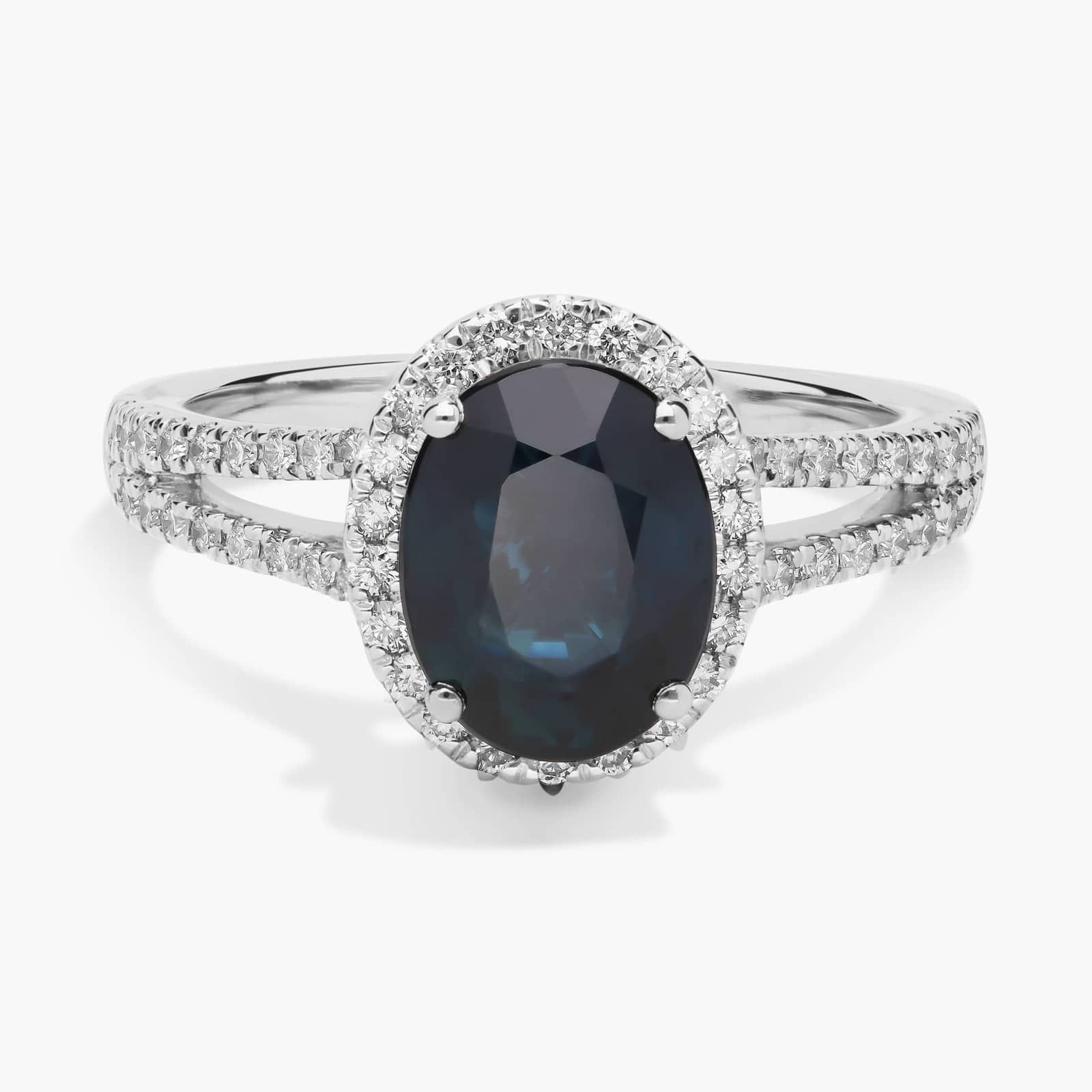


Short answer: sapphire is aluminum oxide (Al₂O₃), a mineral called corundum. Pure corundum is colorless. Trace iron and titanium make it blue. Chromium makes it pink. Iron alone makes it yellow or green. It ranks 9 on the Mohs scale. That hardness comes from a hexagonal crystal lattice. Aluminum and oxygen bond in a near-unbreakable grid.
Quick Answer
What Sapphire Is Made Of — 60-Second Answer
- Chemical formula: Al₂O₃ (aluminum oxide, also known as corundum)
- Pure form: Colorless — called leukosapphire or white sapphire
- Blue color: Iron (Fe²⁺) + titanium (Ti⁴⁺) impurities
- Pink / red: Chromium (Cr³⁺) — same element that makes rubies red
- Yellow / green: Iron (Fe³⁺) alone, no titanium
- Hardness: 9 on Mohs scale — second only to diamond
- Formation: Metamorphic or igneous rock, 1–10 million years, 900–1300°C
- Industrial use: iPhone screens, laser rods, watch crystals (all lab-grown corundum)
Deal Alert: Mother’s Day Sale Up To 30% Off* select fine jewelry at Blue Nile.
New Collection: Shop the James Allen Collection at Blue Nile.
Vault Sale: “Clear The Vault” – Get up to 70% OFF at Blue Nile!
Flash Sale: Save up to 40% OFF sitewide at Rare Carat.
Exclusive: Get up to 60% OFF select fine jewelry at Ritani.
Mehedi’s Take: “Clients ask me what sapphire is made of every week. The simple answer: aluminum, oxygen, and a tiny bit of iron or chromium. The complicated answer is why that tiny bit changes a $200 stone into a $30,000 stone.” — Mehedi Hasan, Gemologist & Co-founder, Aurelia
“Your sapphire ring is a 500-million-year-old chemical reaction. Frozen in time.”
Hi, I am Mehedi. Co-founder of Aurelia. Gemologist. I have spent years looking at sapphires under electron microscopes. These stones are not just pretty rocks. They are built under extreme heat, pressure, and geological luck.
Think of sapphires this way. Aluminum and oxygen bond into near-indestructible crystals. Trace impurities paint them blue, pink, or sunset orange. The color depends on atomic accidents that happened before dinosaurs.
Here is the chemistry. We cover how unheated blue sapphires hold their value. And why some are worth their weight in gold.
The Basic Chemistry of Sapphires

What gives sapphires their brilliance, color, and legendary durability? The answer lies in their atomic structure and the trace elements that act as nature’s paintbrush. Let’s break down the science, from aluminum oxide basics to the impurities that create rainbows in stone.
Corundum: The Parent Mineral
Every sapphire is corundum. Formula: Al₂O₃ (aluminum oxide). Pure corundum is colorless. We call it leukosapphire — Greek for “white sapphire.” So what makes corundum special?
- Hardness: Rated 9/10 on the Mohs scale, sapphires are second only to diamonds. This atomic toughness comes from their hexagonal crystal structure, where aluminum and oxygen atoms bond in a near-unbreakable lattice.
- Rarity: Pure corundum is rare. Most sapphires contain trace elements that alter their color and value.
The GIA rates corundum ideal for jewelry. It resists scratches, heat, and chemical damage. But color comes from the trace impurities nature adds.
Trace Elements: Nature’s Paintbrush
Sapphires get their colors from trace elements that sneak into the corundum structure during formation. Think of these elements as nature’s dye:
- Blue Sapphires:
- Iron (Fe²⁺) + Titanium (Ti⁴⁺): This dynamic duo absorbs red and yellow light, leaving that iconic cornflower blue.
- Fun Fact: The finest blues come from Kashmir, where titanium levels are just right.
- Yellow & Green Sapphires:
- Iron (Fe³⁺): Higher iron concentrations create sunny yellows or earthy greens. These often form in iron-rich environments like Australia’s basalt fields.
- Pink Sapphires & Rubies:
- Chromium (Cr³⁺): The same element that dyes rubies red creates pink sapphires in smaller doses. The line between ruby and pink sapphire? It’s thinner than you think.
- Padparadscha:
- Chromium + Iron: This rare combo blends pink (Cr³⁺) and orange (Fe²⁺) into a sunset hue. Less than 1% of sapphires qualify as true padparadscha.
What Is the Chemical Formula of Sapphire?
Al₂O₃. Two aluminum atoms. Three oxygen atoms. That is it.
The scientific name is aluminum oxide. The mineral name is corundum. Both terms describe the same compound. Sapphire, ruby, leukosapphire, padparadscha — all corundum. Only the trace elements change.
| Property | Value |
|---|---|
| Chemical formula | Al₂O₃ |
| Chemical name | Aluminum oxide |
| Mineral name | Corundum |
| Molecular weight | 101.96 g/mol |
| Crystal system | Trigonal (hexagonal close-packed) |
| Hardness | 9 on Mohs scale |
| Density | 3.98-4.1 g/cm³ |
| Melting point | 2,044°C (3,711°F) |
Verdict: Sapphire is Al₂O₃. Same formula as ruby. The color-making elements are trace impurities. Below 0.5% by weight. Nature’s math.
Is Sapphire an Element, Compound, or Mineral?
Sapphire is a mineral made of a compound. Not an element. Here is the quick breakdown.
- Element: A pure substance on the periodic table (aluminum, oxygen, chromium). Sapphire is not an element.
- Compound: Two or more elements chemically bonded. Al₂O₃ is a compound of aluminum and oxygen. Yes, sapphire is a compound.
- Mineral: A natural, solid, crystalline substance with a defined chemical composition. Corundum (Al₂O₃) is a mineral. Sapphire is a gem variety of corundum.
So the full answer: sapphire is a gem variety of the mineral corundum. Corundum is a compound. It bonds two elements — aluminum and oxygen.
Verdict: Mineral and compound. Not an element. Not on the periodic table. Aluminum and oxygen are.
Geological Formation: How Sapphires Are Born
Sapphires don’t just appear—they’re forged in Earth’s most extreme environments. From volcanic magma chambers to riverbeds, these gems undergo a brutal, million-year journey to reach your jewelry box. Let’s explore where and how nature cooks up these crystalline wonders.
Where Do Sapphires Form?
Sapphires crystallize in three main geological settings, each leaving a unique fingerprint on the gem’s color and clarity:
- Metamorphic Rocks:
- Sri Lanka’s “Garnet-Amphibolite” Belts: Here, sapphires form when ancient seabeds collide with continental plates, creating pressures of 4–6 GPa. The result? Velvety blue sapphires with legendary luster.
- Key Feature: These stones often contain rutile “silk,” which scatters light into a soft glow.
- Igneous Rocks:
- Madagascar’s Basalt Flows: Molten lava carries aluminum-rich minerals to the surface, where they cool into sapphires. These gems are typically vivid blue or padparadscha, with higher iron content.
- Mining Risk: Many Malagasy mines are unregulated, raising ethical concerns.
- Alluvial Deposits:
- Montana’s Missouri River: Over millennia, erosion washes sapphires from their parent rocks into riverbeds. These “secondary deposits” yield smaller but brilliantly colored stones, like the signature Yogo sapphires.
- Bonus: Alluvial sapphires are naturally polished, requiring less cutting.
The Million-Year Recipe
Creating a sapphire isn’t quick—it’s a slow-cook process requiring precise ingredients:
- Heat (900–1300°C): Melts aluminum and oxygen into a molten soup. Too hot, and the crystal dissolves; too cold, and it never forms.
- Pressure (4–6 GPa): Squeezes the melt into a dense crystal lattice. That’s 40,000–60,000 times Earth’s surface pressure—equivalent to stacking 10 jumbo jets on your fingernail!
- Time (1–10 million years): Allows trace elements like iron and chromium to seep into the corundum structure.
Below is an Infographic table of Sapphire Formation Conditions
| Factor | Range | Effect on Sapphire |
|---|---|---|
| Temperature | 900–1300°C | Stabilizes corundum crystal |
| Pressure | 4–6 GPa | Prevents mineral melting |
| Trace Elements | 0.01–0.5% | Determines color |
Why It Matters:
- Natural vs. Lab: Lab-created sapphires skip the million-year wait, growing in weeks under similar conditions. Learn to spot the difference in our lab vs. real guide.
- Ethical Sourcing: Madagascar’s fast-forming basalt sapphires often fund conflict, while Sri Lanka’s metamorphic gems are more ethical.
Crystal Structure: Why Sapphires Are So Tough

Sapphires are tough because of their atomic structure. Hexagonal close-packing. Resists scratches, heat, and tectonic pressure. Here is the molecular blueprint.
Hexagonal Close-Packing
Imagine stacking oranges in a grocery display—that’s essentially how sapphire atoms arrange themselves:
- Aluminum Layers: Hexagonal sheets of aluminum ions (Al³⁺) form the base.
- Oxygen Fillers: Oxygen ions (O²⁻) nestle into the gaps, bonding tightly with aluminum.
- Result: A 3D lattice so strong it scores 9/10 on the Mohs scale. For comparison, steel ranks 4–4.5.
Real-World Impact:
- Daily Wear: Resists scratches from keys, sand, and even diamond-tipped tools.
- Heat Resistance: Withstands temperatures up to 1,800°C (lab-created sapphires are used in iPhone screens!).
- Chemical Stability: Won’t corrode in saltwater or chlorine—perfect for beach-ready jewelry.
Inclusions: The Birthmarks
Inclusions aren’t flaws—they’re a sapphire’s fingerprint, revealing its origin and authenticity:
- Rutile Needles (“Silk”):
- Found In: Kashmir and Sri Lankan sapphires.
- Effect: Scatters light into a velvety glow, boosting value.
- Zircon Crystals:
- Significance: Proves natural formation (lab gems lack zircon).
- Trade-Off: May cause internal stress fractures.
- Gas Bubbles:
- Red Flag: Indicates lab-created stones (e.g., flame fusion method).
- Test: Use a 10x loupe—natural sapphires rarely have bubbles.
Pro Tip: Always request a gemological report. For example, unheated blue sapphires with rutile silk are 30% pricier than treated ones.
Sapphire vs. Ruby: The Twin Minerals
Sapphires and rubies are siblings—born from the same mineral but divided by a single element. Both are varieties of corundum (Al₂O₃), yet their colors and cultural significance couldn’t be more different. Let’s unravel what sets these gems apart and why collectors obsess over both.
The Chromium Divide
The key difference lies in trace elements:
- Rubies: Owe their fiery red to chromium (Cr³⁺). Even 0.1% chromium can dye corundum blood-red. Too much chromium (over 1%) creates cracks, making large rubies ultra-rare.
- Sapphires: Get their blues, pinks, yellows, and greens from iron, titanium, or vanadium. Only red corundum is called ruby—everything else is sapphire.
Fun Fact: The line between ruby and pink sapphire is blurry. GIA often grades based on hue: stones with dominant red = ruby; pink = pink sapphire.
Value & Rarity
- Rubies: Top-tier Burmese rubies (like the Sunrise Ruby) fetch $1M+/carat. Their rarity and cultural ties to passion make them pricier than most sapphires.
- Sapphires: Padparadscha and Kashmir blue rivals ruby prices, but most sapphires (e.g., yellow, green) are 80% cheaper.
- Durability: Both score 9/10 on the Mohs scale, but rubies are more fracture-prone due to chromium-induced stress.
Infographic: Ruby vs. Sapphire Value
| Feature | Ruby | Sapphire (Blue) |
|---|---|---|
| Price/Carat | $10K–$1M+ | $800–$50K |
| Rarity | 1 in 8,000 gems | 1 in 500 gems |
| Top Source | Myanmar (Burma) | Kashmir, Sri Lanka |
For a deeper dive, explore our Ruby vs. Sapphire Value Guide.
Why This Matters
- Investment: Rubies appreciate faster, but sapphires offer broader color options.
- Ethics: Burmese rubies often fund conflict, while sapphires from Sri Lanka are more ethical.
- Versatility: Sapphires suit all skin tones; rubies scream boldness.
How Are Sapphires Formed Naturally?
Four natural pathways. All require aluminum-rich, silica-poor rock. All take millions of years.
- Metamorphic (Kashmir, Sri Lanka): Marble or gneiss recrystallizes under tectonic pressure. Aluminum migrates. Corundum crystallizes at 500-700°C. Best clarity. Highest price.
- Igneous (Madagascar, Australia): Basalt lava carries aluminum-rich minerals to the surface. Cools fast. More iron content, often darker blue. Lower clarity.
- Alluvial (Montana, Thailand): Erosion washes sapphires from parent rocks into riverbeds. Naturally polished. Smaller size. Easy to mine.
- Contact metamorphism (Myanmar, Vietnam): Hot magma meets limestone. Aluminum-rich zones crystallize. Produces vivid blue and pink stones.
Timeline: 1 to 10 million years. Temperature: 500-1,300°C depending on pathway. Pressure: 4-6 gigapascals in metamorphic settings. That is 40,000-60,000 times atmospheric pressure.
Verdict: Natural sapphires need aluminum-rich rock, pressure, and heat. Four pathways. Each produces a signature look.
Blue, Pink, Yellow & White Sapphire Chemistry
Every sapphire color comes from different trace elements inside the Al₂O₃ lattice. Same core formula. Different impurities. Different colors.
| Color | Trace Element | Chemistry | Typical Price per Carat |
|---|---|---|---|
| Blue | Iron + Titanium | Fe²⁺ + Ti⁴⁺ absorb red and yellow light | $800-$5,000 |
| Pink | Chromium | Cr³⁺ absorbs green and violet light | $500-$3,000 |
| Yellow / Green | Iron only | Fe³⁺ absorbs blue and violet light | $300-$1,500 |
| Padparadscha | Chromium + Iron | Cr³⁺ + Fe³⁺ create the orange-pink hue | $3,000-$30,000 |
| Purple / Violet | Vanadium | V³⁺ absorbs green and yellow light | $400-$2,500 |
| White (leukosapphire) | None (pure Al₂O₃) | No trace element absorption | $200-$500 |
| Color-change | Chromium + Vanadium | Shifts blue in daylight, purple in incandescent | $2,000-$10,000 |
Verdict: Blue = iron plus titanium. Pink = chromium. Yellow = iron alone. White = no impurities. Rare combinations command premium prices.
Natural vs Lab-Created Sapphires
Natural sapphires come from Earth. Lab sapphires come from factories. Both look stunning. But origin, ethics, and value differ.
Natural Sapphires
Formed over 1–10 million years, natural sapphires are time capsules with flaws that tell their story:
- Inclusions: Rutile needles (“silk”), zircon crystals, or healed fractures.
- Ethics: While Sri Lankan mines follow fair practices, regions like Madagascar face child labor issues.
- Value: Untreated, natural stones appreciate 5–10% annually.
Red Flag: Avoid dealers who can’t provide origin certificates. For ethical options, explore Sri Lankan unheated sapphires.
Lab-Created Sapphires
Grown in weeks using three main methods:
- Flame Fusion:
- Process: Aluminum oxide powder melted in a flame.
- Cost: $10-$50 per carat.
- Flaw: Gas bubbles and curved growth lines.
- Hydrothermal:
- Process: Mimics natural growth in water-rich, high-pressure chambers.
- Quality: Few inclusions, often sold as “natural-looking.”
- Price: $100-$500 per carat.
- Czochralski:
- Process: Pulls crystals from molten corundum.
- Use: High-tech applications (watch crystals, lasers).
- Perfection: Flawless clarity, zero resale value.
Infographic: Lab vs. Natural
| Factor | Natural | Lab-Created |
|---|---|---|
| Growth Time | 1M–10M years | 2–6 weeks |
| Inclusions | Rutile, zircon | Gas bubbles |
| Ethics | Variable | Conflict-free |
| Resale Value | 5–10% annual growth | 10–30% depreciation |
Learn to spot fakes in our Lab vs. Real Guide.
Why Composition Matters in Jewelry
Chemistry drives beauty, resilience, and price. Here is how composition impacts your gem:
- Durability:
- Mohs 9 Hardness: Resists scratches from daily wear (diamonds are 10). Perfect for engagement rings or active lifestyles.
- Crystal Structure: Hexagonal lattice prevents chipping, unlike emeralds or opals.
- Color Stability:
- Untreated Sapphires: Retain hues for centuries. Heat-treated stones may fade.
- Natural vs. Lab: Lab gems lack trace elements, so colors stay artificial-looking.
- Value:
- Rare Elements: Chromium (pink) or titanium (blue) boost prices. A Padparadscha’s sunset blend can cost $30K/carat.
- Provenance: Kashmir sapphires with rutile silk fetch 50% premiums.
Pro Tip: Use our Sapphire Care Guide to maintain brilliance.
How Is Synthetic Sapphire Made?
Three main methods. All produce real corundum with the same Al₂O₃ formula. The difference is time and growth signature.
| Method | How It Works | Growth Time | Price per Carat |
|---|---|---|---|
| Flame Fusion (Verneuil) | Aluminum oxide powder melted in oxyhydrogen flame | 4-8 hours | $10-$50 |
| Czochralski (Pulling) | Crystal pulled from molten corundum at 2,044°C | 1-2 weeks | $50-$200 |
| Hydrothermal | Grown in high-pressure water chambers, mimics natural | 4-6 weeks | $100-$500 |
All three produce chemically identical Al₂O₃. Flame fusion is the cheapest and most common. It leaves gas bubbles and curved growth lines. Hydrothermal is the hardest to detect — often sold as natural-looking.
Verdict: Lab sapphires are real sapphires. Same chemistry. Different birth story. Price reflects growth difficulty, not quality.
Industrial Uses of Sapphire (Beyond Jewelry)
Sapphire is not just for engagement rings. Lab-grown corundum runs modern electronics.
- iPhone camera lenses: Scratch-resistant sapphire glass. Apple uses millions of carats per year.
- Watch crystals: Rolex, Omega, Patek Philippe all use sapphire for watch faces. 9 Mohs hardness means no scratches.
- Semiconductor wafers: Sapphire substrates for LED chips and silicon-on-sapphire integrated circuits.
- Laser rods: Chromium-doped corundum (ruby) created the first operational laser in 1960.
- Military optics: Transparent armor, missile domes, tank viewing ports. Survives extreme heat and impact.
- Supermarket barcode scanners: Sapphire windows protect the laser from grocery abuse.
Verdict: Al₂O₃ is one of the most useful compounds on Earth. Jewelry is maybe 1% of total production. The rest runs iPhones, lasers, and lab equipment.
Mehedi’s Take: “Clients get surprised when I tell them Apple uses more sapphire by weight than every jewelry house combined. Same chemistry. Same Al₂O₃. Different market.” — Mehedi Hasan, Gemologist & Co-founder, Aurelia
Decision Matrix: Which Sapphire Fits Your Use?
| You Want | Chemistry Match | Price | What This Means |
|---|---|---|---|
| Classic blue engagement ring | Iron + Titanium (natural, Ceylon) | $800-$5,000/ct | Royal blue. Investment-grade. |
| Diamond alternative, low budget | Pure Al₂O₃ (leukosapphire) | $200-$500/ct | Colorless white sapphire. |
| Soft pink gemstone | Chromium (low concentration) | $500-$3,000/ct | Pink sapphire. Lighter than ruby. |
| Yellow accent stone | Iron only (Fe³⁺) | $300-$1,500/ct | Golden to canary yellow. |
| Collector-grade rarity | Chromium + Iron (padparadscha) | $3,000-$30,000/ct | Orange-pink. Sri Lanka only. |
| Industrial / lab research | Synthetic Al₂O₃ (Czochralski) | $50-$200/ct | Lab-grown. Perfect clarity. |
| Dramatic color-change ring | Chromium + Vanadium | $2,000-$10,000/ct | Blue in daylight, purple in bulb light. |
Verdict: Pick by purpose. Engagement ring? Go blue natural. Budget alternative? White sapphire. Statement? Padparadscha. Lab stones are chemically identical and 90% cheaper.
Mehedi’s Take: “Chemistry is the only thing I check first. Not clarity. Not cut. Color chemistry tells me if a stone is natural, treated, or lab-grown. Often before I reach for the loupe.” — Mehedi Hasan, Gemologist & Co-founder, Aurelia
Frequently Asked Questions
Can Sapphires Be 100% Pure Aluminum Oxide?
Yes. These colorless gems are called leukosapphires. Lab-grown versions are used in watch crystals and bulletproof windows. Natural ones are rare. Most form in low-iron environments like Montana. Price: $200-$500 per carat. Cheaper than colored sapphires.
Why Are Most Sapphires Blue?
Iron and titanium combine inside the Al₂O₃ lattice. Fe²⁺ and Ti⁴⁺ absorb red and yellow light. The result reflects blue. About 70% of mined sapphires are blue, mostly from Sri Lanka. Some blues shift green under LED due to trace vanadium.
Do Lab Sapphires Have the Same Composition?
Chemically identical. Visually different. Lab sapphires are Al₂O₃ with the same hardness, same refractive index, same density. Signs they are lab-grown: gas bubbles, curved growth lines, perfect clarity. Price is 90% lower than natural.
What Gives Padparadscha Its Orange-Pink Hue?
Chromium plus iron plus low oxygen. Only 1% of sapphires qualify. Most come from Sri Lanka’s Ratnapura mines. Demand a GIA report. Dyed fakes are everywhere.
Are Black Sapphires Real?
Yes. Caused by iron/titanium overabundance or graphite inclusions. Usually cut into beads or men’s rings. Price: $50-$200 per carat. Less popular than white sapphires.
What Is the Parent Mineral of Sapphire?
Corundum. Both sapphire and ruby are gem varieties of the mineral corundum (Al₂O₃). The only difference is the trace element. Chromium makes ruby red. Iron and titanium make blue sapphire.
Is Sapphire on the Periodic Table?
No. Sapphire is a compound, not an element. The periodic table lists elements only. Aluminum (Al, #13) and oxygen (O, #8) are on the periodic table. Sapphire is what you get when they bond into Al₂O₃.
What Elements Make Up Sapphire?
Aluminum and oxygen for the base crystal. Then trace amounts of one or more: iron, titanium, chromium, vanadium, magnesium, nickel. Trace elements are less than 0.5% by weight. They control the color.
Are Sapphires Made of Carbon?
No. That is diamond. Sapphires are aluminum oxide (Al₂O₃). Diamonds are pure carbon (C). Different element. Different crystal structure. Different hardness (diamond is 10, sapphire is 9).
What Is the Chemical Composition of Blue Sapphire?
Al₂O₃ with trace iron (Fe²⁺) and titanium (Ti⁴⁺). Together they absorb red and yellow light and reflect blue. Intensity depends on the ratio. More titanium gives deeper blue. More iron gives grayer blue.
What Is the Chemical Composition of White Sapphire?
Pure Al₂O₃. No trace elements. Also known as leukosapphire. The absence of any coloring impurity leaves the crystal transparent and colorless. Looks similar to diamond but ranks 9 instead of 10 on Mohs.
What Is the Chemical Composition of Yellow Sapphire?
Al₂O₃ with iron (Fe³⁺) alone, no titanium. Iron absorbs blue and violet light, reflecting yellow. Deep gold yellows are rare and command premium prices. Vedic astrology uses yellow sapphire for Jupiter and prosperity.
Is Sapphire a Mineral or a Compound?
Both. Sapphire is the gem variety of corundum, which is a mineral. The mineral itself is a compound of aluminum and oxygen (Al₂O₃). So sapphire is a mineral made of a compound.
How Hard Is Sapphire on the Mohs Scale?
9 out of 10. Second only to diamond. The hardness comes from the hexagonal close-packed structure of aluminum and oxygen atoms. Steel ranks 4-4.5. Glass ranks 5.5. Diamond ranks 10. Sapphire sits one step below diamond.
How Long Does It Take for a Sapphire to Form Naturally?
1 to 10 million years. The exact time depends on the geological pathway. Metamorphic sapphires form slowest and have the best clarity. Igneous sapphires form faster in cooling basalt and have more iron.
What Color Is Sapphire in Its Purest Form?
Colorless. Pure corundum (Al₂O₃) has no color. The clear, colorless variety is called leukosapphire or white sapphire. Any color at all means trace impurities are present inside the crystal lattice.
Why Is Sapphire So Hard?
The aluminum-oxygen bond is one of the strongest in geology. Hexagonal close-packed structure fills every available space. Nothing bends. Nothing shifts. That lattice resists scratches, heat up to 1,800°C, and most acids.
What Is the Difference Between Sapphire and Corundum?
No chemical difference. Corundum is the mineral name. Sapphire is the gem name for the blue, pink, yellow, green, purple, or colorless varieties. Ruby is the gem name for the red variety. All corundum. Same Al₂O₃ formula.
What Rock Type Contains Sapphires?
Metamorphic rocks (marble, schist, gneiss) in Sri Lanka and Kashmir. Igneous rocks (basalt) in Madagascar and Australia. Alluvial deposits (riverbed gravel) in Montana and Thailand. The common requirement: aluminum-rich, silica-poor rock.
What Is Sapphire Crystal in Watches Made Of?
Lab-grown Al₂O₃. Same chemistry as a natural sapphire gemstone. Grown using the Czochralski method, then cut and polished into watch faces. Scratch-resistant up to Mohs 9. Only diamond can scratch it.
Mehedi’s Final Take: “Sapphire chemistry is simpler than people expect. Aluminum, oxygen, and a few trace elements. That is the whole gem. The million-dollar question is which trace element — and how much.” — Mehedi Hasan, Gemologist & Co-founder, Aurelia
See Also
- What Is an Unheated Blue Sapphire?
- How Much Does a Green Sapphire Cost?
- Lab Created Sapphire vs Real Sapphire
- How Can You Describe Sapphire’s Luster?
- Padparadscha Sapphire: The Rarest Color
- Pink Sapphires: Chemistry and Value
- Blue Sapphire: The Royal Standard
- White Sapphire: The Diamond Alternative
- Are Sapphires Worth More Than Gold?
- Diamond Color and Clarity Chart
- Blue Nile Reviews: Real Customer Feedback
The Bottom Line
Sapphires are chemistry written in fire and time. Each one blends aluminum, oxygen, and trace elements. Value comes from both the sparkle and the story behind it.
From Sri Lanka to Montana, these stones survive volcanoes and erosion. Wear yours with pride. It is a relic of geological grit.
Ready to own a piece of this legacy? Explore our handpicked sapphire jewelry from ethical mines, where every gem comes with a story as unique as its atomic bonds.
Blue Nile is one of the biggest and most recognized online jewelry retailers, offering an extensive and exclusive inventory. Their high-resolution images are improving and getting closer to the quality offered by James Allen, while their prices remain highly competitive. Right now, Blue Nile offers up to 30% savings on jewelry during a limited-time sale.
WHAT WE LOVE ABOUT THEM:
- 30-day no-questions-asked return policy, with a prepaid shipping label provided by Blue Nile.
- Lifetime warranty on all purchases.
- Free shipping on every order.
- Complimentary services every six months, including prong tightening, repolishing, rhodium plating, and cleaning.
- Insurance appraisal included with your purchase.
- One free resizing within the first year.
- High-quality images available for roughly half of their diamond selection.
- 24/7 customer service support.
- Full credit toward future upgrades, as long as the new item is at least double the value.
- Best-in-class order fulfillment process.


Looking for GIA-certified sapphires with full HD video? Blue Nile (ex-James Allen) is the strongest online option for inspection-grade stones.